

Learn & Explore/Species/Sea Turtles/Green Sea Turtle
Green Sea Turtle
Hawaiian name: Honu
Scientific name: Chelonia mydas
Description and Natural History
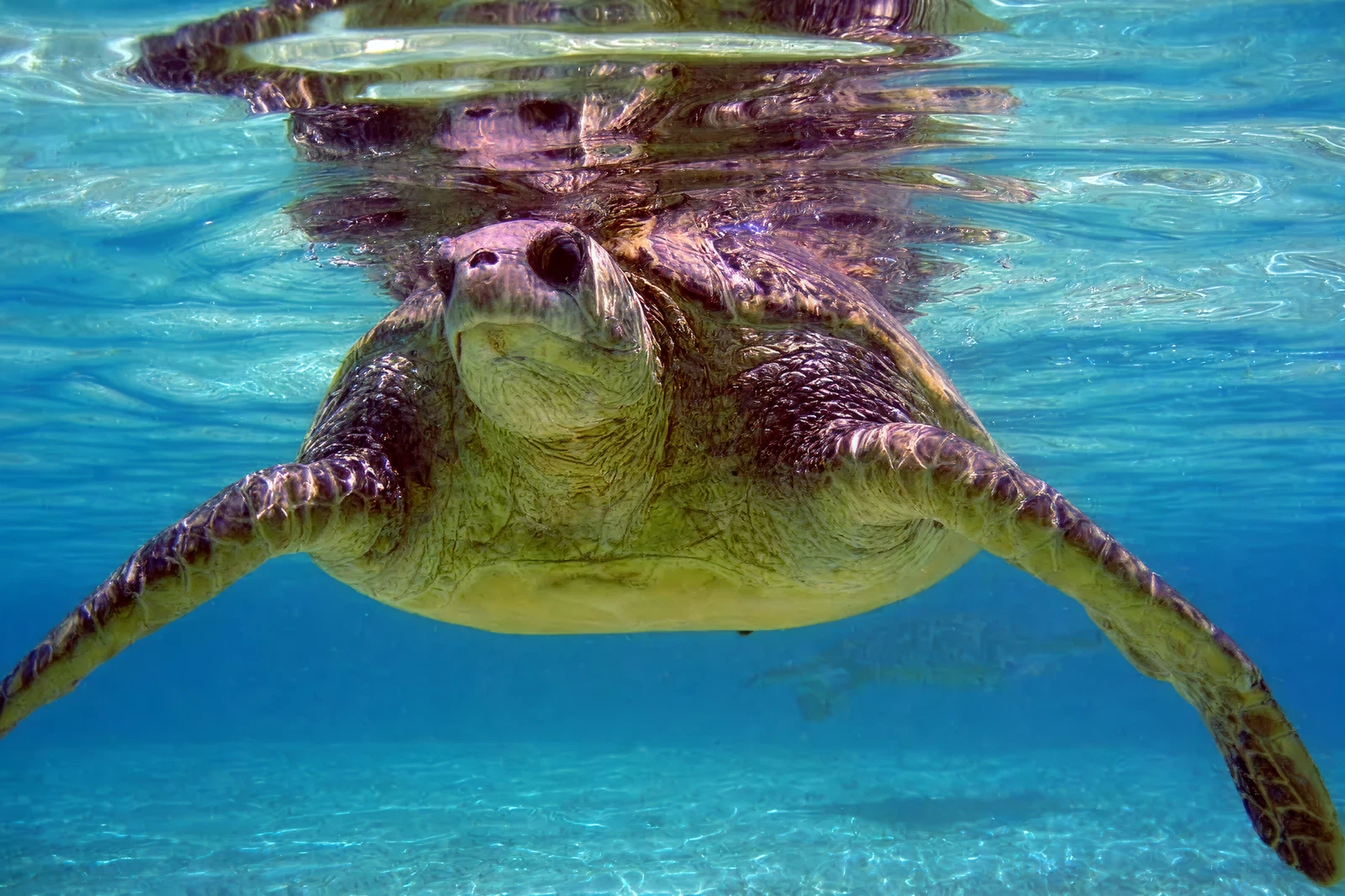
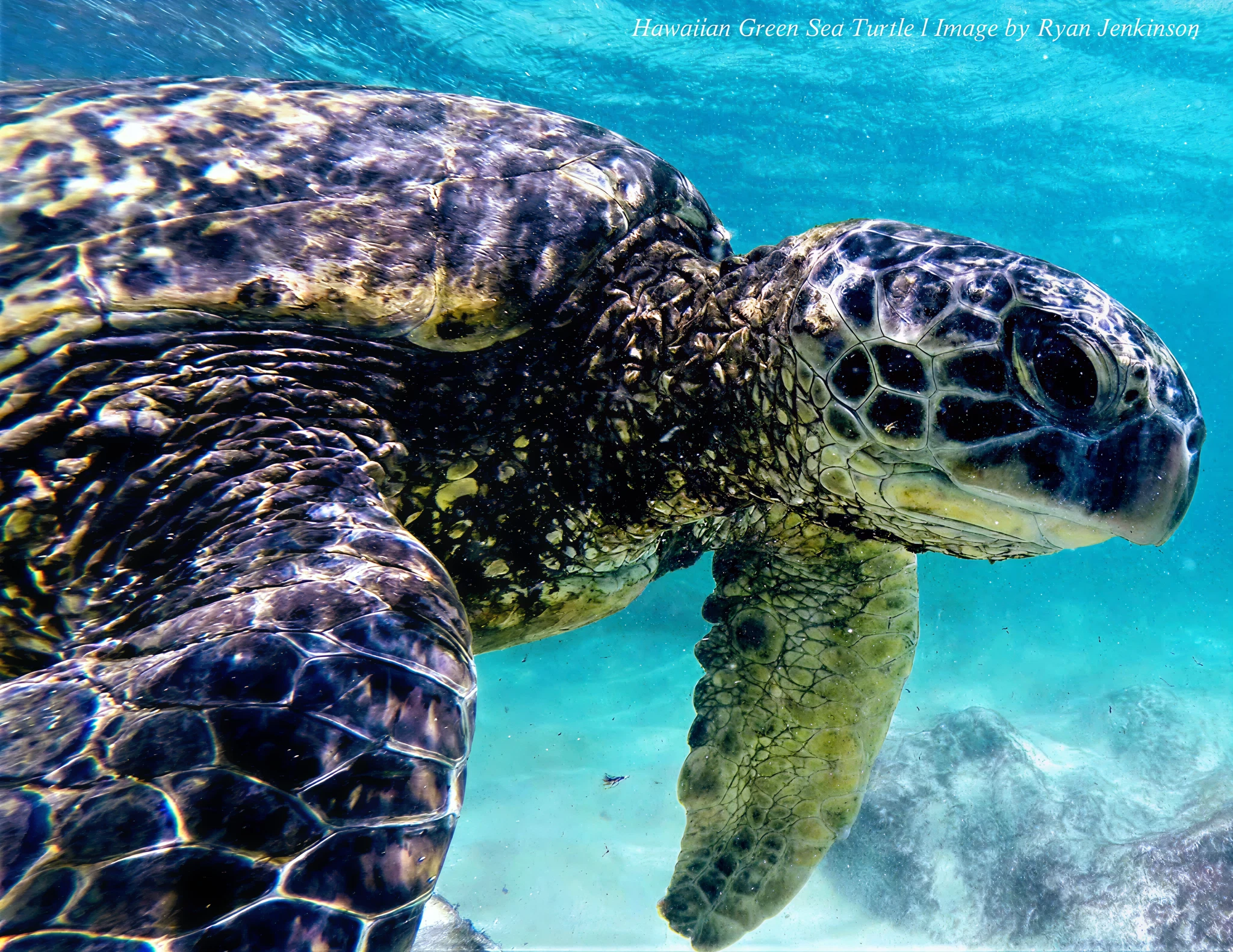
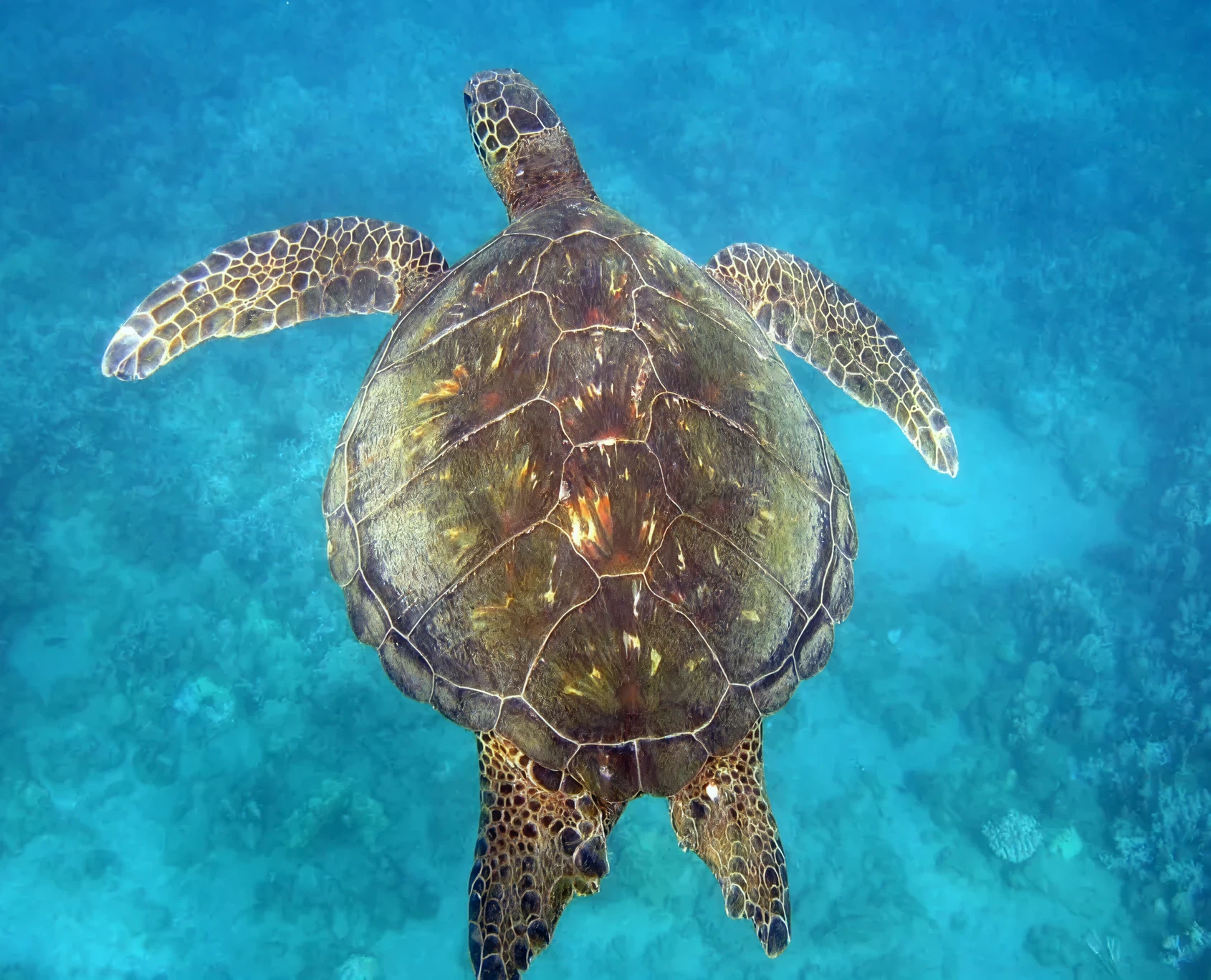
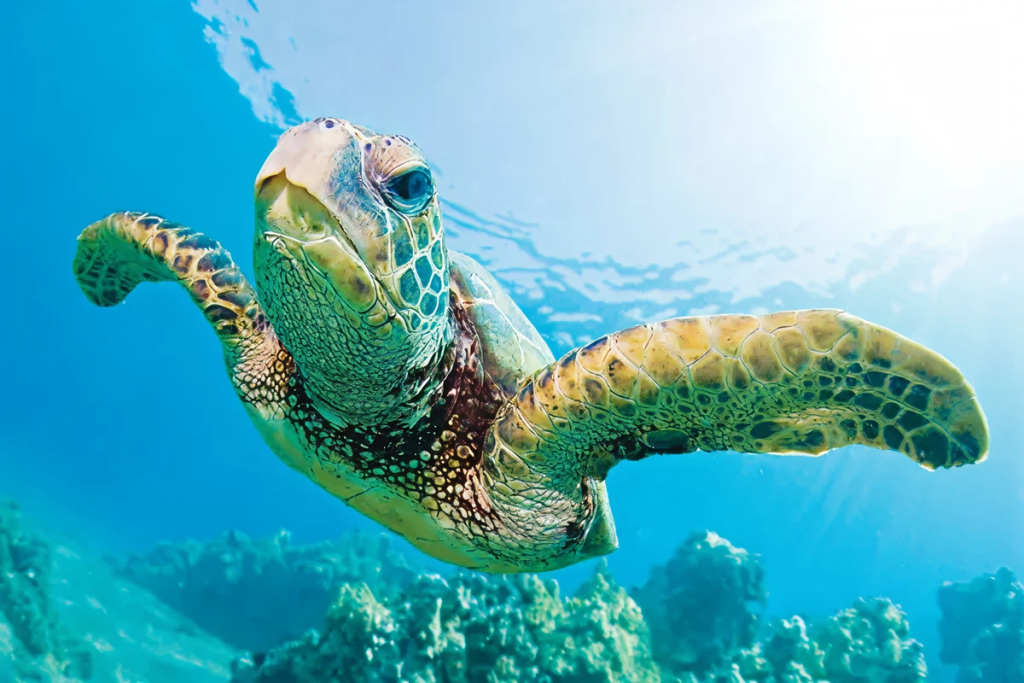
The Green Sea Turtle is considered the largest hard-shelled sea turtle found worldwide because of the combo of their shell type and sheer size. (Although leatherbacks are much bigger overall, their shells are considered soft-shelled, leathery and not hard.) Greens are the most frequently observed sea turtle in Hawai’i and today they are still protected by state and federal laws while still playing a crucial role to Hawaii’s ocean ecosystems, alongside having cultural significance to Hawaiians.
- Commonly known as Honu in Hawaiian
- Greens are the only type of sea turtle that exhibit basking (resting) behavior on the beach
- These sea turtles can measure 3-4 feet in length, weigh over 350 pounds, and are estimated to live for 70 years or more.
- Historically considered property of the ali’i (chiefs), they were sometimes raised in loko i’a (fishponds), with their shells used for storage, meat for consumption, and bones carved into tools.
- Many Hawaiians view green sea turtles as ‘aumakua (deities) warranting protection and care.
- Hunting of Green Sea Turtles was banned in 1978 when turtles were listed under the Endangered Species Act (ESA) due to diminishing populations from the introduction of Western, European and Asian fleets.
Today, green sea turtles are protected by state and federal laws and are considered culturally significant in Hawai‘i.
The Hawaiian Green Sea Turtle
QUICK FACTS
LENGTH
Up to 4 feet
LIFESPAN
Up to 70 years
THREATS
Disease, Climate Change & Habitat Loss, Predation, Fishing Gear & Marine Debris, Illegal Harvest & Other Human Impacts
Status and Protection
- Green Sea Turtles are found globally and classified into 11 distinct population segments (DPS) under the ESA.
- Hawaiian Green Sea Turtles belong to the Central North Pacific DPS and are listed federally under the ESA as threatened and green sea turtles worldwide are listed as Least Concern under the IUCN Red List
- Hawaiian Green Sea Turtles are protected by Hawaii State Law:HRS Chapter 195D and HAR 13-124 and are a distinct population that doesn’t leave our Hawaiian Archipelago chain.
- Hawaiian Green Sea Turtles are managed by The Hawaii Department of Land and Natural Resources, Division of Aquatic Resources and shares responsibility with two federal partners, the U.S. Fish and Wildlife Service and the National Oceanic and Atmospheric Association (NOAA) Fisheries. NOAA Fisheries is the agency that is permitted to help injured or stranded sea turtles.
Population Recovery
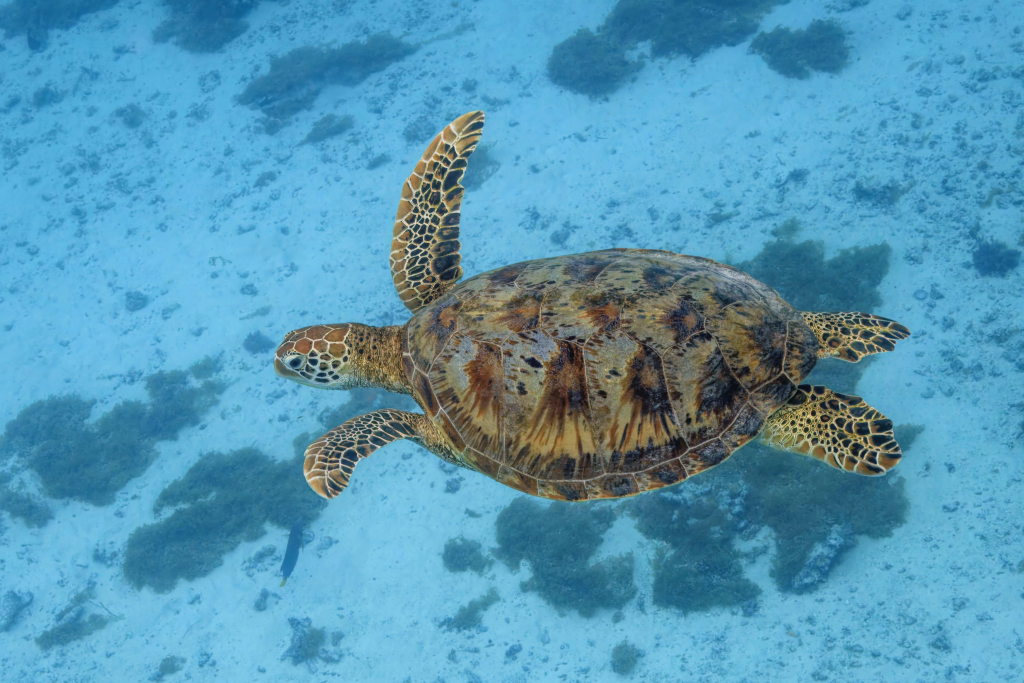
- Nesting populations have grown by 5% per year since the 1970s.
- Today, nearly 500 females nest annually, compared to 67 in 1973.
Diet and Habitat
- Green Sea Turtles feed mainly in nearshore coral reefs.
- Their diet is mostly algae and seagrasses, which help maintain healthy ecosystems.
- They also forage in rocky outcrops and seagrass beds.
Reproduction and Nesting
- Nesting In Hawai’i: About 96% of the Hawaiian green sea turtle population nests on either French Frigate Shoals (Lalo), a small atoll located in the Northwestern Hawaiian islands, within Papahanaumokuakea Marine National Monument. Hawaiian green sea turtles do nest in the main Hawaiian islands as well.
- Nesting Season: Nesting season is in late May to early October.
- Sexual Maturity and Nesting Times:
- Females lay eggs every 2-5 years
- Sexual maturity starts between ages 25-35 years of age
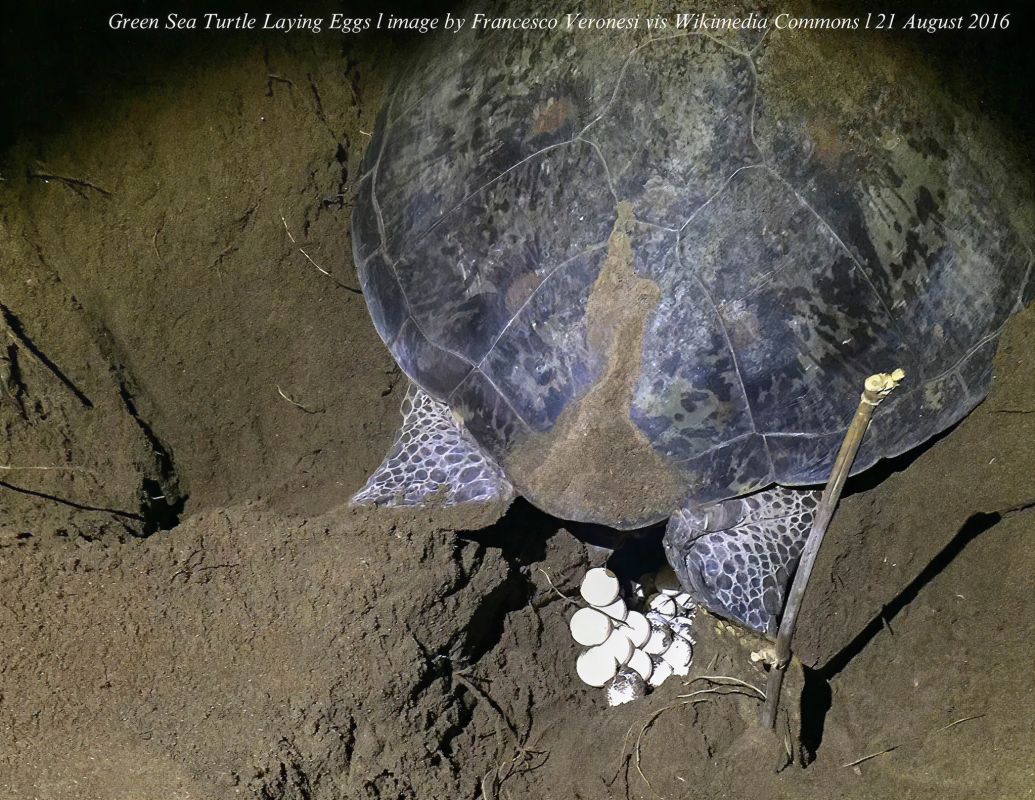
- Clutch Sizes: Females can lay 100 or more eggs per nest, every two weeks for several months and often come back to the same beach to lay eggs, as the beach they were born on.
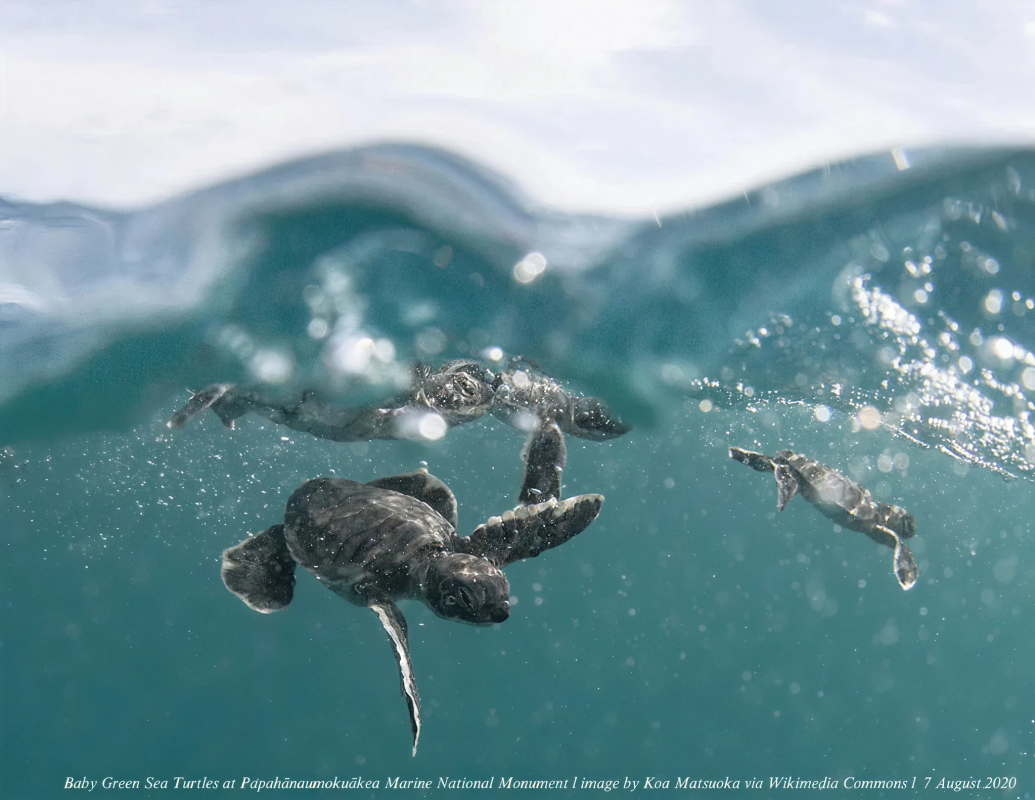
- Hatchlings: Hatchlings that emerge from the nest are typically guided to the ocean by moonlight. So it is important to be considerate of human made white lights, as it can confuse baby sea turtles and lead them into the wrong direction instead of the ocean. Red or amber lighting should be considered around known nesting areas instead. Hatchlings face many predators once they are born, few survive to adulthood, estimating that only 1 in 1,000 hatchlings actually make it.
Did you know?
That the sex of hatchlings is determined by the temperature of the nests, called temperature-dependent sex determination (TSD). Research shows that if a turtle egg incubates below 27.7 degrees Celsius, the hatchling will be male, whereas if the turtle egg incubates above 31 degrees Celsius, it will be female. Temperatures that fluctuate will produce both male and females.
Interesting Fact
The sex of hatchlings depends on nest temperature—warmer sand produces more females.
Threats
Although the Green Sea Turtle has shown encouraging signs of recovery after more than 40 years of state and federal protection, many threats remain.
Disease
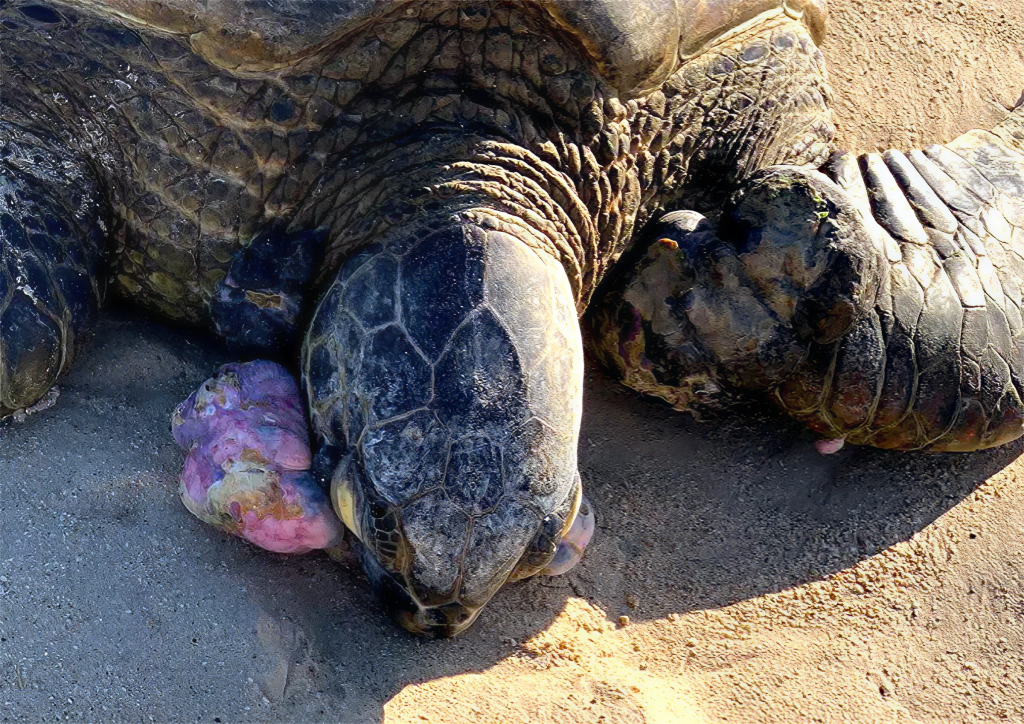
The primary disease that affects Green Sea Turtles is a type of herpes virus transmitted between turtles called fibropapillomatosis (a.k.a. FP). It is a viral disease with a worldwide, circumtropical distribution, found mainly in coastal habitats where green sea turtles are more common. FP is spread by direct contact or secondary vectors such as parasites, barnacles, or cleaner fish [7].
FP causes tumors that are generally considered benign but can exist externally and internally anywhere on the turtle’s body. Internal tumors can disrupt normal organ function and cause mortality, while external tumors can impair critical functions such as sight, swimming, feeding, buoyancy, predator avoidance, mating, and more [1].
Additionally, tumors can more easily become entangled in fishing gear or other marine debris, which can also lead to a premature death. No methods currently exist for controlling or treating FP; however, mitigating agricultural run-off and improving wastewater treatment infrastructure in nearshore regions may reduce the prevalence of the disease. Although FP has declined over the past decade, it persists in the Hawai‘i population. Learn more about fibropapillomatosis here.
Predation
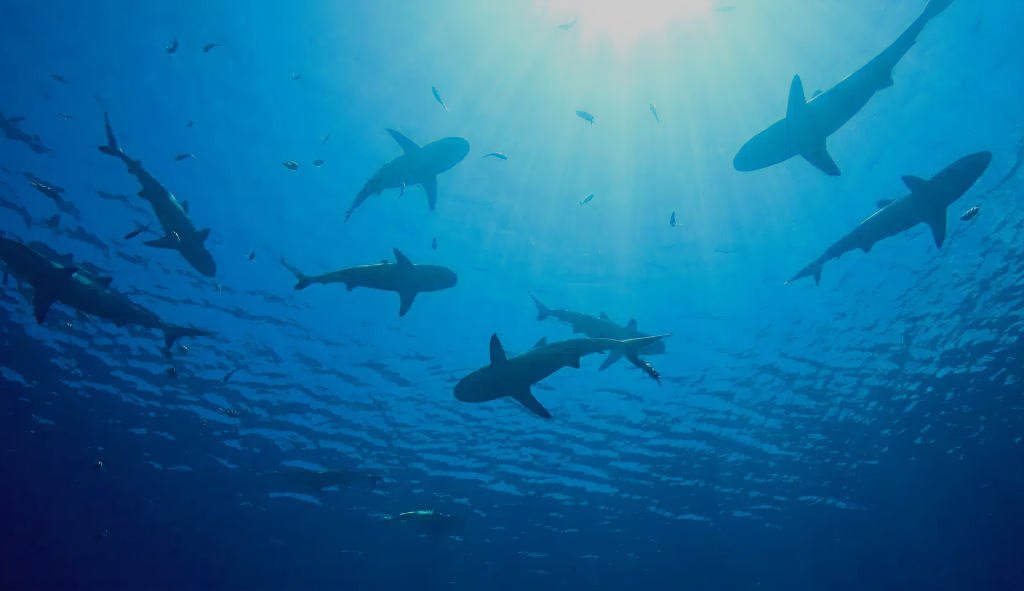
Sharks prey on Green Sea Turtles as part of the natural food chain. If you happen to see a shark pursuing or eating a turtle, please let the shark continue its meal and do not interrupt natural predation.
Eggs and hatchlings can face threats from non-native species in Hawai’i
Dense non-native vegetation can block hatchlings from emerging
Climate Change and Habitat Loss
Like many marine species, green sea turtles are threatened by global climate change. Sea level rise and extreme storms are already impacting Green Sea Turtle nesting habitat. The erosion of islands within French Frigate Shoals (Lalo), an atoll in the Northwestern Hawaiian Islands, is a prime example of this issue. Beginning in the late 1990s, some of the largest islands in the atoll began to wash away. In 2018, hurricane Walaka went right over Lalo and completely submerged East Island, one of the primary green sea turtle nesting islands. East Island has still not fully returned in 2023. Nesting habitat loss is predicted to continue in the NWHI with sea-level rise and increased storm / flooding activities predicted with a warming climate.
In the Main Hawaiian Islands, nesting locations have been lost due to erosion and coastal development. But in recent years, there are turtles nesting on popular beaches again for the first time in years.
Additionally, climate change may potentially skew the sex ratios in the population towards more females. Since green turtles demonstrate temperature-dependent sex determination, warmer temperatures may mean higher rates of females than males, which may cause declines in the future due to an imbalance of males vs. females. Evidence of this phenomena has already been noted across the U.S. Eastern seaboard with other species of marine sea turtles.
Fishing Gear and Marine Debris Entanglement
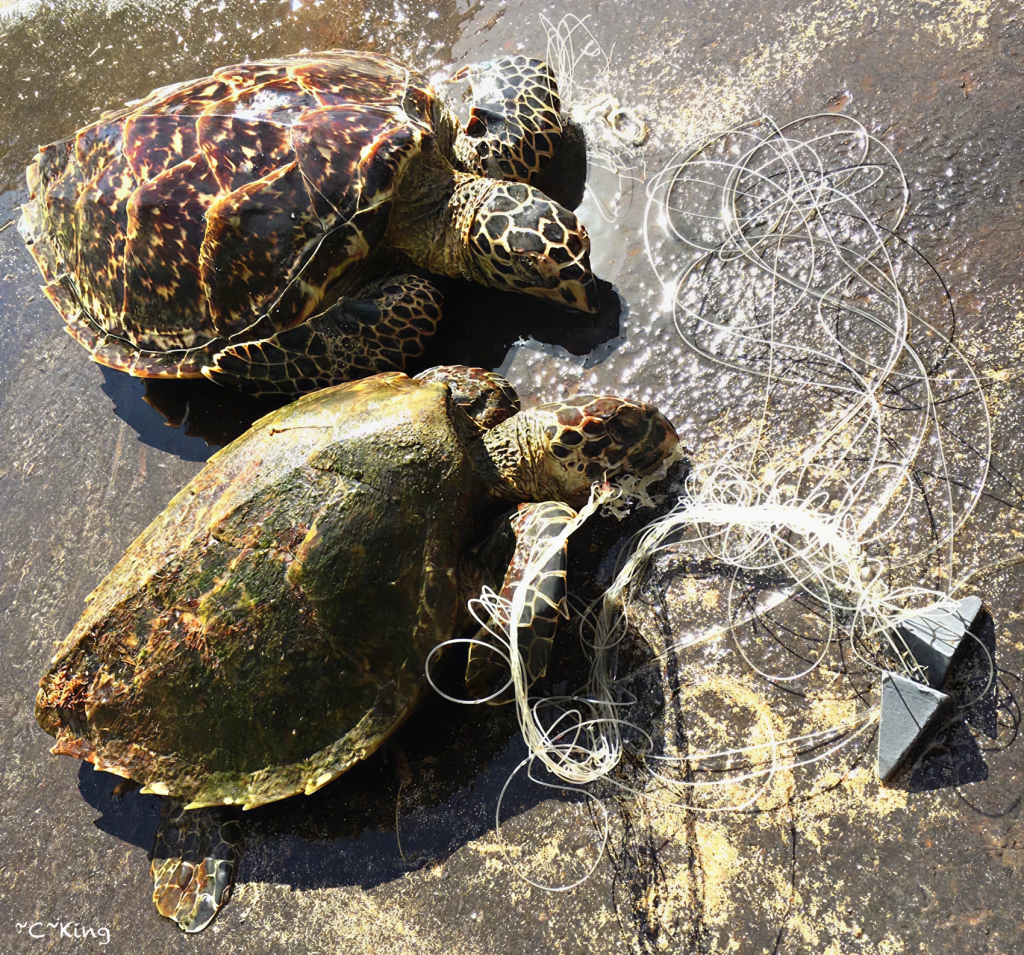
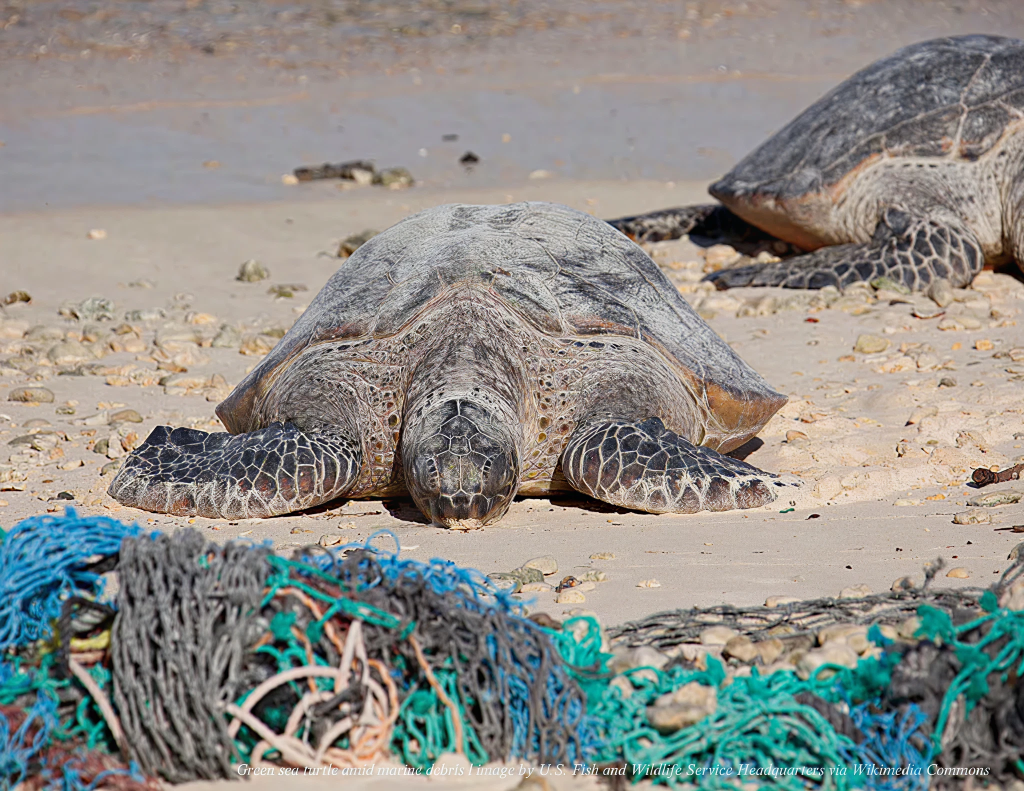
The foraging and diving behavior of sea turtles makes them particularly vulnerable to entanglement in debris or discarded fishing gear. Young turtles utilize floating objects for food or shelter and may accidentally become entrapped. Marine turtles often use oceanic fronts and currents to move through the waters where debris congregates, thus increasing potential entanglement risk. In particular, debris such as fishing lines, hooks, and nets pose the greatest risk as these objects can wrap around the animal’s appendages and prohibit them from surfacing to breathe, swim effectively, avoid predators, eat, or reproduce. Sea turtles of a variety of species have also been shown to consume plastics in Hawaiian waters.
Visit our Fishing Around Protected Species Webpage to learn how to fish around Hawai’i’s protected species properly.
If you see any injured, entangled, or dead Green Sea Turtle, please call the Statewide Marine Animal Hotline number at 833-4-DA-NETS.
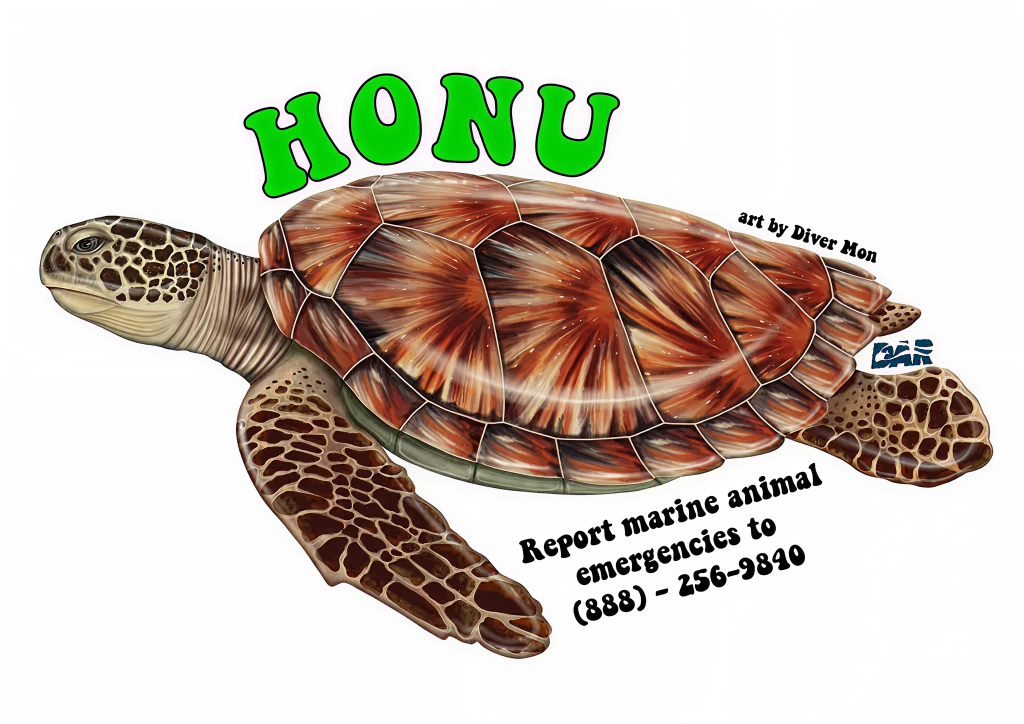
If you would like to get a Honu sticker with the marine animal hotline number, like below, please contact your local DLNR-DAR office.
Intentional Killing and Disturbance
Unfortunately, occasional but deliberate killing, harvesting, harassment, and other forms of disturbance of green sea turtles still occurs despite current federal and state protections. Non-life-threatening impacts such as touching, feeding, or getting too close to turtles can cause stress and overexertion. To view green sea turtles respectfully, a recommended distance of 10 or more feet has been suggested by the NMFS. To learn more about how you can help Green Sea Turtles, visit the NMFS website on responsible wildlife viewing.
Literature Cited
1. NOAA Fisheries. (2023, July). Green Turtle.
2. Maui Ocean Center. (2023). Hawaiian Green Sea Turtle.
3. Seminoff, J.A et al. (1970, January). Status Review of the green turtle (Chelonia mydas) under the Endangered Species Act.
4. NOAA Fisheries. (2019, August). There and Back Again: A Turtle Biologist’s Tale.
5. NOAA Fisheries. (2017, April). What causes a sea turtle to be born male or female?
6. NOAA Fisheries. (2015, June). A sea turtle listicle. Fascinating Facts.
7. NOAA Fisheries. (2021, January). Fibropapillomatosis and Sea Turtles – Frequently Asked Questions.
8. NOAA Fisheries. (2023, October). Hawksbill Turtle.
9. Gaos, Alexander R. et al. (2020, June). Conservation Genetics Hawaiian hawksbills: a distinct and isolated nesting colony in the Central North Pacific Ocean revealed by mitochondrial DNA.
10. NOAA Fisheries. (2020, July). Hawksbill sea turtles are truly Hawai’i locals.
See Another Turtle
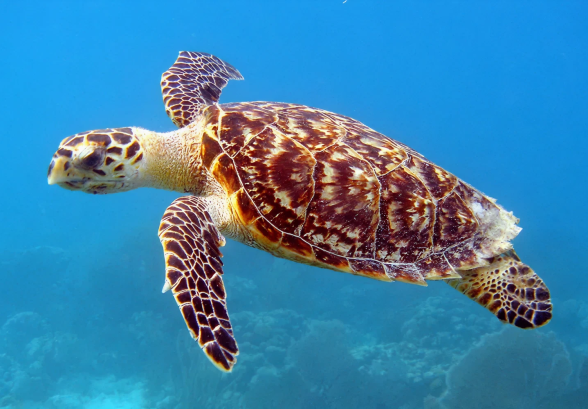
Hawksbill Sea Turtle
Hawaiian name: Honu ʻea (or ʻea)
Scientific name: Eretmochelys imbricata