

Know the Rules/Laws & Rules/Ballast Water
Ballast Water
Learn how Hawai‘i manages ballast water to prevent invasive marine species and protect native ecosystems.
Background and History
Hawaiʻi Administrative Rules Ch. 13-76
On October 12, 2007, Hawaiʻi Administrative Rules Ch. 13-76 was adopted to manage ballast water discharge from vessels operating in Hawaiian waters. The rules are intended to minimize introduction and spread of non-indigenous aquatic organisms into waters surrounding the Hawaiian Islands.
The rules require non-exempt vessels that carry ballast water to:
- Submit a Ballast Water Management Report to the State of Hawaiʻi DLNR 24 hours prior to arrival in port and can be downloaded at National Ballast Information Clearinghouse. Forms can be emailed to [email protected].
- Submit an amended form with corrected information, if needed, before leaving state waters
- Have a USCG ballast water management plan onboard
- Have 2 years of ballast water history maintained on board
- Manage ballast water in an approved method before discharge
- Allow DLNR to board the vessel to inspect documentation and take samples of sediment and ballast water to ensure compliance
These administrative rules correspond to and complement federal regulations on ballast water to ensure consistency, provide best practices guidelines to improve vessel ballast water management prior to entering state marine waters, and establish a ballast water management program that includes a reporting system and compliance monitoring. Under the current DLNR rules, vessels arriving from outside of the State carrying ballast water are required to submit a ballast water reporting form both to the Coast Guard and the Department. Reporting forms are available on the NBIC website.
More detailed information about DLNR’s ballast water management can be downloaded in pdf form at this link.
Ballast Water Reporting
For ballast water management reporting to the State of Hawai‘i Department of Land and Natural Resources (DLNR), please note the following:
Effective immediately, and until further notice, DLNR will accept either the old USCG “Ballast Water Reporting Form” (PDF) or the new “Ballast Water Management Report” (PDF version only, not .xml). Either form may be used to satisfy Hawaii’s ballast water reporting requirements under Hawai‘i Administrative Rule (HAR) §13-76-19.
To meet Hawai‘i reporting requirements, the forms must be:
- Submitted as an email attachment (PDF) to [email protected] or via fax to (808) 587-0115; and
- Submitted no later than 24 hours prior to vessel arrival into state marine waters per Hawai‘i Administrative Rules (HAR) §13-76-19(a)(2). Submitting the report to the USCG via Web App or as a PDF at the same time would be in compliance with their reporting requirement as well. Vessels and agents choosing to use the new NBIC Web App version must also complete a separate PDF version with the same information and submit it to DLNR as noted above.
- Should there be a change in any of the information submitted in accordance with ballast water management requirements, submit an amended form to the department before the vessel departs state marine waters. HAR §13-76-19(3). This applies to both the old and new ballast water management forms. If you are sending an amended report, please put “AMENDED” in the email subject line.
All other Hawai‘i ballast water management requirements under HAR §13 Chapter 76, Subchapter 2, remain in effect.
Questions and Support
Please contact Lizzy Monaghan at [email protected] for further questions.
Questions regarding the new BWMR and NBIC submission process should be directed to the NBIC: [email protected] or (443) 482-2339.
Submission of the ballast report to the department does not relieve the master of responsibility to report to the USCG.
About Ballast Water
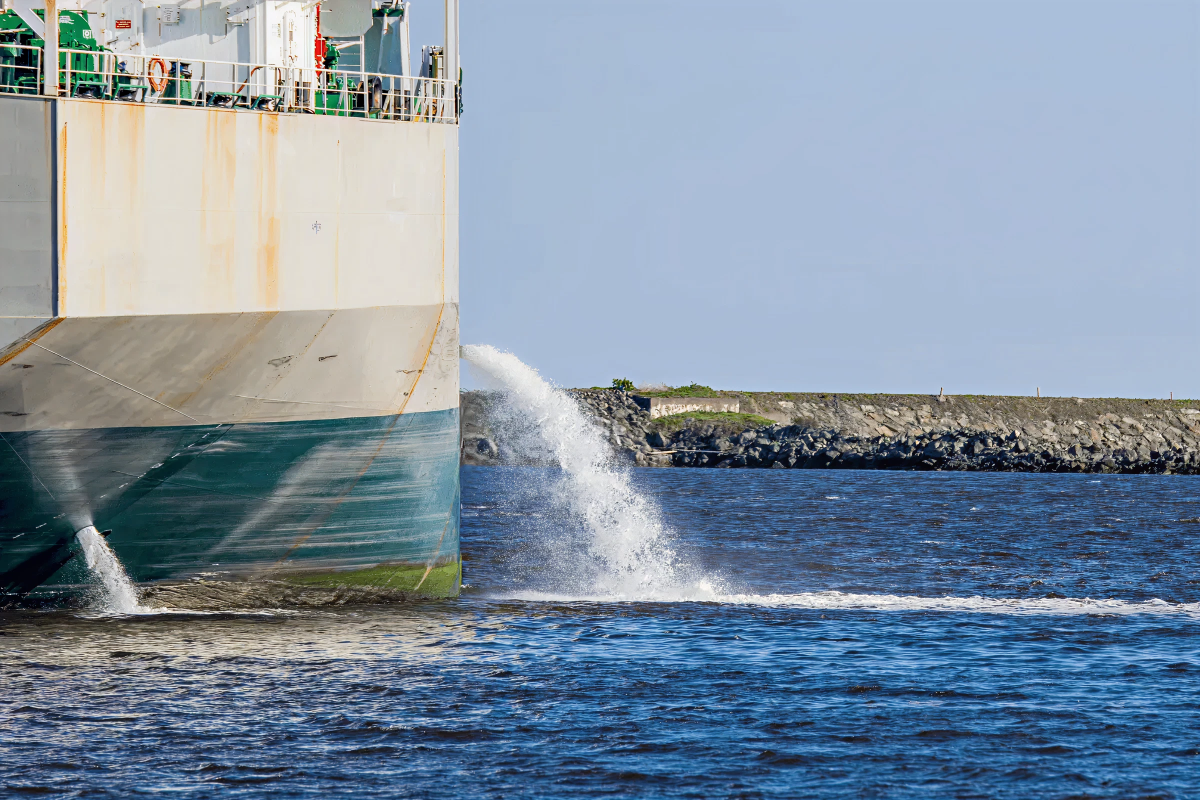
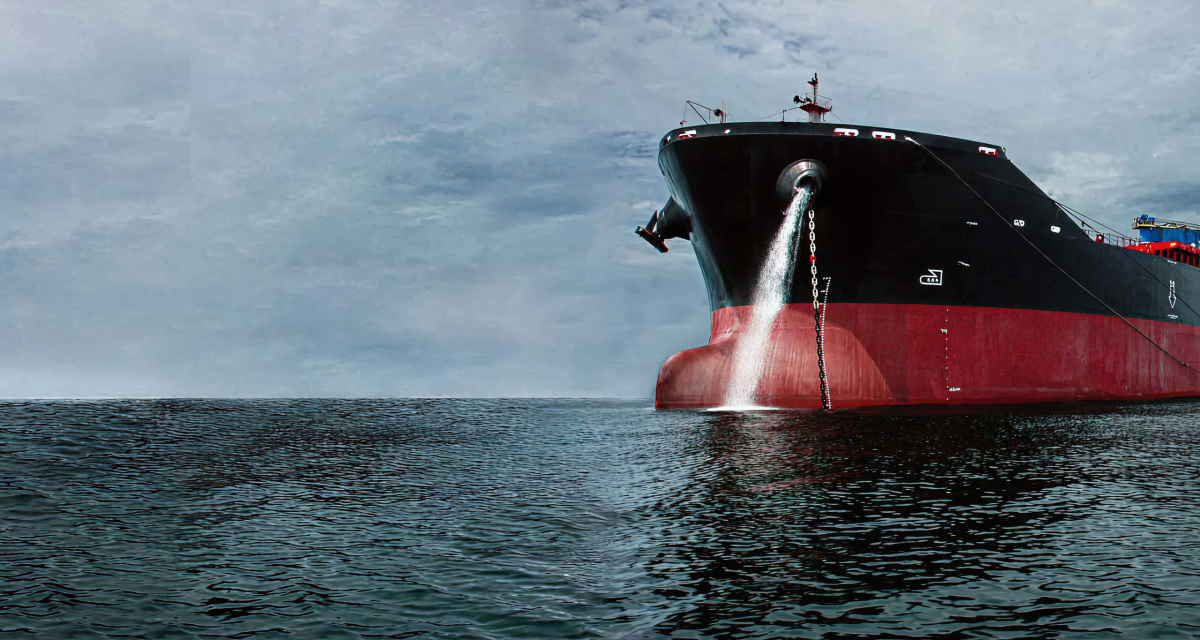
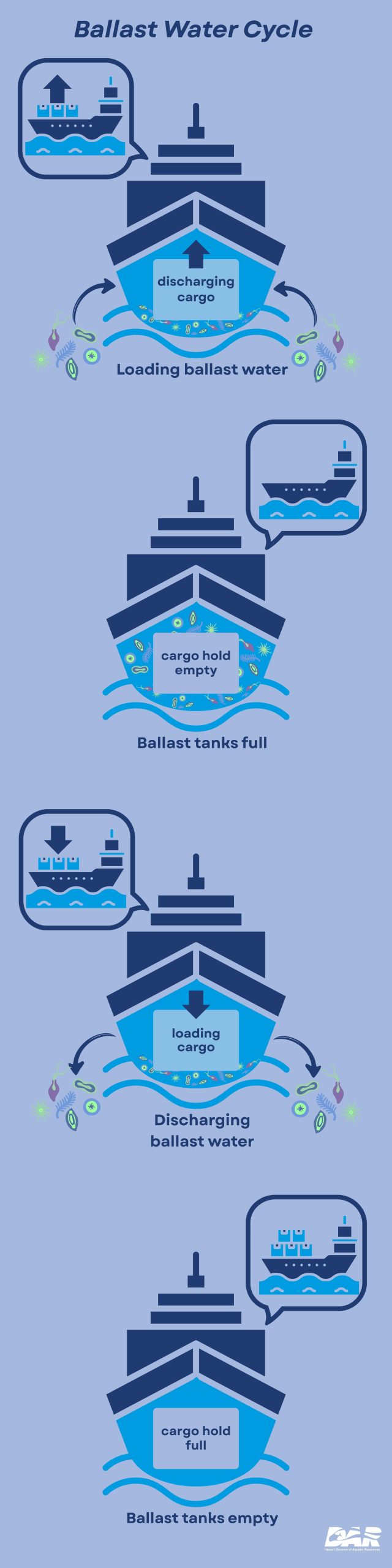
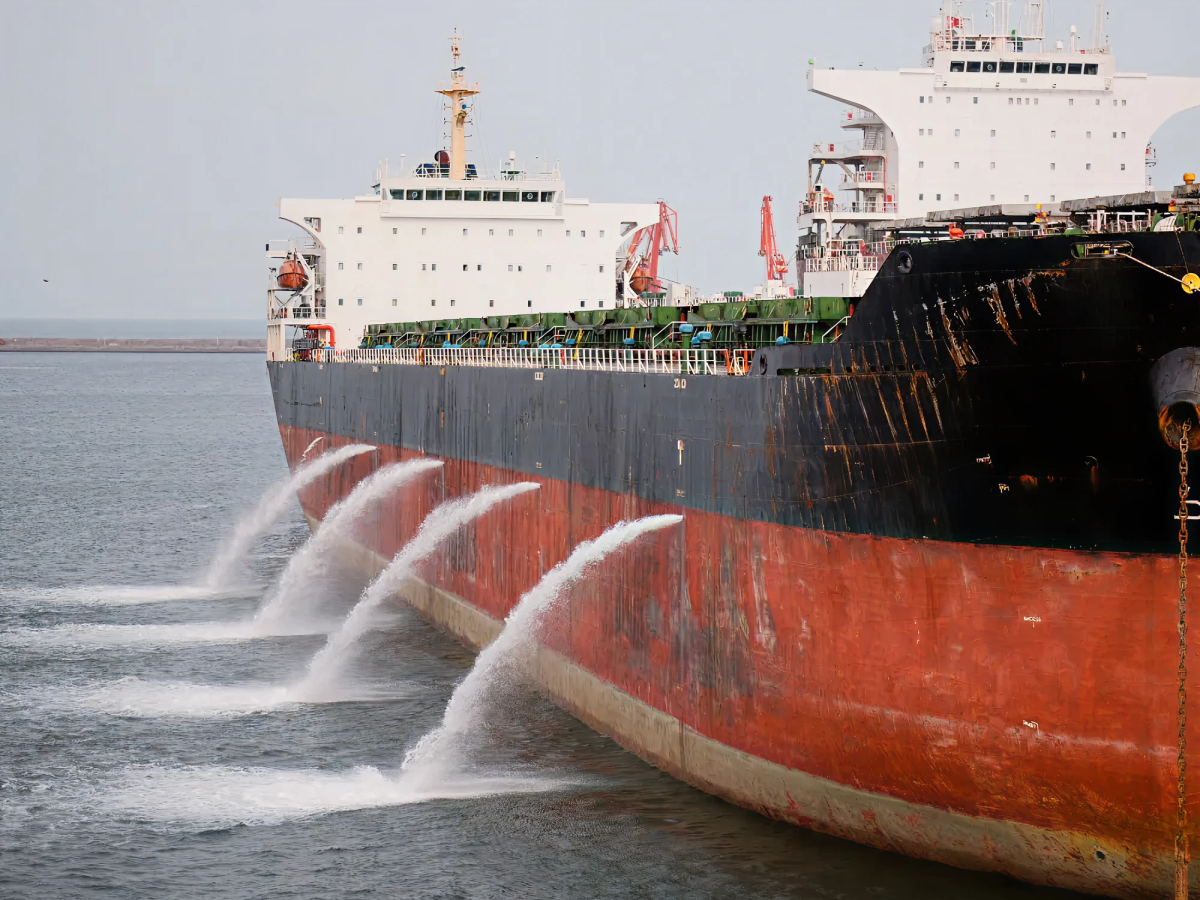
Ballast water is water taken up or released by a ship to provide stability and adjust buoyancy. Usually, ballast water is taken into ballast tanks when offloading cargo, and is discharged when cargo is being loaded. Ballast water quantities can be adjusted on the open ocean to compensate for weather, fuel consumption, and for the overall safety of the ship and crew. When ships take in water for ballast in port, they also take in organisms present in the water. These organisms are then transported and potentially introduced into the waters of the ports along the vessels’ routes as ballast tanks are emptied. The rapid, long-distance travel of modern ships provides a pathway for non-native marine species, including algae, invertebrates, and microbes, to be introduced to Hawai‘i via ballast water.
Ballast water is a well-known pathway for aquatic species introductions around the world, and Hawaiʻi is the most affected state in the U.S.. Once aquatic invasive species are introduced, they are difficult and costly to control, and eliminating them is rarely possible. Therefore, prevention is the most effective solution.
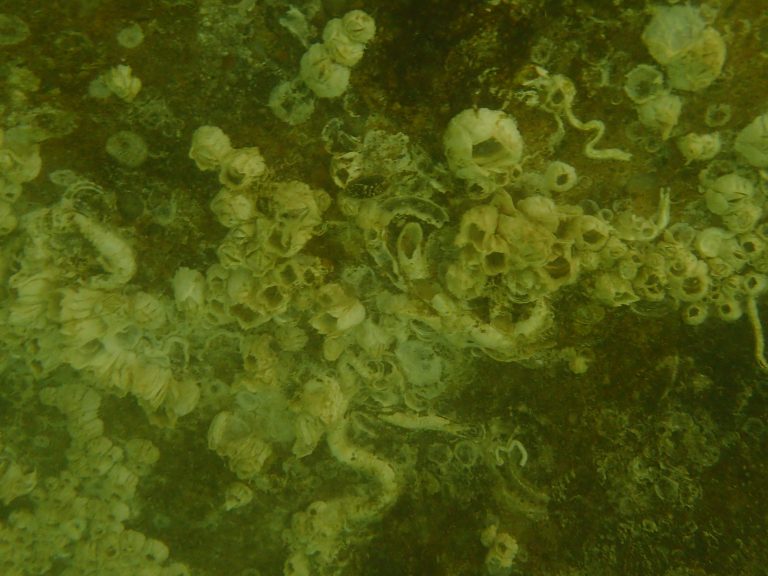
These introduced non-native species can have serious economic, cultural and environmental consequences. A well known example in Hawai‘i is snowflake coral (Carijoa riisei), which is believed to have arrived either as larvae in ballast water or on the bottom of a ship as hull fouling. First documented in Hawai‘i in 1972 at Pearl Harbor, snowflake coral has since spread throughout the Main Hawaiian Islands. This species readily colonizes artificial surfaces such as metal, concrete, plastic, and rope, contributing to its rapid spread. It threatens Hawai‘i’s marine biodiversity by monopolizing space and food resources and displacing native species. Snowflake coral has been observed growing on and smothering black coral colonies at an alarming rate. Its planktonic larval stage allows it to disperse widely via ocean currents, and it appears to have no significant natural predators in Hawai‘i. Other examples include marine invertebrates such as jellyfish (Phyllorhiza punctata, Cassiopea andromeda), worms (Chaetopterus sp.), barnacles (Chthamalus proteus) and crabs (Pachygrapsus fakaravensis).
Snowflake Coral in Hawaiʻi
Snowflake coral (Carijoa riisei) is believed to have been transported to Hawai‘i as larvae in ship ballast water or on the bottom of a ship as hull fouling. It was first discovered in Hawai‘i in 1972 at Pearl Harbor, and has since spread to all the Main Hawaiian Islands. It grows well on artificial surfaces such as metal, concrete, plastic, rope and many other surfaces. It is a highly successful invasive species and threatens Hawai‘i’s biodiversity by monopolizing food and space resources and by displacing native species. It has been observed growing on and smothering black coral colonies at an astonishing rate. It has a planktonic larval stage that facilitates dispersal via ocean currents, giving it the ability to spread over a wide area. It appears to have no significant predators in Hawai‘i.
Hawaiʻi's Regulatory Response
In 2000, the State’s Department of Land and Natural Resources was designated the lead agency for prevention and eradication of alien aquatic organism introductions via ballast water and hull fouling. New rules were developed with extensive discussions and consultation from the Alien Aquatic Organism Task Force (AAOTF). The AAOTF includes members representing Federal and State agencies, private shipping and boating industries, environmental organizations, and the scientific community. A public hearing for the proposed rules was held on June 28, 2007 and the Board of Land and Natural Resources approval them on August 10, 2007.
Learn how Hawai‘i manages ballast water to prevent invasive marine species and protect native ecosystems.