

Learn & Explore/Programs & Initiatives/Water Quality for Aquatic Resources
Water Quality For Aquatic Resources
Learn how DAR is incorporating and understanding of water quality and watershed connectivity into our management of aquatic resources
DAR's Water Quality Journey
“In 2024, DAR initiated a project to investigate our role in addressing degraded water quality in the state to support aquatic resource health. This effort was borne out of conversations in 2022 with community members who were concerned that degraded water quality was affecting aquatic organisms in our oceans, streams, and estuaries like fishes, corals, and limu.
This effort led to the creation of He Wai e Ola, a water quality strategy for DAR, in early 2026.
Read more below to learn about findings in the strategy and how DAR is incorporating them into our management of aquatic resources!
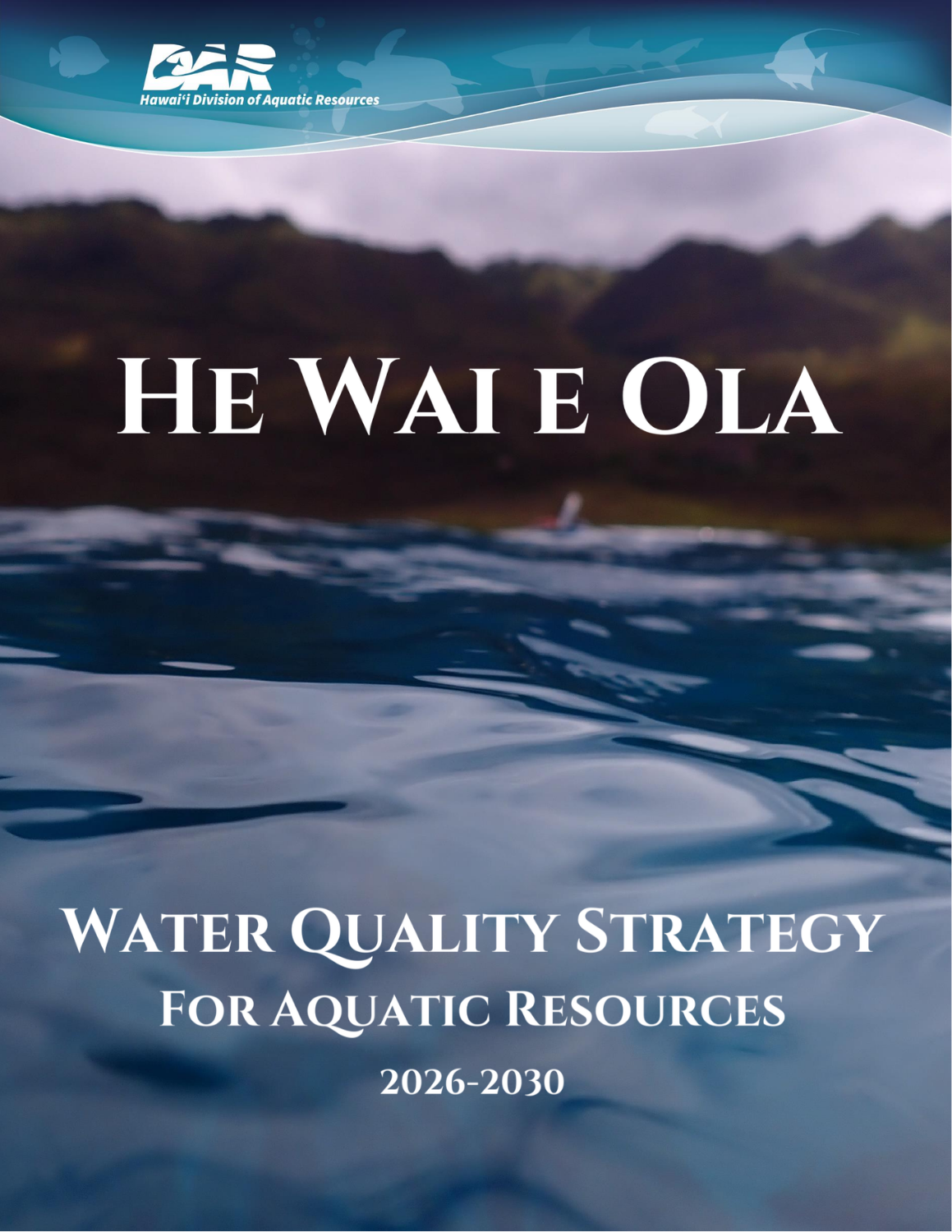
He Wai e Ola: Water Quality Strategy (2026-2030)
Wai (water) is one of the most important and unifying natural resources in Hawaiʻi, reflected through the traditional Native Hawaiian management of watersheds through the ahupuaʻa (land division) system. However, in a siloed western government framework based on subject-matter expertise, which does not reflect the values of traditional Native Hawaiian water management, it is difficult to effectively and sustainably manage wai as a resource that transcends modern jurisdictional boundaries. This is especially challenging when looking at the effects of water quality and quantity on the condition of the organisms living in aquatic ecosystems, exemplifying the need for greater watershed and water quality connectivity and inclusivity into management of aquatic organisms. In response to this need, the Division of Aquatic Resources (DAR) developed He Wai e Ola, a water quality strategy for aquatic resources, which identifies how DAR can collaborate across the state to support and uplift ongoing efforts as well as fill in gaps in the understanding of how aquatic life is affected by water quality.
The primary statewide issues identified by this Water Quality Strategy are as follows:
- Water quality is an uka (upland) to kai (ocean) issue, but the agencies that manage and work to improve it are siloed;
- Statewide monitoring efforts are not currently structured to identify effects of water quality on aquatic ecosystems;
- There is a lack of published literature of how water quality parameters are affecting aquatic species specific to Hawaiʻi, and;
- There is a need for both continued data collection and active solutions to improve water quality at the same time, which can be challenging due to a lack of capacity and funding.

To respond to this need, DAR has identified the following internal goals for the duration of this Water Quality Strategy from 2026-2030:
- Build internal DAR capacity to implement projects and partnerships to improve water quality for aquatic resources;
- Facilitate regular communication and collaboration between state, federal, and county agencies managing water quality, water quantity, and watersheds;
- Support the collection of biological data and water quality data in the same locations to facilitate better understanding of water quality effects on aquatic resources;
- Support research on the effects of various water quality parameters on culturally and commercially important reef fishes and other aquatic organisms, and;
- Build community partnerships to support restoration efforts to improve water quality.
He Wai e Ola was made public in January 2026, and DAR hired a Water Quality Coordinator to implement it. Through the coordinator’ work, DAR is developing standard operating procedures for water quality work, organizing internal water quality- and watershed-related projects, and continuing to facilitate collaboration with other state agencies and organizations that were initiated through the creation of this strategy. This strategy provides a comprehensive guide to sustaining and strengthening the connection between water and aquatic resources and improving water quality through collaborative efforts for positive outcomes for our kahawai (streams), muliwai (estuaries), and kai
What water quality parameters is DAR interested in?
Based on guidance from the Mauka to Makai Water Quality Working Group, which was formed to guide the creation of He Wai e Ola, our efforts focus on the following high-priority parameters:
- Sedimentation & Turbidity: Reducing land-based runoff that smothers coral reefs.
- Nutrients (Nitrogen & Phosphorus): Managing excess nutrient loading that leads to algal blooms.
- Fecal Indicator Bacteria (FIB): Addressing wastewater and cesspool contamination.
- Contaminants of Emerging Concern (CECs): Researching the impacts of pharmaceuticals and industrial chemicals.
DAR Water Quality Project Tracker
Follow along with the project tracker below to keep updated on where we are in the process of implementing He Wai e Ola. This project tracker will be updated quarterly. If you have any questions regarding these projects, please reach out to Ellie Jones ([email protected])