Learn & Explore/Species/Sea Turtles/Hawksbill Sea Turtle
Hawksbill Sea Turtle
Hawaiian name: Honu ʻea (or ʻea)
Scientific name: Eretmochelys imbricata


Description and Natural History
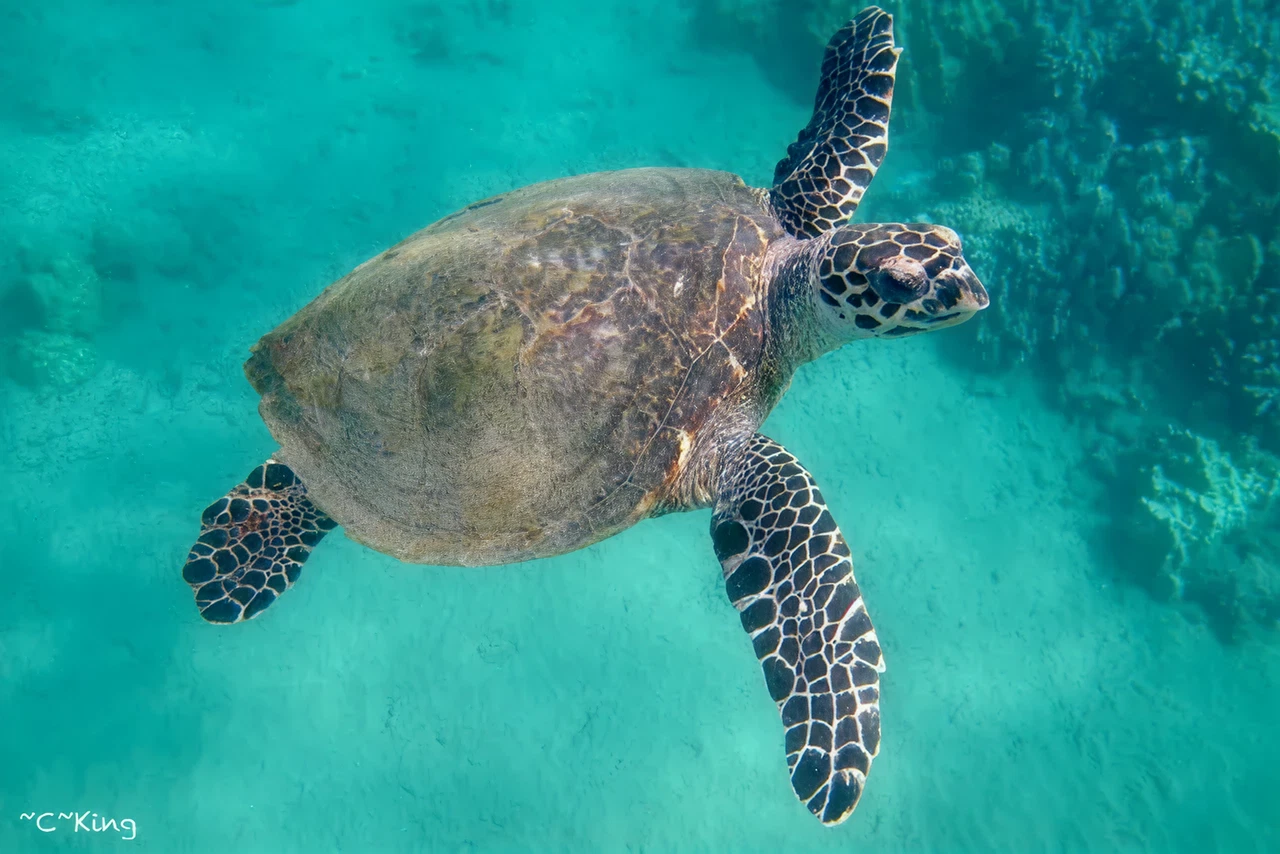
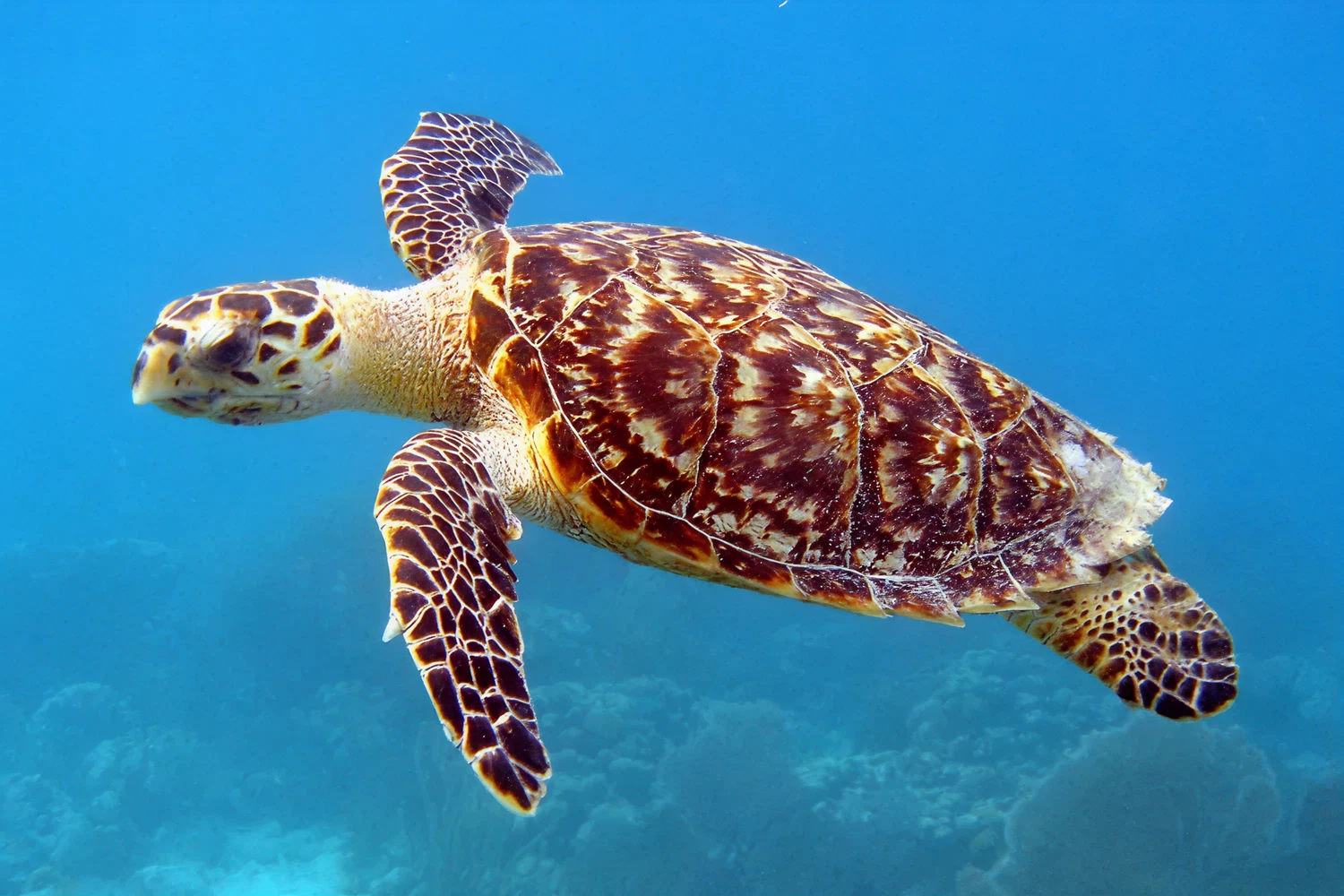
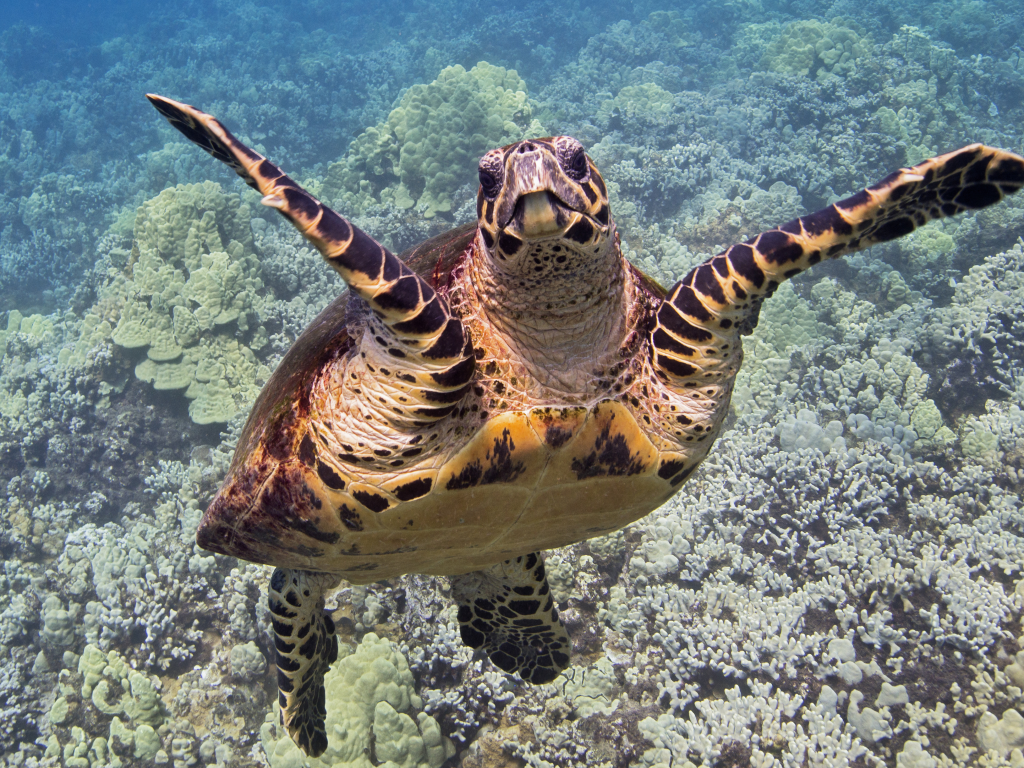
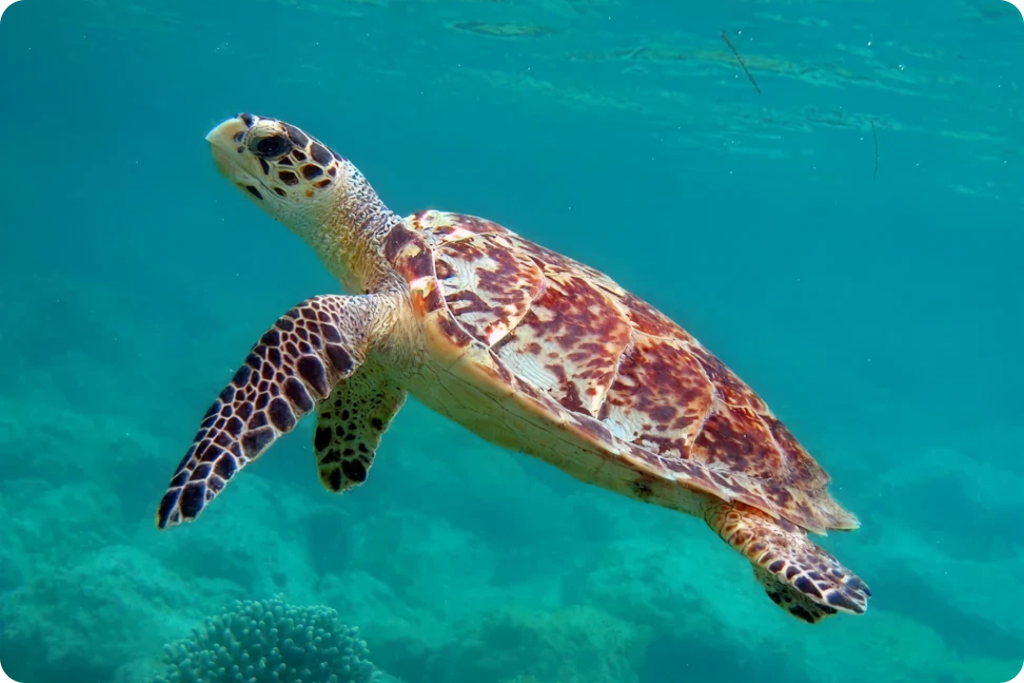
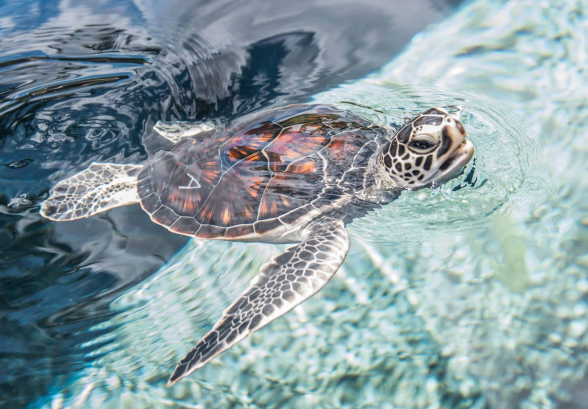
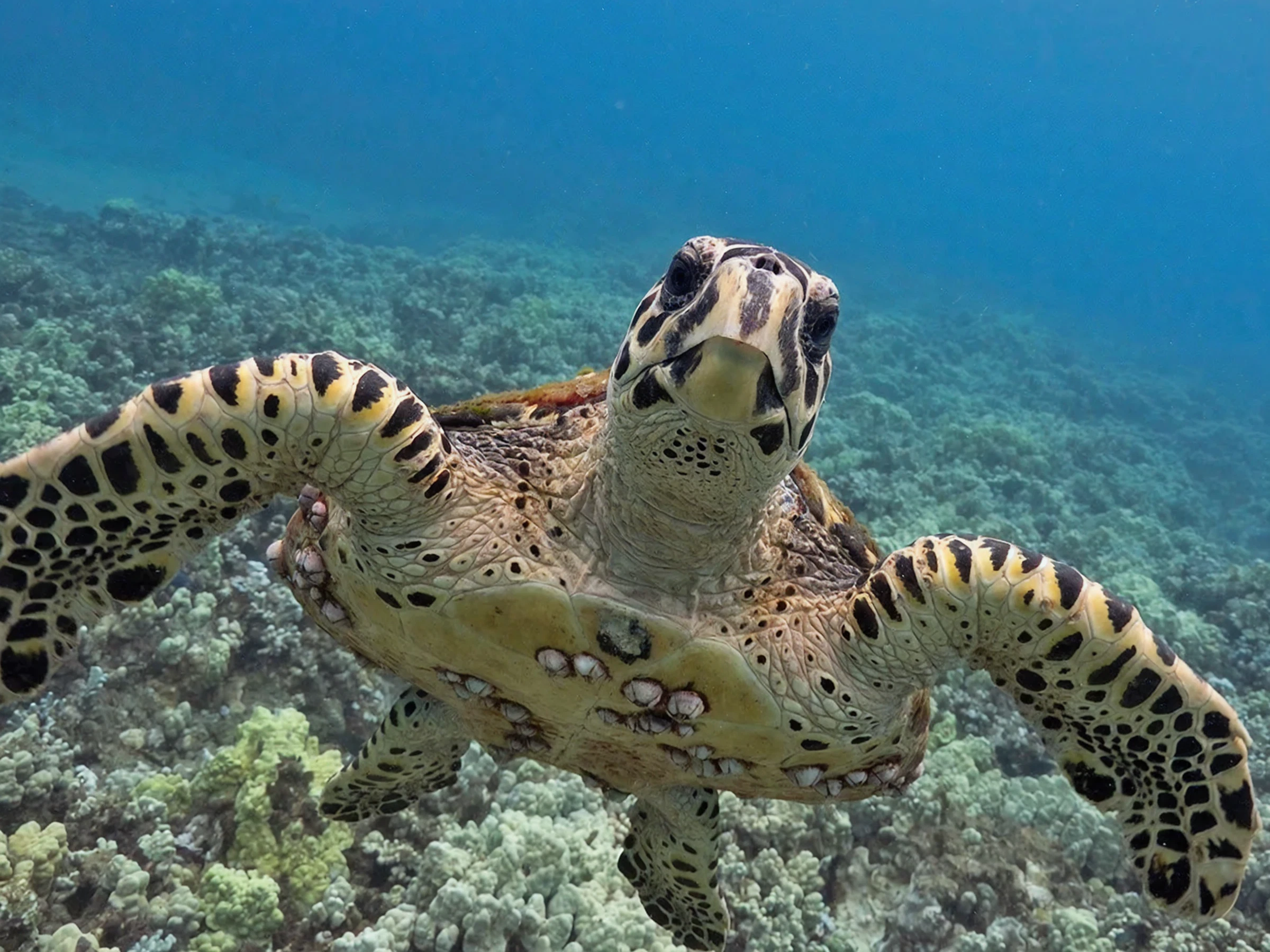
The Hawksbill Sea Turtle is a medium-sized marine turtle that gets its name from its unique beak-like mouth resembling a hawk’s. They are not as commonly seen in Hawai’i due to their low population numbers.
- Known in Hawaiian as Honu’ea or ‘ea
- Adult Hawksbills can reach approximately 3 feet in shell length and weigh up to 250 pounds, making them slightly smaller than green sea turtles.
- They have a beautiful “tortoise-shell” pattern on their carapace (top shell), which has caused their decline since they were hunted for years to make jewelry, fishing hooks, and other ornamental items.
- Recent studies suggest Hawaiian Hawksbills are a distinct genetic stock and nesting population, though a distinct population segment has not yet been formally established.
- Hunting hawksbills was banned in 1970 when they were officially listed as endangered under the Endangered Species Act (ESA).
The Hawksbill Sea Turtle
QUICK FACTS
LENGTH
About 3 feet
LIFESPAN
Up to 50+ years
THREATS
Climate Change & Habitat Loss, Predation, Fishing Gear & Marine Debris, Illegal Harvest & Other Human Impacts
Status and Protection
- Hawksbill sea turtles are protected federally by the ESA and locally by state laws such as HRS Chapter 195D and HAR 13-124.
- Hawksbills are listed as endangered under the ESA and throughout their global range. The IUCN Red list lists them as critically endangered globally.
- Like Green Sea Turtles, Hawksbills are managed by the state, alongside the USFWS and NOAA Fisheries.
- Hawksbills are rare in Hawai’i, compared to the green sea turtle, which outnumbers hawksbills by about 100 to 1.
Diet and Habitat
- Foraging sites in Hawai‘i are along the eastern (Hāmākua) coast of Hawai‘i island and the waters of west Maui.
- Diet varies but commonly includes marine sponges, invertebrates (like crabs and fireworms), and algae.
- Hawksbill meat can be harmful to humans because they consume sponges, making the meat potentially toxic and capable of causing disease or even death.
- Hunting hawksbills for consumption has been illegal since 1973.
Reproduction and Nesting
- Sexual maturity: Hawksbill sea turtles are estimated to reach sexual maturity between 20–35 years.
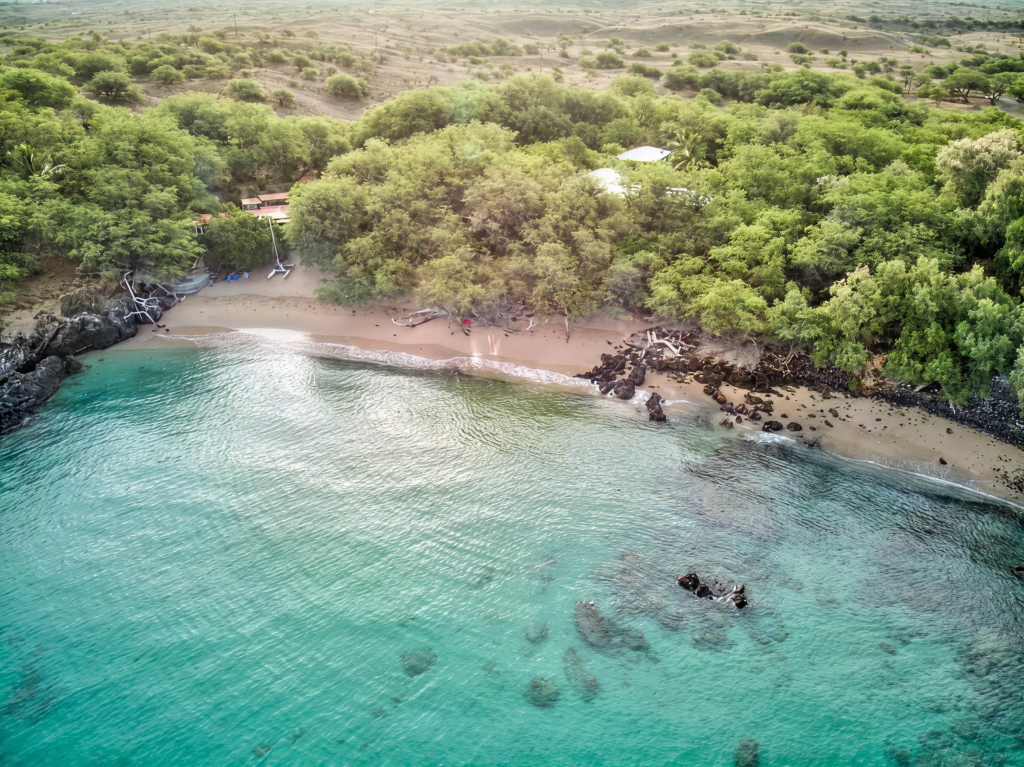
- Nesting in Hawai‘i: Nesting appears to be exclusive to the Main Hawaiian Islands, primarily along the southeast shoreline of the island of Hawai‘i (Kaʻū coastline), with a smaller number of nests on isolated beaches of Maui, Moloka‘i, Lāna‘i, and Kauaʻi. About 20–25 females nest annually.
- Nesting season: May–December.
- Clutch size: Approximately 130–160 eggs.
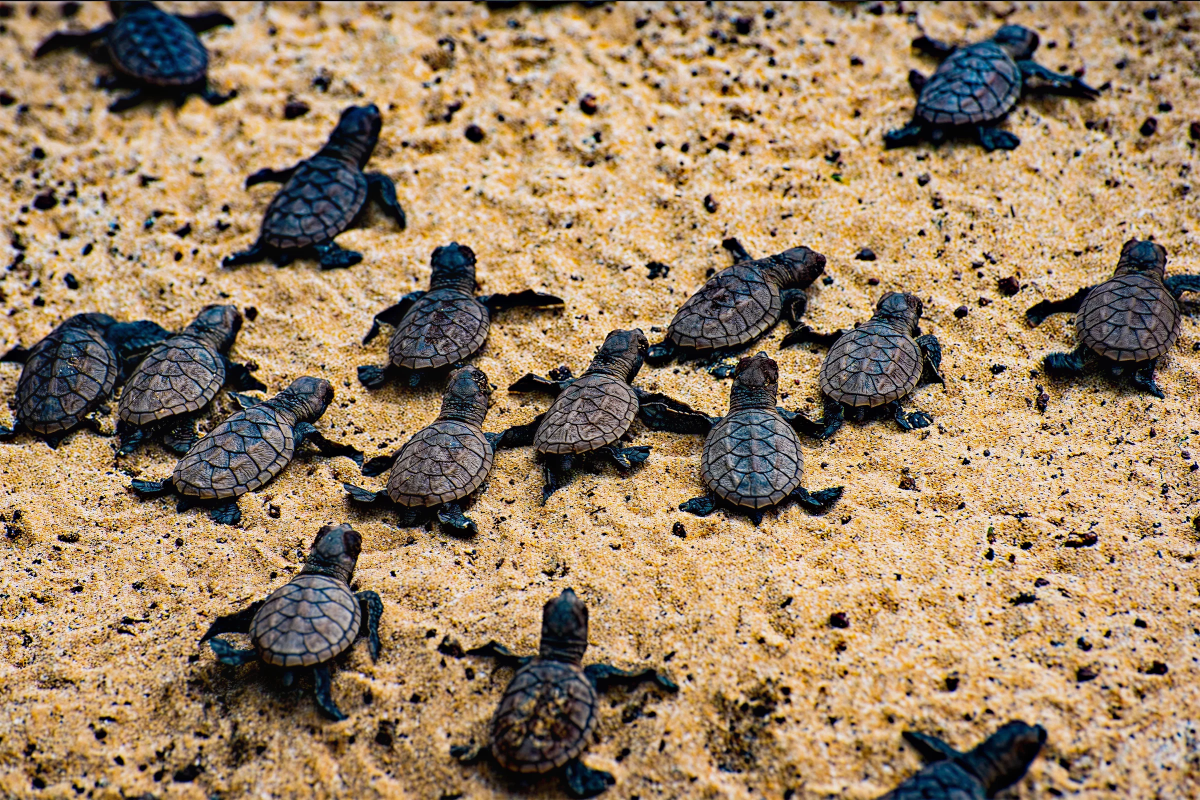
- Hatchlings: Generally emerge after about two months of incubation and head to the ocean, where little is known about their pelagic, early-life stage.
- Interesting Fact: The sex of hawksbill hatchlings are also temperature dependent like green sea turtle hatchlings. Cooler incubation temperatures produce males, while warmer incubation temperatures produce females, and a combination of temperatures will produce both.
Threats
Predation
Hawksbill turtle eggs and hatchlings in the main Hawaiian Islands are vulnerable to predation by non-native animals, including cats, dogs, mongooses, rats, and pigs.
Dense non-native vegetation can block hatchlings from emerging.
Fishing Gear and Marine Debris Entanglement
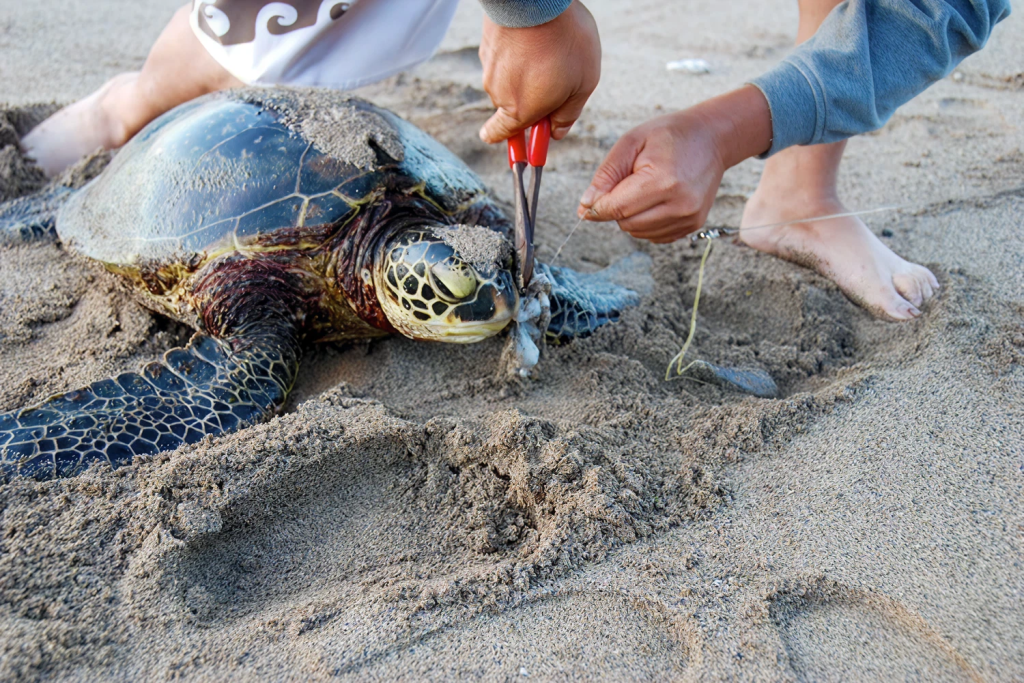
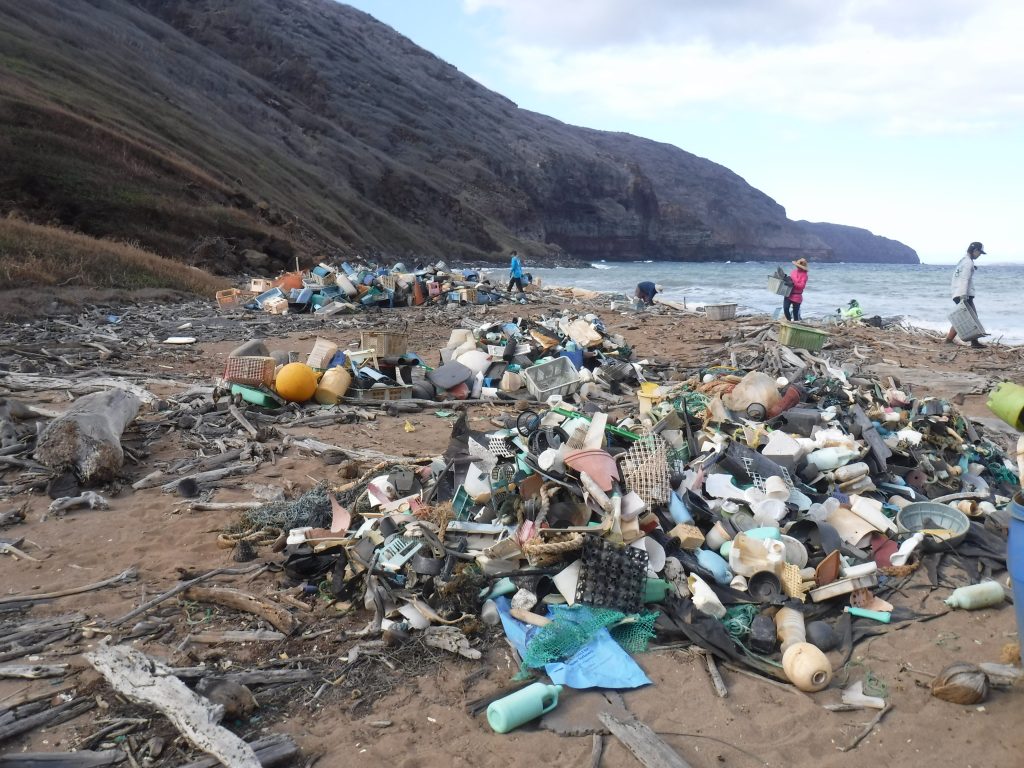
Hawksbill turtles are vulnerable to entanglement in marine debris and discarded fishing gear such as fishing lines, hooks, and nets. These materials can prevent turtles from surfacing to breathe, swimming effectively, avoiding predators, or feeding and reproducing. Ocean currents often concentrate debris in certain areas, increasing the risk of entanglement, with fishing lines, hooks, and nets posing the greatest threat. Public tip: Help protect turtles by removing fishing gear and debris from shorelines whenever it is safe to do so.
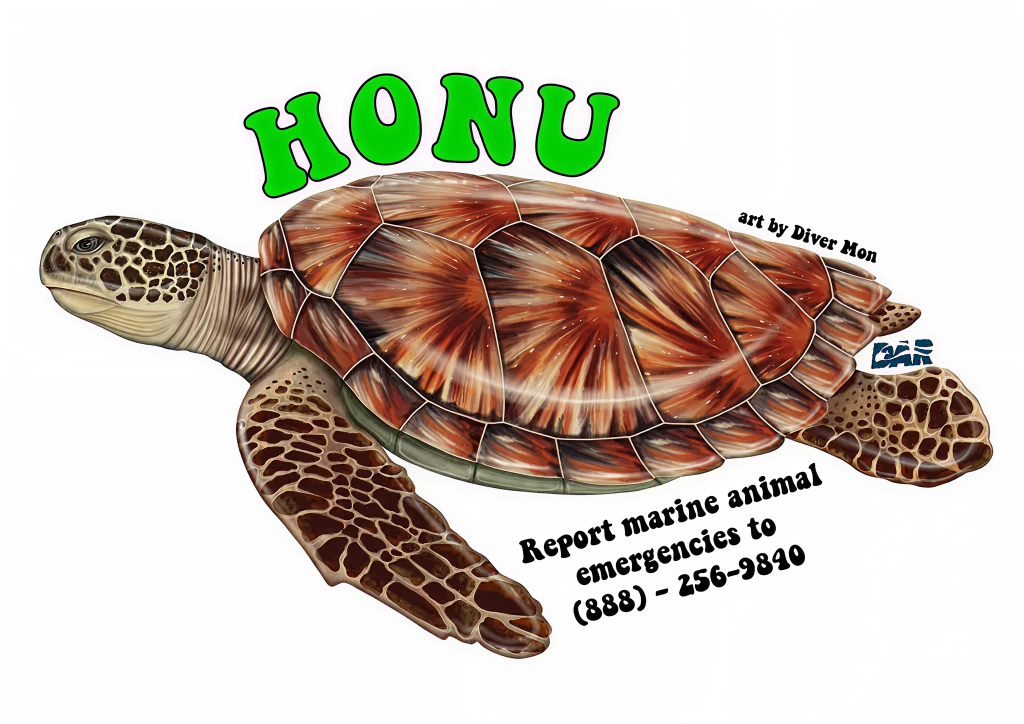
Visit our Fishing Around Protected Species Webpage to learn how to fish around Hawai’is protected species properly. If you see any injured, entangled or dead hawksbill sea turtle, please call the statewide marine animal hotline number at 888-256-9840. If you would like to get a Honu’ea sticker with the marine animal hotline number like below, please contact your local DLNR-DAR office.
Climate Change and Habitat Loss
Hawksbill turtles are vulnerable to entanglement in marine debris and discarded fishing gear such as fishing lines, hooks, and nets. These materials can prevent turtles from surfacing to breathe, swimming effectively, avoiding predators, or feeding and reproducing. Ocean currents often concentrate debris in certain areas, increasing the risk of entanglement, with fishing lines, hooks, and nets posing the greatest threat.
Public tip: Help protect turtles by removing fishing gear and debris from shorelines whenever it is safe to do so.
Intentional Take and Accidental Bycatch
Hawksbill turtles in Hawaiʻi continue to face threats from intentional take and accidental bycatch despite federal and state protections. Intentional killing, harvesting, harassment, and other disturbances place stress on these endangered turtles. Even seemingly non‑lethal interactions—such as touching, feeding, or approaching turtles—or impacts from recreational, shore‑based fishing can result in stress, injury, entanglement, or death.
Literature Cited
1. NOAA Fisheries. (2023, July). Green Turtle.
2. Maui Ocean Center. (2023). Hawaiian Green Sea Turtle.
3. Seminoff, J.A et al. (1970, January). Status Review of the green turtle (Chelonia mydas) under the Endangered Species Act.
4. NOAA Fisheries. (2019, August). There and Back Again: A Turtle Biologist’s Tale.
5. NOAA Fisheries. (2017, April). What causes a sea turtle to be born male or female?
6. NOAA Fisheries. (2015, June). A sea turtle listicle. Fascinating Facts.
7. NOAA Fisheries. (2021, January). Fibropapillomatosis and Sea Turtles – Frequently Asked Questions.
8. NOAA Fisheries. (2023, October). Hawksbill Turtle.
9. Gaos, Alexander R. et al. (2020, June). Conservation Genetics Hawaiian hawksbills: a distinct and isolated nesting colony in the Central North Pacific Ocean revealed by mitochondrial DNA.
10. NOAA Fisheries. (2020, July). Hawksbill sea turtles are truly Hawai’i locals.
See Another Turtle
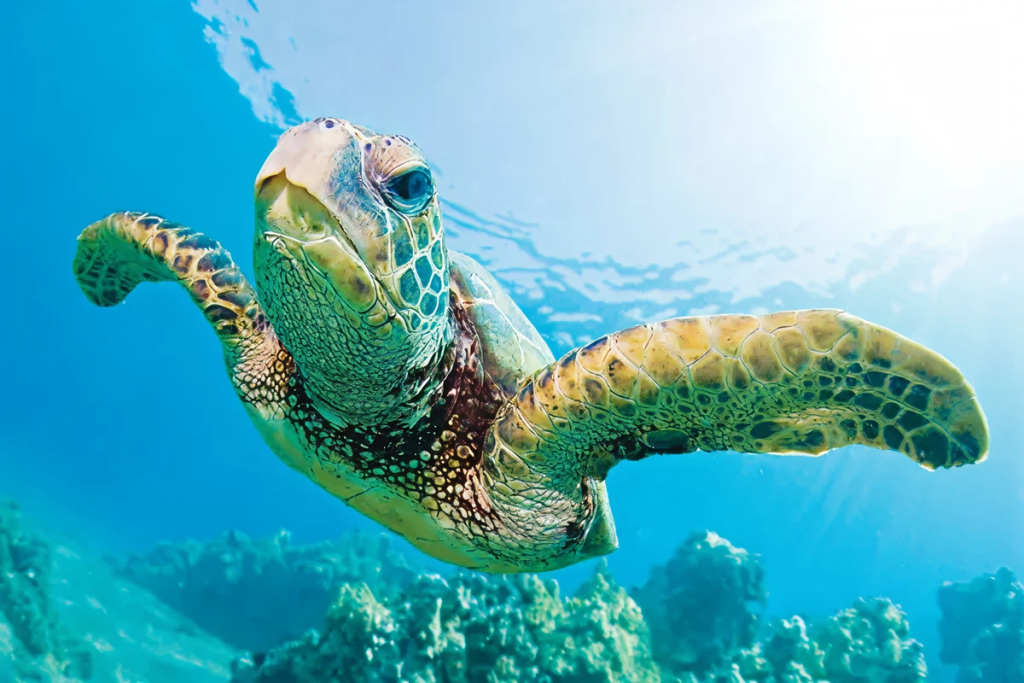
Green Sea Turtle
Hawaiian name: Honu
Scientific name: Chelonia mydas