

Science & Data/Research & Monitoring/Fish Tagging Projects
Fish Tagging Projects
Tracking Hawaii’s nearshore and bottom fishes to understand their movement and growth to support sustainable fishing.
Fish Tagging and Tracking
- Hawai‘i’s nearshore fish play an important cultural and recreational role and are prized for both food and fishing experiences. Key species include ulua, pāpio, moi, ‘ō‘io, and goatfish (weke and related species).
- Due to their popularity and heavy fishing pressure, resource managers need detailed knowledge of life histories and movement patterns.
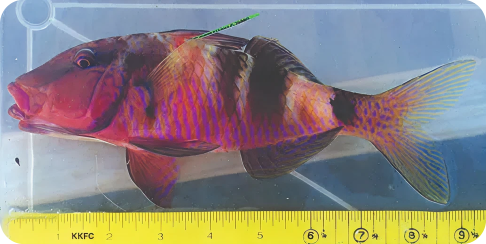
Mark and Recapture Studies
- DAR conducts mark and recapture studies with volunteer anglers to learn about growth rates and movement patterns of nearshore fishes.
- Free tagging kits are provided to fishers, who measure, tag, release, and report data to DAR.
- Anglers who recapture tagged fish receive participation gifts such as t-shirts and posters.
- Previous volunteer tagging efforts have targeted pāpio, ʻulua, moi, and goatfishes.
Acoustic Tagging
Acoustic and bottomfish studies are included based on available reports or publications. Some of this work has occurred historically, but content is limited to documented activities.
Bottomfish Studies
- Popular deep-water bottomfish such as opakapaka, kalekale, and onaga are highly sought for food and cultural value.
- Managers need data on preferred habitats and movement patterns to ensure sustainable fishing.
- By deploying receiver networks and tagging bottomfish with acoustic tags, biologists can track movements and gather critical information for effective management.
For full project details, check out the Sportfish Restoration Fund page