

Science & Data/Research & Monitoring/Non-Commercial Fisheries
Non-Commercial Fisheries
Your fishing counts — join the effort to protect Hawai‘i’s marine resources through better, community-driven data.
Hawaiʻi Marine Recreational Fishing Survey (HMRFS)
Your Catch Counts!
A cooperative project funded by:

What is the HMRFS?
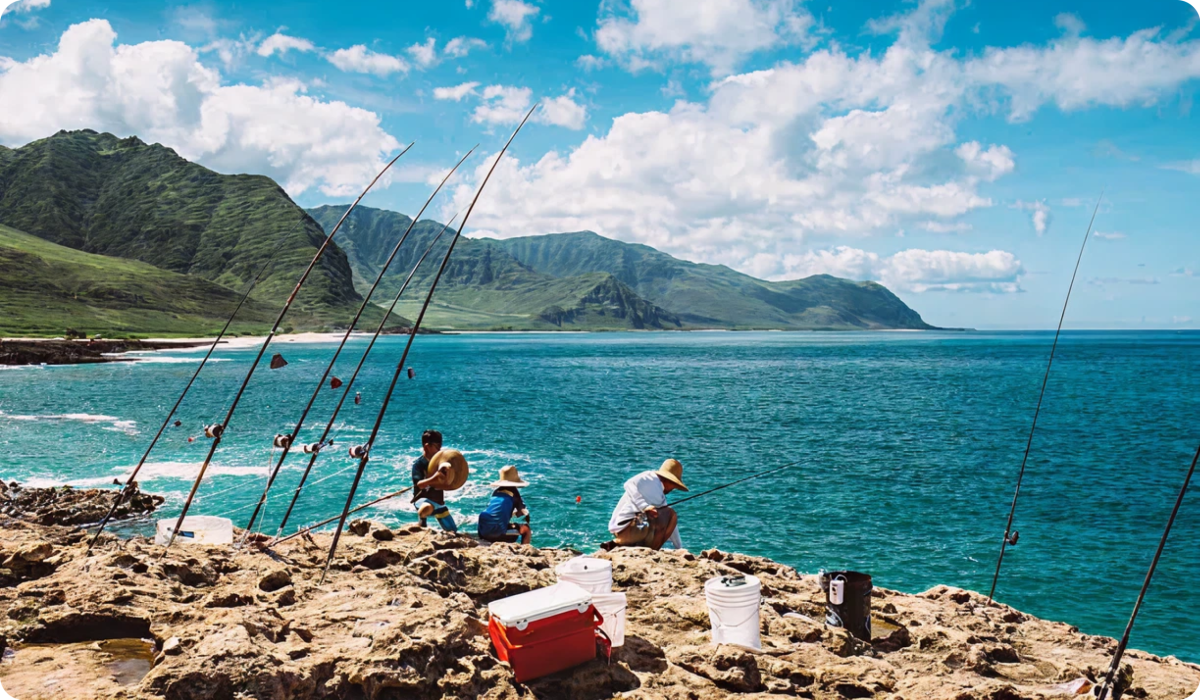
For many residents of Hawaiʻi, non-commercial fishing includes both recreational and subsistence practices, as well as the continuation of cultural values—such as sharing catch with friends and neighbors and contributing to gatherings and events. Fishing tourism also plays an important role in Hawaiʻi’s economy, offering opportunities for visitors to fish through charter services or on their own. However, with a steadily growing population and tourism industry, fishing pressure—along with other stressors like development, pollution, and runoff—is increasing, placing added strain on nearshore resources. Understanding both the biological impacts and the social importance of recreational and subsistence fishing is therefore essential to effective management, helping inform policies that sustain quality fishing opportunities for future generations.
The Hawaiʻi Division of Aquatic Resources (DAR) began working with NOAA Fisheries in 2001 to collect marine non-commercial fishing data through the Hawaiʻi Marine Recreational Fishing Survey (HMRFS). DAR and other state and territorial agencies partner with and receive funding from NOAA Fisheries through the Marine Recreational Information Program (MRIP), which develops, administers, and certifies survey methods while establishing national standards. Decisions on survey implementation and data collection are made at the regional level. To estimate the number of non-commercial fishing trips taken by shoreline and private boat fishers in Hawaiʻi, NOAA Fisheries distributes a mail survey to a sample of residential addresses statewide. To estimate catch, DAR staff collect data at public fishing sites across Hawaiʻi Island, Maui, Molokaʻi, Oʻahu, and Kauaʻi, covering a range of fishing methods including rod and reel, spear, net, and other gear.
Background
- Fish Stock Assessments: The data helps scientists understand how fishing affects fish populations.
- Protecting Fishing Access: If catch limits are ever decided, this data makes sure non-commercial fishers are counted and still have a chance to fish.
- Planning: It helps decide where to put things like new boat ramps or artificial reefs.
- Hawaiʻi Culture: Fishing is a big part of the culture, and this survey helps recognize the social importance of fishing, like providing food for family and friends.
How Can You Help?
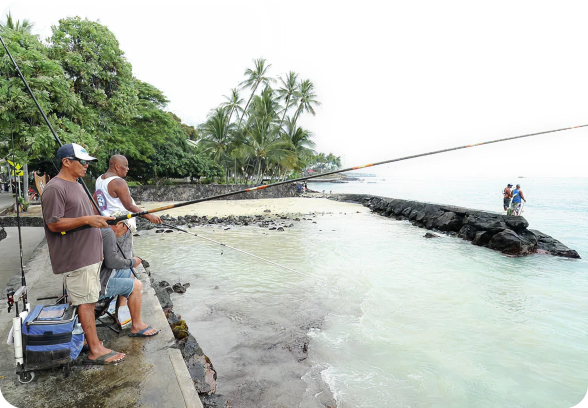
The interviewers are not law enforcement, and your personal information may be used only to verify that you were actually interviewed and is kept private.
- Fill out the mail survey if you receive one.
- Participate! If a surveyor approaches you while you’re fishing, please cooperate and share your information.
For more details, you can read the HMRFS Fact Sheet.
Additional Information
Sample Survey Forms
Other Resources
DAR HMRFS Office
Department of Land & Natural Resources, Division of Aquatic Resources
1151 Punchbowl Street, Room 330, Honolulu, HI 96813
Voice: 808-587-0100
FAX: 808-587-0115
DAR Survey Manager
Thomas Ogawa
Federal Office
U.S. Department of Commerce, National Oceanic & Atmospheric Administration
NOAA Fisheries
1315 East-West Highway, Silver Spring, MD 20910
NOAA Fisheries, Non-Commercial Data Program Leads
Katherine Papacostas, Richard Cody, and John Foster
[email protected]