Learn & Explore/Species/Introduced & Invasive/Asiatic Clam

Asiatic Clam

Category: Invasive

A fast-spreading freshwater clam that disrupts streams and competes with native species.

Asiatic Clam (Corbicula fluminea)

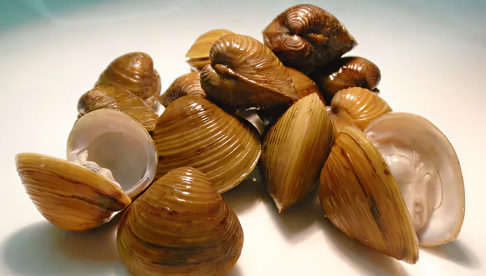
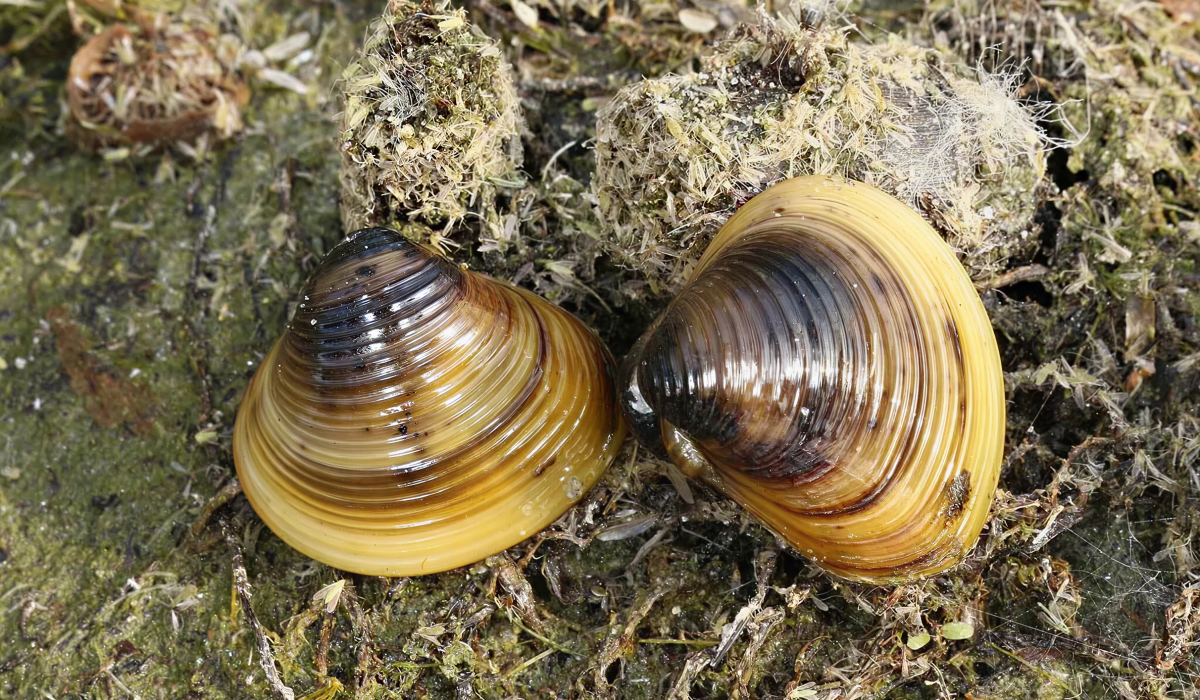
  • Small, light colored bivalve 2

  • Shell color ranges from yellow-greens, browns, and hues of purple 2

  • Reaches a maximum size of 50 mm 3

976312b8dc07ff1231ff1b575aef6035b67ab65a

Habitat

  • Fresh and Brackish water

  • Prefer fast, flowing water because they require high levels of dissolved oxygen 2

  • Usually found in sand and clay substrates 2

  • Low tolerance of cold temperatures 2

Impacts & Concern

  • Large numbers of Asiatic Clams can clog power and water pipes 2

  • Alter benthic substrates and compete with native species 3

4b39e65f14b5b7936f5b5e2d940b2e6af8ec76be

Introduction

  • First seen at a farmers market in Kailua, Oʻahu in 1977 2

  • Thought to have been smuggled in for food 3

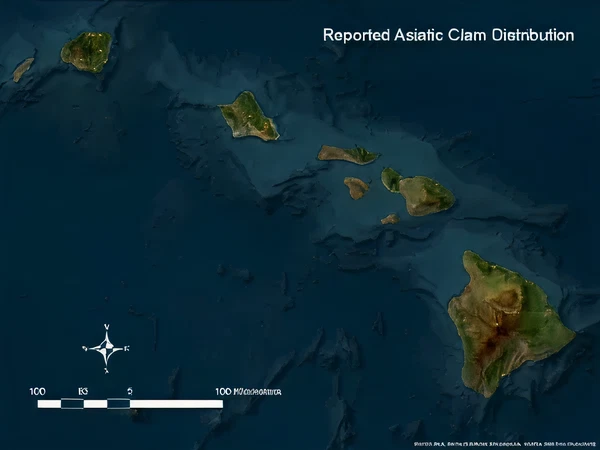
Distribution in Hawaiʻi

  • Kauaʻi: Present

  • Oʻahu: Present

  • Molokaʻi: Not documented

  • Lānaʻi: Not documented

  • Maui: Present

  • Hawaiʻi Island: Not documented

References

  1. Christennsen, C. (2016). Alien Freshwater Clams in the Hawaiian Islands. Bishop Museum Occasional Papers, 118, 1–4. https://hbs.bishopmuseum.org/pubs-online/pdf/op118p1-4.pdf.

  2. Foster, A.M., Fuller, P., Benson, A., Constant, S., Raikow, D., Larson, J., and Fusaro, A. (2021). Corbicula fluminea (O. F. Müller, 1774): U.S. Geological Survey, Nonindigenous Aquatic Species Database, Gainesville, FL, https://nas.er.usgs.gov/queries/FactSheet.aspx?speciesID=92
  3. Allen, U. (2019). Corbicula fluminea. [Data sheet]. CABI. https://www.cabi.org/isc/datasheet/88200

Other Introduced & Invasive