


State of Hawai'i
Division of Aquatic Resources

A Unique Fishing Class
DAR Education Specialist John Kahiapo regularly teaches a fishing class at Wailoa Station in Hilo, Hawai‘i Island. The class targets those who have violated fishing regulations if the prosecutor, public defender, and judge deem it appropriate. Fishers who attend the class learn the rules to avoid violating fishing regulations in the future. Then, they can take that knowledge back to their communities to help increase compliance with fishing regulations on Hawai‘i Island.
The class covers regulated species, marine protected areas, protected marine animals, and fishing gear. He also teaches people how to use materials he provides, such as regulations booklets and the popular measurement guides that give the minimum size, season, and bag limit for each regulated species. The class takes two hours and goes over everything a fisher needs to know to stay on the right side of the law.
“Fishing is a privilege that we get to enjoy in Hawai‘i,” Kahiapo said. “It’s every fisher’s kuleana to familiarize themselves with the rules.”

Education for All Ages
Kahiapo teaches other introductory fishing education classes to children as well as adults. He also travels to schools to give talks on various aquatic resource topics. Part of his job as an education specialist for DAR is to help people understand what the rules are and why they exist. For example, size restrictions ensure that fish get old enough to spawn before they are taken from the ocean. Regulations are part of the way the State government hopes to make sure that there will still be fish for future generations.
“The rules all exist for a reason,” Kahiapo explained. “With the ‘ama’ama, also known as striped mullet, some are actually capable of spawning when they are seven inches long. However, we want to make sure they produce a few generations before they can be taken. That’s why the regulations require them to be 11 inches or more before they are taken.”
“In-person courses like this are helpful,” Kahiapo said. “People can touch the gear and understand how it is used, ask questions, and have discussions about things they don’t understand.”
Managing our Aquatic Resources
Education is a crucial aspect of DAR’s mission, and it’s not just for fishers. Tour operators, conservationists, people who enjoy ocean sports, and many other stakeholders benefit from understanding responsible resource management. It is only with community support that the government can succeed in being a good steward of land and ocean resources, and education is a meaningful way to get them involved.
“This course is also given at different public events,” Kahiapo said. “I set up a fishing education table for groups who request it, and in this way we can help communities know everything they need to know about marine life management.”
DAR provides a variety of helpful information to the public. For example, fishers who take Kahiapo’s class go home with a copy of the most recent fishing regulations, a guide to regulated species and how to measure them, and a manual on fishing in Hawai‘i. These materials ensure that what they learned in the course will stick with them and be easy to share.
Fearless Fish

If you hear divers talking about being more scared of ulua (Giant trevally) than sharks, they are most likely talking about diving in Papahānaumokuākea! This is one of the few places in the Hawaiian archipelago where it is guaranteed that on every dive you will encounter either an ulua or a shark, usually multiple! And if you’re unlucky, there’s a higher chance of you getting bitten by an ulua than a shark. Yes, that has happened before! But that is what a healthy, marine ecosystem looks like – a truly thriving reef should be dominated by apex predators such as sharks, jacks, and snappers. Due to the remoteness of Papahānaumokuākea, wildlife are not used to seeing humans and therefore are very curious. Sometimes too curious. It’s not uncommon to get close fly-bys from ulua and sharks!
RAMPing up Research
This past summer, the Division of Aquatic Resources’ (DAR) Aquatic Biologist Anita Tsang and senior technician Richard Chen from the Aquatic Invasive Species program had the privilege to join the 2025 National Oceanic & Atmospheric Administration’s (NOAA), Office of National Marine Sanctuaries (ONMS) Reef Assessment and Monitoring Program (RAMP) research cruise up to Papahānaumokuākea. The 24-day trip included stops at Lalo (French Frigate Shoals), Kamole (Laysan), Kapou (Lisianski), Hōlanikū (Kure), Manawai (Pearl & Hermes), and Kuaihelani (Midway) where fish, coral health, limu, and urchin surveys were conducted.

Research on the Reef
Anita was diving as part of the coral health survey team, along with Kailey Pascoe (PhD candidate at University of Hawai‘i at Hilo and researcher from MEGA Lab) and Ethan Nash (NOAA). Coral health surveys included doing fish species and size counts, documenting all coral species and health conditions along the study transect, and conducting Structure from Motion (SfM) surveys that allow the creation of 3D photomosaic models of the reef. These coral health surveys contribute to a long-term dataset that is about 20 years long and provide resource managers important information around coral conditions in Papahānaumokuākea such as presence (or absence) of diseases, bleaching, predation, and other signs of stress.

Interestingly, even though Papahānaumokuākea is generally considered a ʻpristine’ area with healthy reefs, it was saddening to see that several reefs out there were still recovering from past bleaching and hurricane events. Reefs that had suffered high coral mortality from the 2014/2015 bleaching event and the hurricane that hit Papahānaumokuākea in 2018 still had low coral cover, but it was promising to see many new recruits slowly coming back. Nevertheless, there were still healthy reefs with high coral cover, and it was amazing to see a lot of coral diversity that is not commonly seen in the Main Hawaiian Islands!
Looking Closely at Limu

Richard participated in the limu (algae) and urchin surveys which were new additions to the RAMP cruise this year. Historically limu has been understudied on these RAMP cruises, relative to corals and fishes. However, limu and urchins play an important ecological role in coral reefs. Limu is a major food source for many marine life such as fishes and urchins, and the grazing or feeding on limu by these animals is critical to maintain balance on the reef as algal blooms can overgrow and smother corals. Monitoring limu and urchins allow managers and researchers to get a better picture around the general health of a coral reef.
A nuisance alga, first noted in 2016, inspired this year’s limu surveys. In 2016, researchers discovered an unusual red limu growing in thick mats at Manawai. Within three years, subsequent cruises were shocked to find that this unknown alga had begun to spread rapidly over multiple reefs, killing a lot of corals and other native limu. In 2020 the limu was assigned the name Chondria tumulosa, and by 2023 it had spread to Kuaihelani and Hōlanikū. During the RAMP cruise this year, anecdotal observations revealed that a lot of the C. tumulosa have appeared to die back, but there were still several reefs that had high cover of the red alga and many reefs that were previously covered by C. tumulosa were dead. The limu and urchin surveys will allow us to continue to monitor C. tumulosa populations and other unusual changes in benthic composition. DAR is also currently working with University of Hawaiʻi researchers and NOAA to better understand the life history characteristics of this limu and what might cause these blooms.
Seven Sentries
DAR is one of the seven co-managing agencies that work together as a collective to manage and preserve the biological, cultural, and historical significance of the Papahānaumokuākea Marine National Monument. The State of Hawaiʻi is also a co-manager of Papahānaumokuākea National Marine Sanctuary with NOAA ONMS. DAR hopes to continue to partner with NOAA ONMS on the RAMP research cruises to better manage and protect the unique resources of Papahānaumokuākea and is looking forward to ongoing collaboration and expansion of co-management partnerships to support Papahānaumokuākea.
Authors: Anita Tsang and Richard Chen


2025 Trout Season Summary


The Art of Casting
The midmorning sun already sits high in the sky, its rays piercing the shallow waters of Waikiki. The fisherman moves steadily through the cool, waist-high waves as they lap gently against him, his throw net segmented into thirds and ready for launch. Several yards ahead, his quarry– a school of weke(goatfish), stirs anxiously beneath a pier. They are familiar with this scenario and the danger it presents, but they are not yet ready to risk potential predators awaiting them in deeper waters. “The shade helps them feel safe.” explains fisherman Neal Hazama. With decades of experience guiding his movements, Neal gauges the remaining distance, braces against the wind, and throws! The net blossoms like a flower in mid-air before splashing down in a near-perfect circle over the heart of the school, its weights quickly bringing it to the bottom. Success! Over two dozen of the goatfish have been ensnared, and Neal begins to haul his catch to shore. These fish are not destined for the dinner plate however. Instead, they have the honor of contributing to over 25 years of scientific data, before being released back where they were caught.
The Process of Processing
Every month Neal conducts a shoreline sampling survey of Waikiki with his thrownet, starting from Kaisers and ending all the way at the Diamond Head lighthouse. The purpose of this ongoing study helps to assess not only the biodiversity of Oahu’s nearshore waters, but the species density as well. Often, Neal is able to identify the species, number, and size range of the fish by sight alone, but it is when he lets his net fly, that things really get interesting.

As Neal approaches the beach, I hurry to fill a five gallon bucket with seawater and haul it to dry land. A portable air pump is added to maintain oxygen levels and as the fish are dropped in, I produce a measuring shoot and tagging kit from our dive bag. With practiced efficiency, Neal measures the length of the fish from snout to tail fork, while I record the data. Then, a plastic tag with an identification number and phone number is imbedded just under the animal’s skin before we release it out to sea once more.
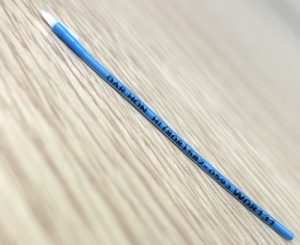
If you or anyone you know catches this fish in the future, feel free to keep your catch, but we appreciate it if you contact the included phone number to report it (808.587.0593), the tag can help DAR identify the individual and compare how much it has grown and how far it has travelled since its original capture. The over two decades’ worth of cumulative data from these catching and tagging studies is critical in influencing some of the regulations put in place with regards to fish bag limits and catch sizes. It isn’t only weke, either. Moi(thread fin) are also tagged, but visual confirmation still provides valuable data on all species, especially those valuable to fishermen, such as aholehole(flag tail), ʻōʻio(bonefish), and kala(unicorn fish).
Cultivating Community

Neal’s work seldom goes unnoticed by the public and we are frequently engaged by visitors and locals alike, providing a prime opportunity to engage with them in an impromptu information and education session. Some especially enthusiastic and lucky keiki are even permitted to help with the fish release as a way to encourage their burgeoning interests in fishing and marine biology. There are many more watermen and lifeguards who already recognize Neal and don’t hesitate to great him with a smile and a wave of aloha.
Neal always returns the smile, “After doing this some 25 years, you start to remember people.”
At the same time, Neal is always considerate to give space to others using the sea, such as kids bodyboarding, nearshore fishermen, and even monk seals sleeping on the beach. As important as this study is, the ocean is a shared space and it is important to maintain good relationships. Perhaps equally valuable to the data gathered from this shoreline sampling are the lessons it imparts: to live with aloha.
by Charles Lee
DAR Education Specialist of Oahu


Upon my first step into Heʻeia fish pond, the soft mud swallows my boot well past the ankle; the suction would have surely pulled it off my foot, had it not been attached to thick wader overalls that kept the waist-deep waters from soaking my clothes. Like my legs, my hands were sheathed in rubber gloves with sleeves that ran past my elbows, but these were not to keep the water out…they were for the stings.
Ahead of me, my prey appeared: a pulsing kaleidoscope of orange and green, disturbed by the movements of those ahead of me. Drawing from childhood fishing experience, I gripped the scoop net in my hand and struck, bagging the first of many catches that day. This was not how you typically harvested in Heʻeia, but then again, this was not your typical catch. We weren’t fishing; we were jellyfishing.

An Accidental Arrival
Cassiopea or Upside-down Jellyfish as they are known, were accidentally introduced to the Hawaiian Islands when they were brought in the bowels of ship ballast tanks. Like their cousins the coral, they are able to photosynthesize–create food from sunlight by lying upside down in the mud, with their tentacles pulling extra food from the water column. In the calm lagoons and fishponds of Hawaii, they absolutely thrived.

This was how Heʻeia suddenly found itself faced with another invasive species, as the conditions that allowed mangroves to flourish also benefited the upside-down jellies. Thousands of them quickly outcompeted the stocks of opae and mullet that Heʻeia’s caretakers worked so hard to cultivate. It had been hard and laborious, but Heʻeia had successfully removed the mangroves and they would remove the jellies too. And they wouldn’t be alone.
Netting the Cnidarians
The call was answered by some fifty volunteers and staff. DAR Watershed Restoration Coordinator Anthony Olegario invited fellow staff and our Invasive Species Team to partake in the effort. While Heʻeia’s caretakers have had previous jelly removal days, this was the first time that the call went out and in total, an estimated 20% of the jellyfish were removed from the fish pond. Not bad for a first time.
Workshopping Solutions

An indirect benefit of such a large gathering was that it gave us an opportunity to exchange ideas on how to effectively tackle the situation. Scoop netting was effective, but time-consuming. Some volunteers imagined a smaller version of the super sucker vacuum that had removed seaweed from Kaneohe Bay, while others commented that in past removals, visiting honu may have helped control the jellies by eating them, and bio-control may be an effective long-term solution. For the time being, scooping the jellies appears to be effective, but future gatherings may further flesh out ideas that can permanently keep Heʻeia free of these pulsating pests.
Conservation is a community effort and the greater number of volunteers, the greater the impact. Heʻeia plans to host jellyfish removal every other week and eager participants are always welcome. https://paepaeoheeia.org/volunteer/Not only is jellyfishing a fun way to talk story and swap ideas, but it also provides greater insight into traditional aquaculture while contributing to the stewardship our aquatic resources.
Charles Lee – Education Specialist, O‘ahu

This January, members of the Division of Aquatic Resources (DAR) had the opportunity to participate in the Motorboat Operator Certification Course (MOCC). MOCC is a basic seamanship course designed to teach individuals the necessary skills and knowledge to safely operate a motorized boat or vessel. The course covers a wide range of topics related to boating safety, regulations, operations, navigation, emergency procedures, environmental awareness, equipment, and maintenance.
DAR identified the need for standardized training for boating operations. Staff members who had attended previous MOCC courses hosted by the National Oceanic and Atmospheric Administration (NOAA) and the US Fish and Wildlife Service (USFWS) found them to be highly beneficial. Standardizing boating operations across all of DAR’s teams has the added benefit of streamlining collaborative projects and allowing for the easy sharing of resources. To that end, DAR members from across the state were invited to attend this session MOCC. DAR staff were trained by instructors from the NOAA, USFWS, and Hawaiʻi Ocean Safety
Three Day Course
MOCC was a 3-day course with both classroom and field exercises. Day one was a combination of classroom exercises and field exercises to practice basic emergency procedures such as PFD fit checks, swim tests, rescue techniques, proper use of fire extinguishers, HELP/HUDDLE/Linked swim, and using throw ropes and rings. Days two and three were conducted on the water and focused on teaching safe boating practices. This was done through a rotating series of live drills, each teaching a different boating skill. The four stations were docking practice, close-quarter maneuvering, obstacle avoidance and victim recovery, and trailering and knot tying.

Docking and Tying
The first station taught DAR staff how to dock and tie up a boat safely. Learning different angles of approach allows boaters to correct for various wind directions or to adjust based on the space available at a dock and ocean conditions. DAR staff took turns practicing approaching from each of the available angles and learning to undock using either a push-off method with assistance from additional crew or the bump method to maneuver away from the dock while in tight corridors. Continuing work in tight spaces, the second station involved mastering a star drill. Because undocking and dropping divers into the water often involves moving close to reefs or other hard structures, it is important to be able to control a boat in tight spaces with little leeway. The star drill taught DAR staff to execute a 360-degree turn within a small area and nose up or back up to objects without bumping the bow or the prop of the boat.
Avoiding Obstacles
Moving out of the confined areas, the next station was to practice avoiding obstacles and victim recovery in the open water. In an ideal situation, objects in open areas will be spotted by crew members well in advance and can be easily avoided. However, sometimes, objects or animals can suddenly appear in front of a boat under power, necessitating quick reactions by the captain. Victim recovery drills involved a team of individuals and necessitated clear and concise communication between crew members. While one person practiced safely maneuvering the boat alongside a victim in the water, one or two other crew members practiced using boat hooks, recovery nets, and various pull techniques to recover the “victim” (in this case, a floating dummy) into the boat. Beyond the skills practiced in these drills, this allowed DAR staff to work on communication skills. While it is never pleasant to think about a situation where a rescue will need to be performed, practicing these situations in a safe environment ensures that staff have the tools and knowledge at their disposal in case a time should arise when these skills will be necessary.

Trailering and Knot Tying
The final station involved trailer practice and knot tying. Fine-tuned trailering skills are just as important as fine-tuned boating skills: without them, you would never be able to get to the water in the first place! It is also essential to be able to back your boat down a ramp, untie your boat, and cast off in a safe, confident, and timely fashion. Knot tying, meanwhile, is the glue that makes all the little tasks run smoothly. Tying your boat to a dock, securing a boat’s bumpers, coiling your docking lines, and securing your anchor all take different types of knots. To pass MOCC, DAR staff had to demonstrate proficiency in maneuvering boats (docking, close-quarters, and obstacle avoidance), recovering a victim, tying knots, securing a coiled line, and backing a truck and trailer.
Mahalo to the instructors at NOAA, USFWS, Post-Northwest, and Hawaiʻi Ocean Safety for sharing their knowledge with us. In the upcoming months, we plan to continue offering this training to more staff.

The Koholā are here!
It’s peak humpback whale season here in Hawai‘i, when up to 12,000 whales come to breed, calve, and nurse their young in our warm tropical waters.
The Division of Aquatic Resources (DAR) has been working on the cooperative project “Go Slow Whales Below” with the Division of Boating and Ocean Recreation (DOBOR), NOAA’s Hawaiian Islands Humpback Whale National Marine Sanctuary, and Pacific Whale Foundation.
The goal of the project is to protect whales and mariners by reducing boat speeds in whale habitat (down to 600 feet depth) during whale season (November through April).
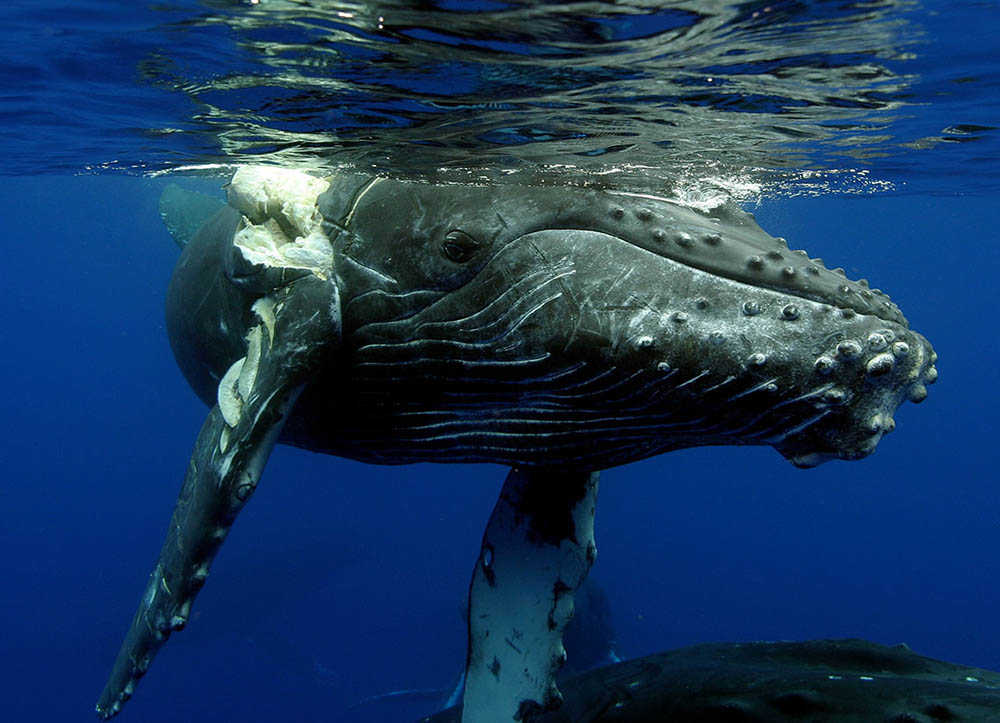
Here are some safe boating practices to help protect you and our humpback whales while you are sharing our oceans:
“Go Slow Whales Below” speed recommendations
Keep your distance – it’s the law!

Stay alert
Don’t assume the whales can see you

Stop immediately if a whale approaches your boat
Go around whales from behind
Please kōkua
Devon Stapleton, DAR Protected Species Program
Images authorized under NOAA Fisheries Marine Mammal Health and Stranding Response Program Permit (#932-1489) unless otherwise noted.
We invite you to watch the first in our new series of short videos, “Dive in with DAR”.
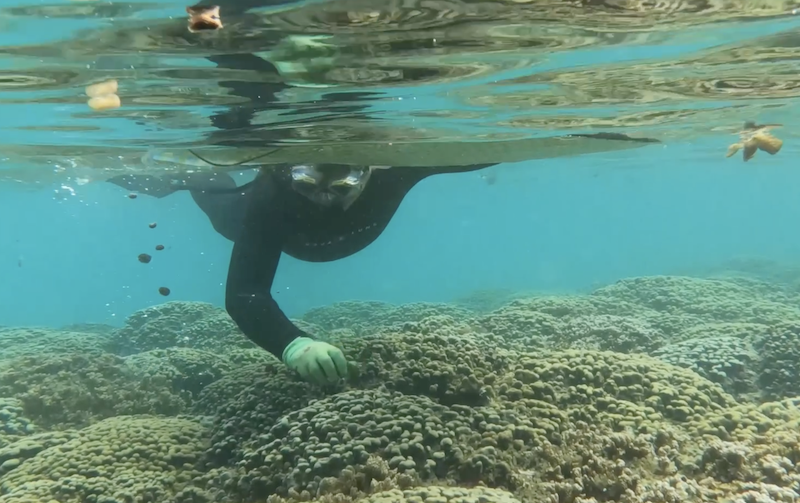
“Dive in with DAR” is meant to spread awareness and appreciation for Hawai‘i’s incredible marine resources. In addition to highlighting the projects and regulations that enable DAR to manage these resources, each episode includes information meant to empower viewers, so that they themselves can make a positive difference for the waters of Hawai‘i.
The first episode, “Helpful Hāwa’e,” takes you into the field with DAR’s Aquatic Invasive Species Team to out-plant collector urchins in Kāne‘ohe Bay. In addition to being our first episode, “Helpful Hāwa’e” also celebrates the anniversary of the first out-planting of collector urchins raised at the Ānuenue Fisheries Research Center on January 29, 2011.