Learn & Explore/Species/Introduced & Invasive/Majano Anemone
Majano Anemone
Category: Invasive
A fast-spreading anemone that overgrows and harms native stony corals.
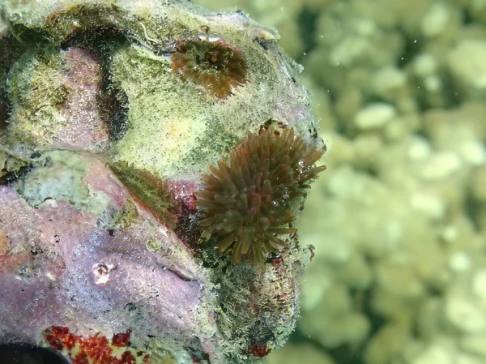
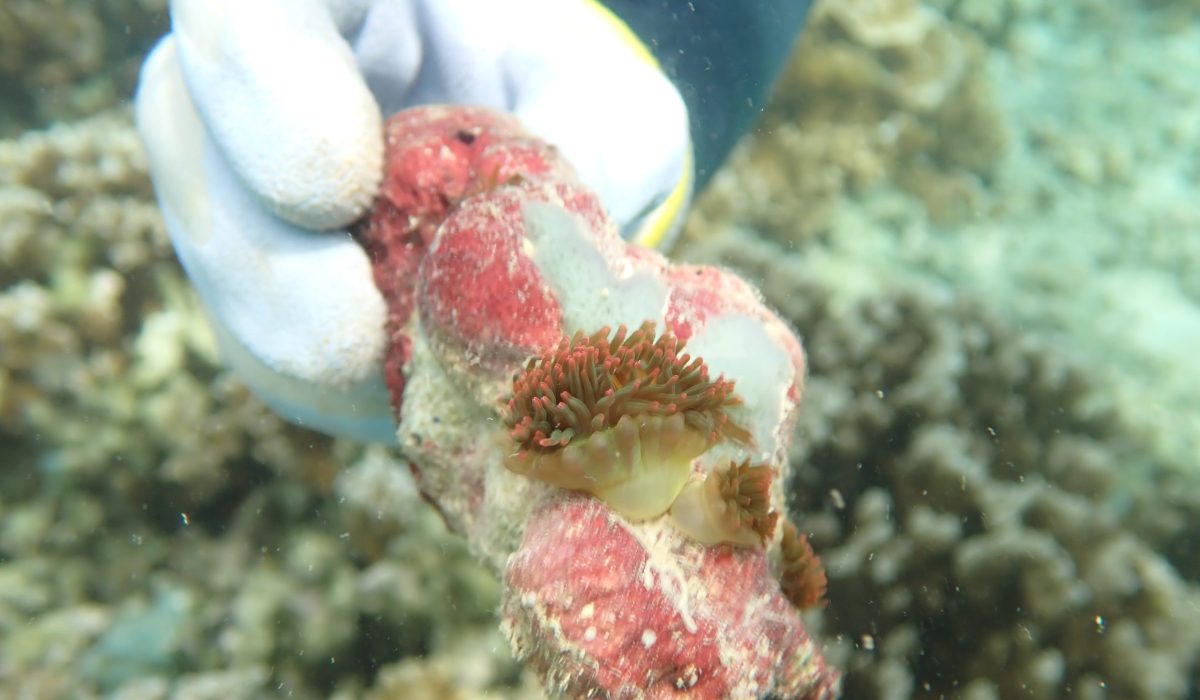
Majano Anemone (Anemonia manjano)
-
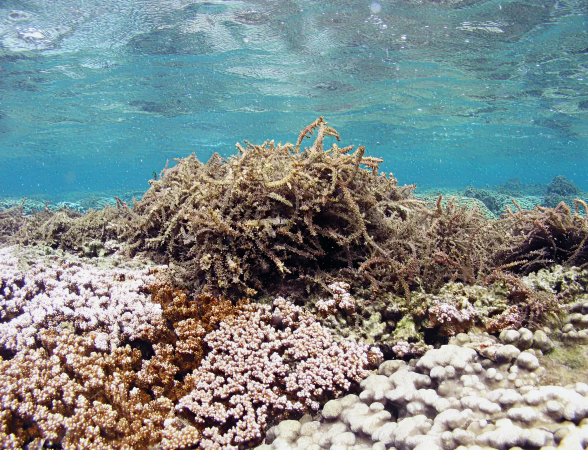
Small brown to tan anemone with green tentacles
-
Rounded tips with light, sometimes pink coloration
Habitat
-
Native to the Indian Ocean. Records indicate spread into the Philippines and Western Pacific 1
-
Ability to colonize multiple substrates, including rock, rubble, and sand, as well as both live and dead coral 2
Impacts & Concern
-
Rapid growth paired with few known predators leads to unchecked spread
-
Can detach from the substrate and relocate while leaving behind tissue to grow into a new anemone
-
Easily fragments when disturbed; each fragment can grow into a viable adult
-
Can colonize a variety of coral forms, including branching, encrusting, and mounding 2
-
Small size and cryptic nature can lead to difficulty with monitoring and removal efforts
Introduction
-
Likely introduced from aquarium releases
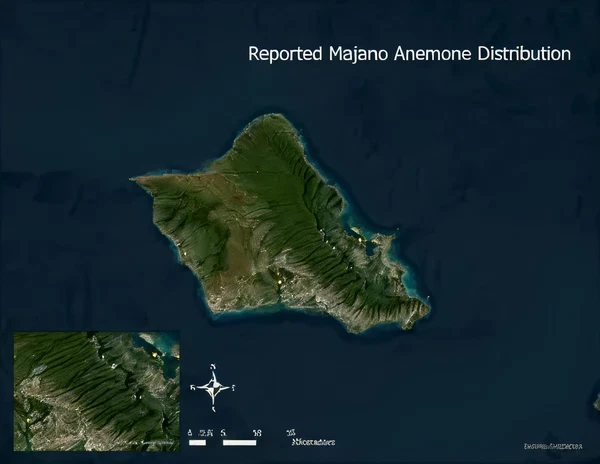
Distribution in Hawai‘i
-
Kauaʻi: Not documented
-
O‘ahu: Pearl Harbor & Kāne‘ohe Bay
-
Molokaʻi: Not documented
-
Lānaʻi: Not documented
-
Maui: Not documented
-
Hawaiʻi Island: Not documented
Related AIS Team Management Projects
AIS is collaborating with NERR, HIMB, DoD, TNC, NOAA, and colleagues from DAR on monitoring and eradication efforts
Regulations
-
Restricted for private and commercial use including for research by universities or government agencies, exhibition in municipal zoos or government-affiliated aquariums, for other institutions for medical or scientific purposes (§4-71-6.5)
-
Does not include individual possession of an animal as a pet
References
-
Vallejo, B. M., Aloy, A. B., Ocampo, M., Conejar-Espedido, J., & Manubag, L. M. (2019). Manila bay ecology and associated invasive species. Impacts of Invasive Species on Coastal Environments: Coasts in Crisis, 145-169.
-
Tkachenko, K. S., & Britayev, T. A. (2016). Unusually high abundance of the actiniarian Anemonia manjano Carlgren, 1900 outcompeting scleractinians in central Vietnam. Marine Biodiversity, 46(3), 545-546.