State of Hawai'i
Division of Aquatic Resources
Learn & Explore/Species/Introduced & Invasive/Upside-Down Jellyfish
Category: Invasive
A shallow-water jellyfish known to take over marine and loko iʻa (fishpond) environments.
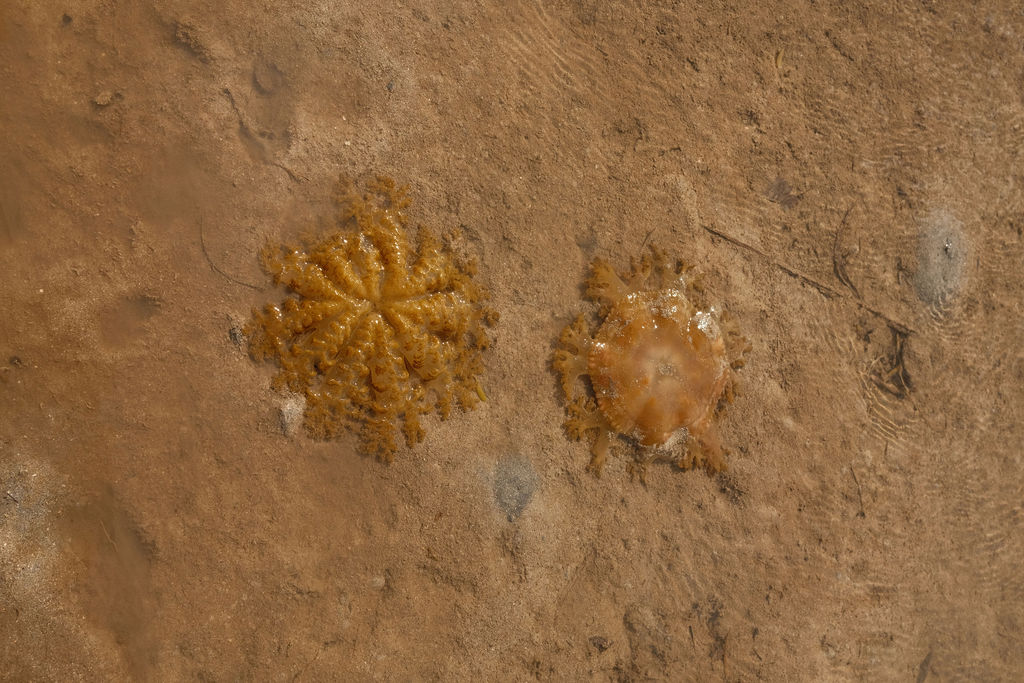
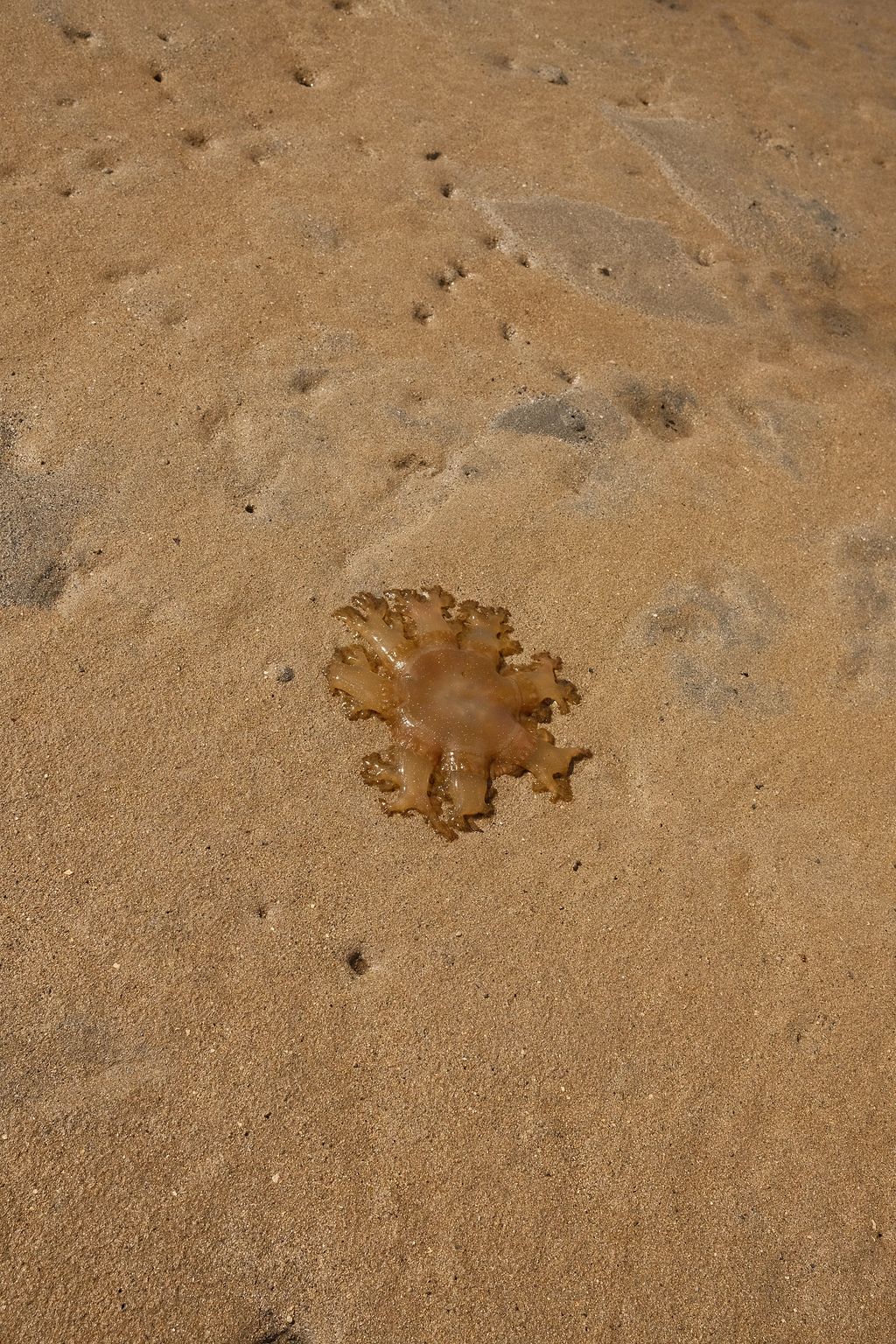
Upside-Down Jellyfish (Cassiopea andromeda)
Yellow with white and pale spots 2
Brown frilly tentacles 2
Can grow up to 30 centimeters in diameter 3
Often mistaken for sea anemones 1
Lies upside down on sandy bottoms 2
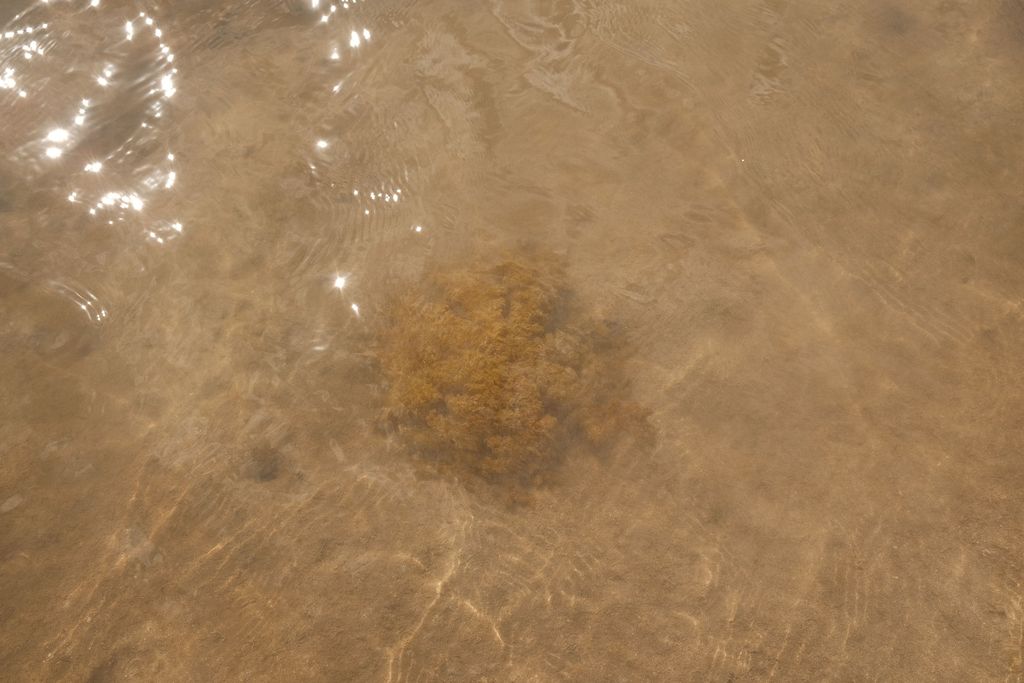
Found in calm, shallow water such as lagoons and intertidal flats 2
Have a mild sting 1
Ecological impacts have not been studied 1
Came from the Philippines to Pearl Harbor between 1941 and 1945 2
Spread by hull fouling or in the ballast water of ships 2
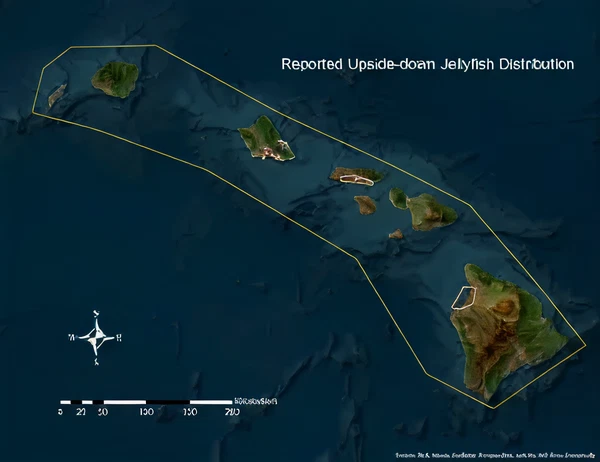
Kauaʻi: Not documented
O‘ahu: Kāne‘ohe Bay, Ala Wai Canal, Honolulu Harbor
Molokaʻi: Kaunakakai
Lānaʻi: Not documented
Maui: Not documented
Hawaiʻi Island: Waikoloa fish ponds
Eldredge, L. G., & Smith, C. M. (2001). A guidebook of introduced marine species in Hawai’i. Honolulu: Bishop Museum and the Univ. of Hawai’i
Eyes of the Reef (EOR). (2015). Alien invasive invertebrates- Upside down jellyfish. Eyes of the Reef Hawaiʻi. https://eorhawaii.org/education/marine-invasive-species/invertebrates/
Bishop Museum. (2001). Cassiopea andromeda. Introduced marine species of Hawai’i Guidebook. Eyes of the Reef resource.