Learn & Explore/Programs & Initiatives/Coral Restoration Nursery/Coral Restoration Process
Coral Restoration Process
Follow corals from collection and care to outplanting and long-term reef recovery.
Coral Restoration Process
Take a closer look at the coral restoration journey — from Collection and Quarantine to Fast-Growth, Acclimation, Outplanting, and continuous Monitoring — and see how each step helps bring reefs back to life.
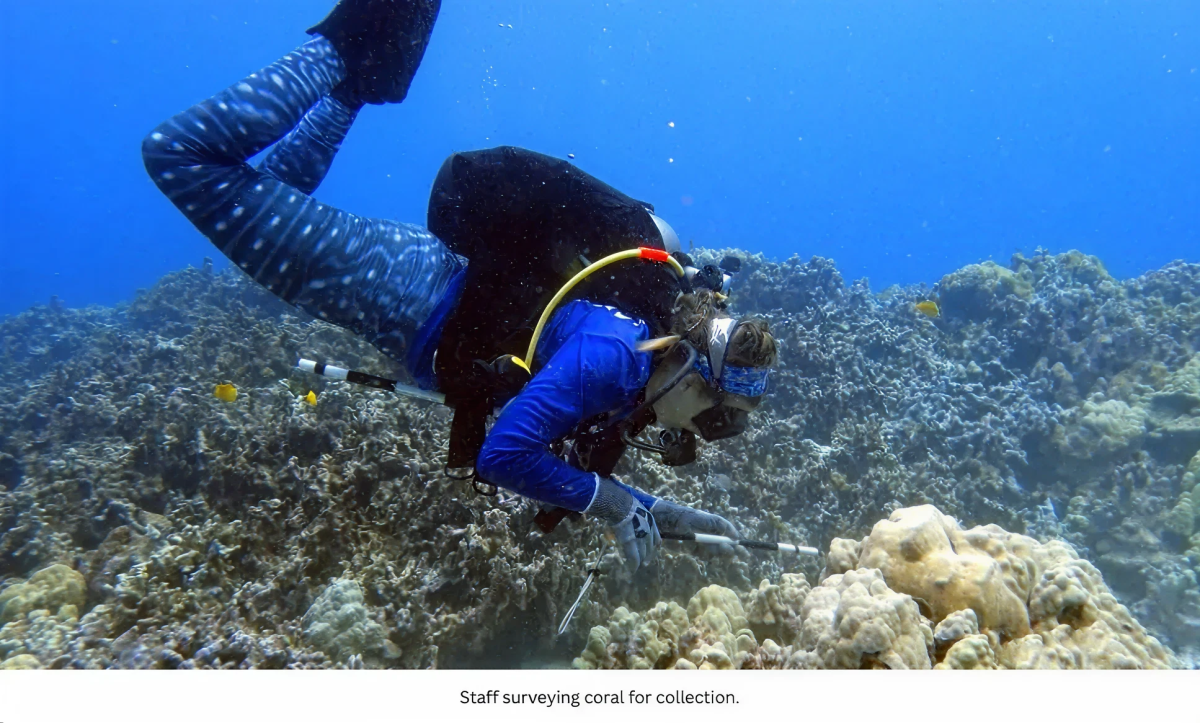
To minimize impacts on natural reefs, the HCRN prioritizes collecting corals from areas of lower ecological value, such as harbors. When needed species are not found there, staff collect loose or damaged “corals of opportunity,” often affected by storms, vessel groundings, or anchor damage.
These corals provide limited ecosystem benefits in their original locations, but by growing them to a larger size and outplanting them onto degraded reefs, the HCRN significantly increases their ecological value and contribution to reef recovery.
Collecting corals from harbors doesn’t come without risks. Due to the polluted nature of harbors, these corals may have a higher chance of containing heavy metals deep within their skeletons, harbor-associated diseases, or aquatic invasive species (AIS). To mitigate these risks, the HCRN follows strict quarantine and health assessment procedures for all corals entering and exiting the nursery.
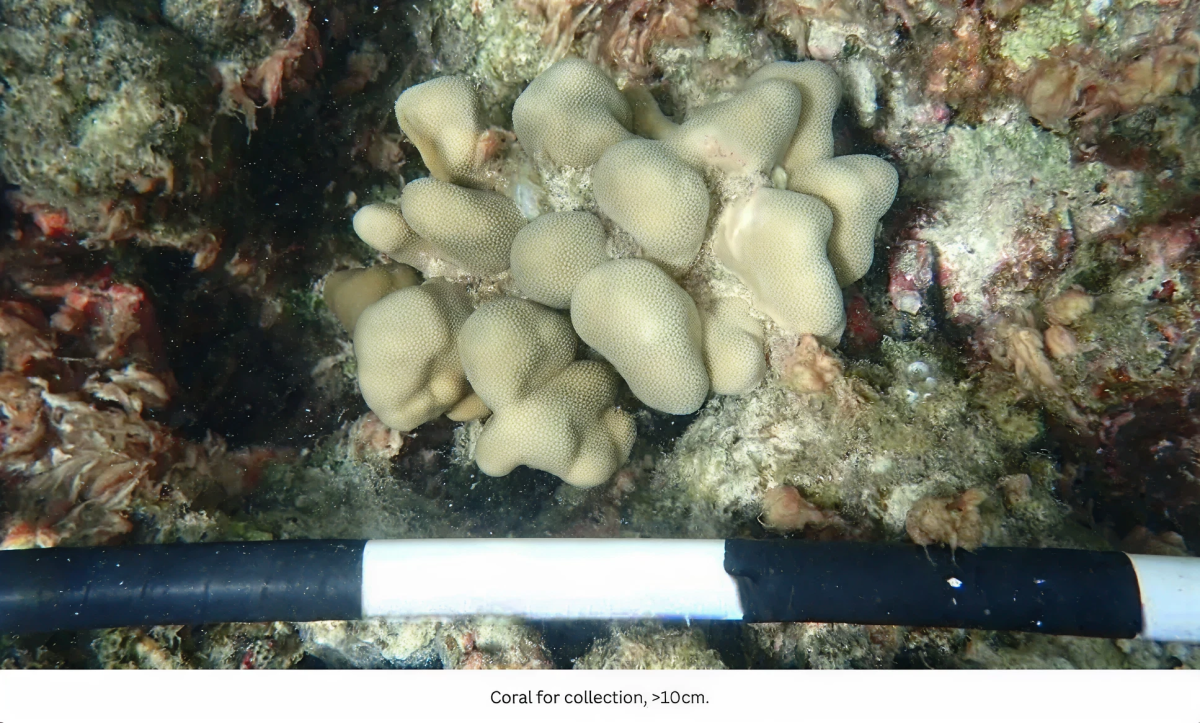
Coral colonies collected for module production must meet the following requirements:
- Must be a native Hawaiian coral species
- Healthy tissue coloration and polyp extension
- Absence of visible tissue recession, disease, or recent death
- Absence of excessive algal growth
- Minimal or absence of visible AIS
- Minimal or absence of visible micropredators on colony
- Be at least 10 cm in size
Corals that meet these requirements are carefully dislodged from the substrate by HCRN staff using various tools. The process is photographed and cataloged in the HCRN database to maintain a chain-of-custody for every coral collected.
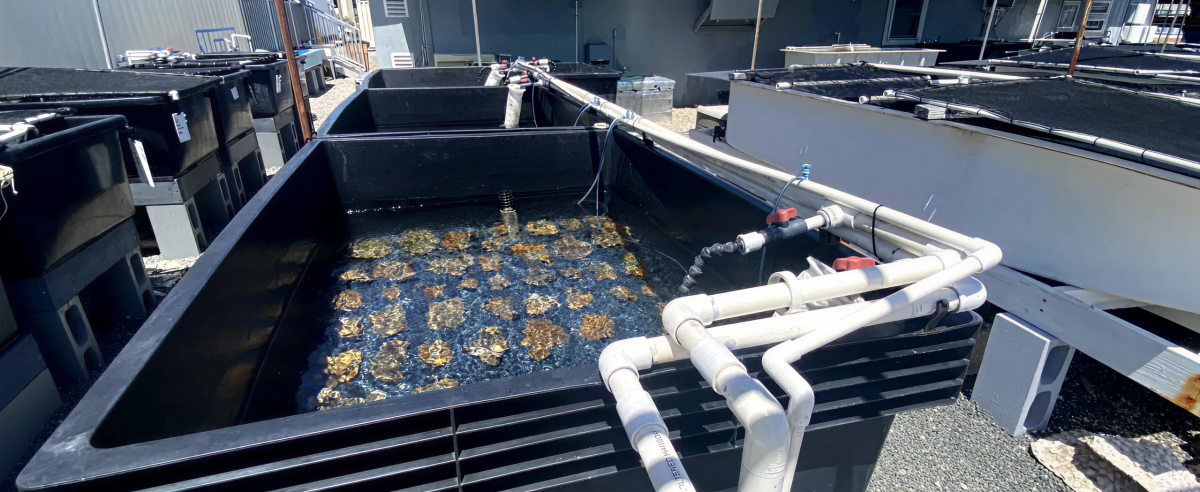
After collection, coral colonies are placed in quarantine tanks and closely monitored for health issues. During this period, HCRN staff conduct daily checks for disease, invasive species, micropredators, and other signs of stress.
Corals remain in quarantine for at least 30 days and are only moved forward once no health concerns are detected. If an issue appears, the quarantine period is restarted. This process helps corals acclimate to the nursery while reducing the risk of introducing disease or pests into the nursery or restoration sites.
Treatment
When corals are subjected to stressful events, they are more likely to contract infections or lose tissue. The process of collection and transport from the field into the nursery is a stressful process, and to minimize the stress during these events, the HCRN uses a variety of coral-safe treatments to boost coral health and combat commonly found infections. For example, corals may be dipped in a water bath containing diluted Lugol’s Iodine. This is because iodine is a powerful astringent and antiseptic that the coral can absorb from the water to prevent or eliminate disease.
Aquatic Invasive Species (AIS)
Due to the isolated location of Hawaiʻi, AIS can pose a serious threat to native ecosystems. AIS are species that are introduced into an environment that outcompete native species, leading to a decline in overall species diversity and ecosystem function. During quarantine, any AIS found are removed and reported to the DAR Aquatic Invasive Species team. On O‘ahu, the most common AIS that threaten corals are invasive algae, such as Gorilla Ogo (Gracilaria salicornia) and Smothering Seaweed (Kappaphycus alvarezii and Eucheuma spp.). These invasive algae can outcompete corals for space due to their rapid growth rate.
Micropredators
There are many animals that naturally eat coral in the Hawaiian coral reef ecosystem. Most commonly found are different species of nudibranchs (sea slugs) which eat corals in the Genus Porites, the Montipora-eating flatworm, and corallivorous snails that prey on a variety of coral species.
To get rid of micropredators, HCRN staff conduct daily health assessment checks, including manual removal of these organisms. Once the coral has been free of disease, AIS, and micropredators for at least 30 days, it can then undergo the fast-growth process.
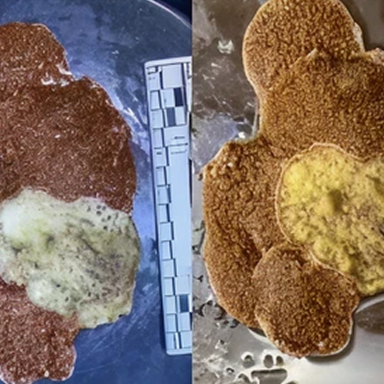
A diseased coral before and after treatment
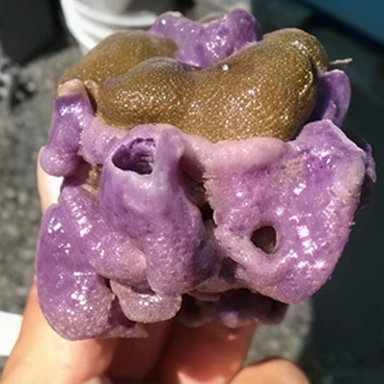
A quarantined coral with an invasive sponge
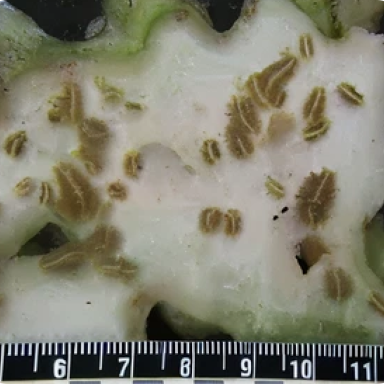
A coral colony is made up of thousands of tiny animals called polyps that build a hard calcium carbonate skeleton. As corals grow, these polyps can reproduce asexually, creating genetically identical copies. When coral is naturally broken, new tissue grows rapidly along the exposed edges.
HCRN uses this natural growth response through a technique called microfragmentation. Staff cut coral colonies into small 1 × 1 cm pieces, creating more growth edges and allowing coral tissue to spread faster. These microfragments are then attached to concrete modules using coral-safe adhesive, where they grow and eventually fuse into larger, healthy coral colonies.
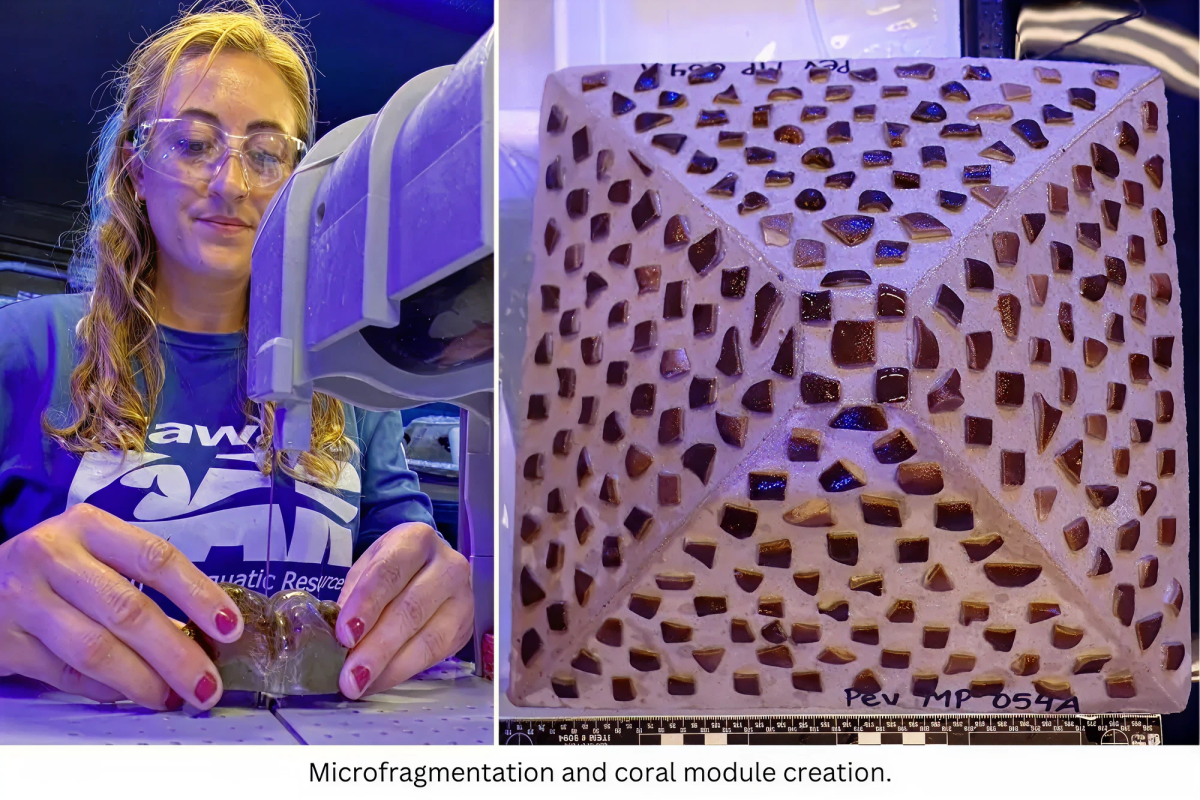
The coral module is placed in a specialized aquarium (“grow-out tanks”) to complete the fast-growth process. Using these concrete modules as a base, microfragments have an initial surface they can grow onto. All the microfragments on the module are from the same source material (i.e. the same genotype), so as they grow across the surface of the concrete module and meet up with their neighboring microfragments, they will fuse to form one large adult colony.
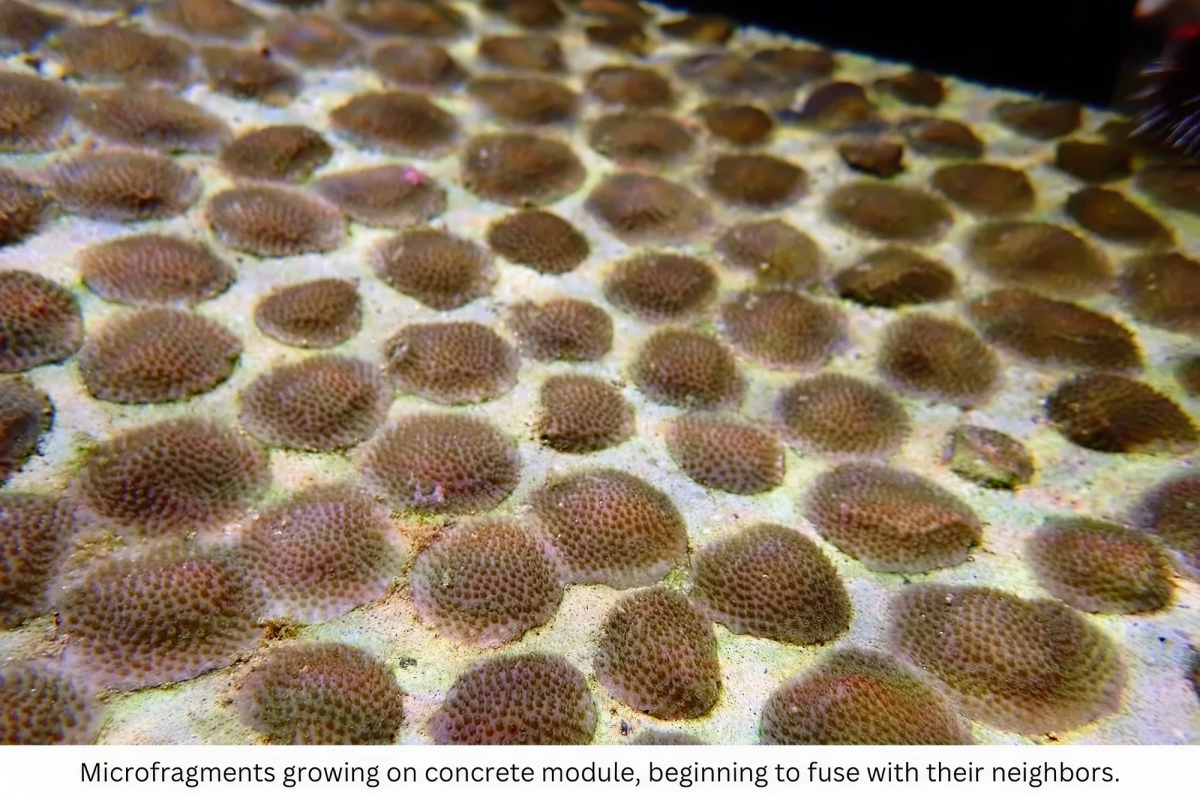
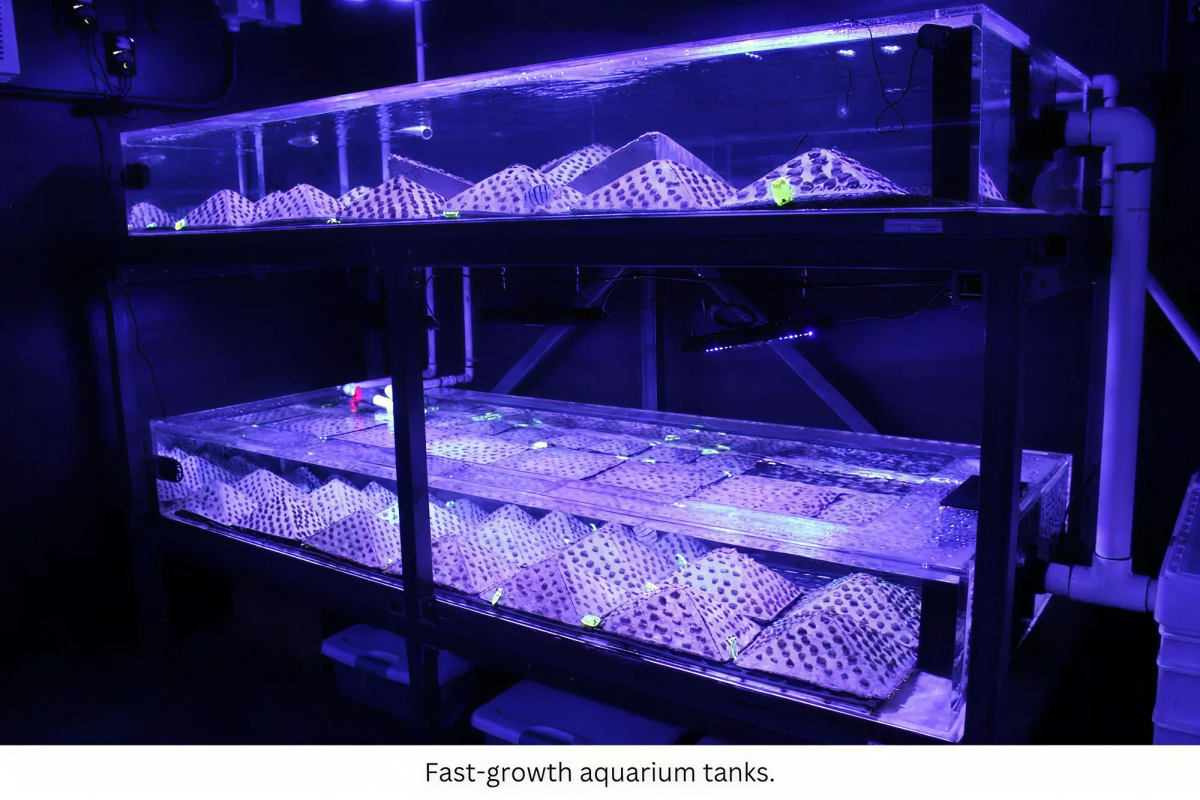
In the grow-out tanks, all aspects of the environment are controlled to create optimal growth conditions. Water temperature and flow, salinity, essential minerals, light, and coral food are a few things the HCRN can modify to aid coral growth. The HCRN’s professional team of aquarists check on the health of the corals to ensure tank conditions remain optimal and take quick action if issues arise. The process is photo documented and entered into the HCRN database to maintain a chain-of-custody for every coral module grown.
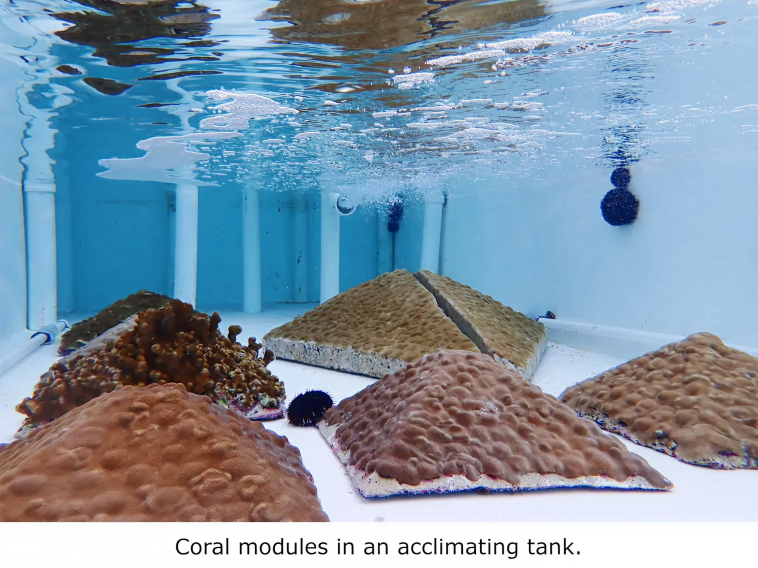
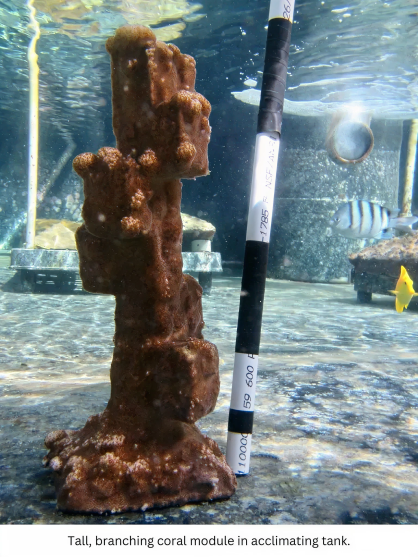
Once a coral fully covers its concrete module, it is nearly ready for outplanting. Because conditions at the HCRN differ from those on natural reefs, corals are gradually acclimated to the target site environment.
For at least 30 days, corals are placed in outdoor acclimation tanks where they adjust to natural sunlight, water quality, and temperature conditions. The entire acclimation process is photo documented and recorded in the HCRN database to track each coral module grown at the nursery.
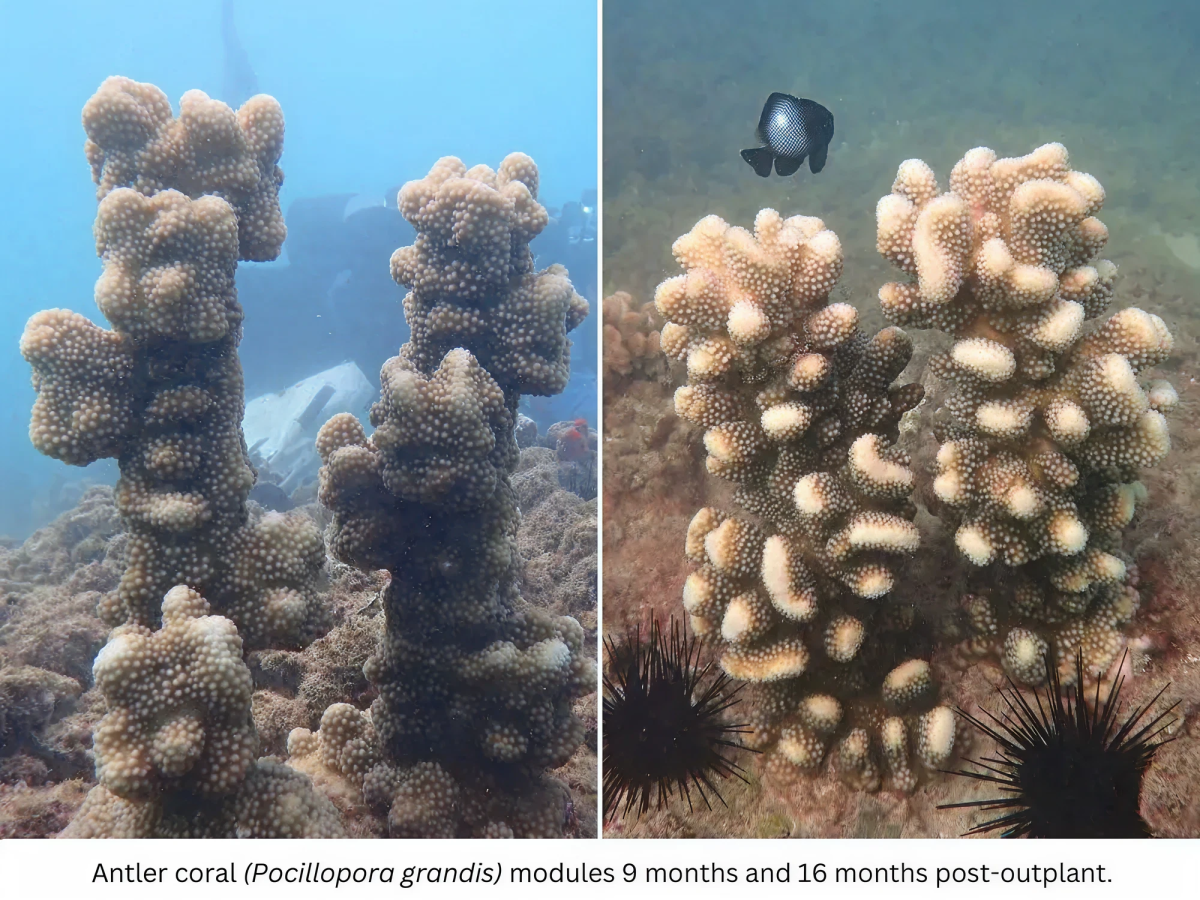
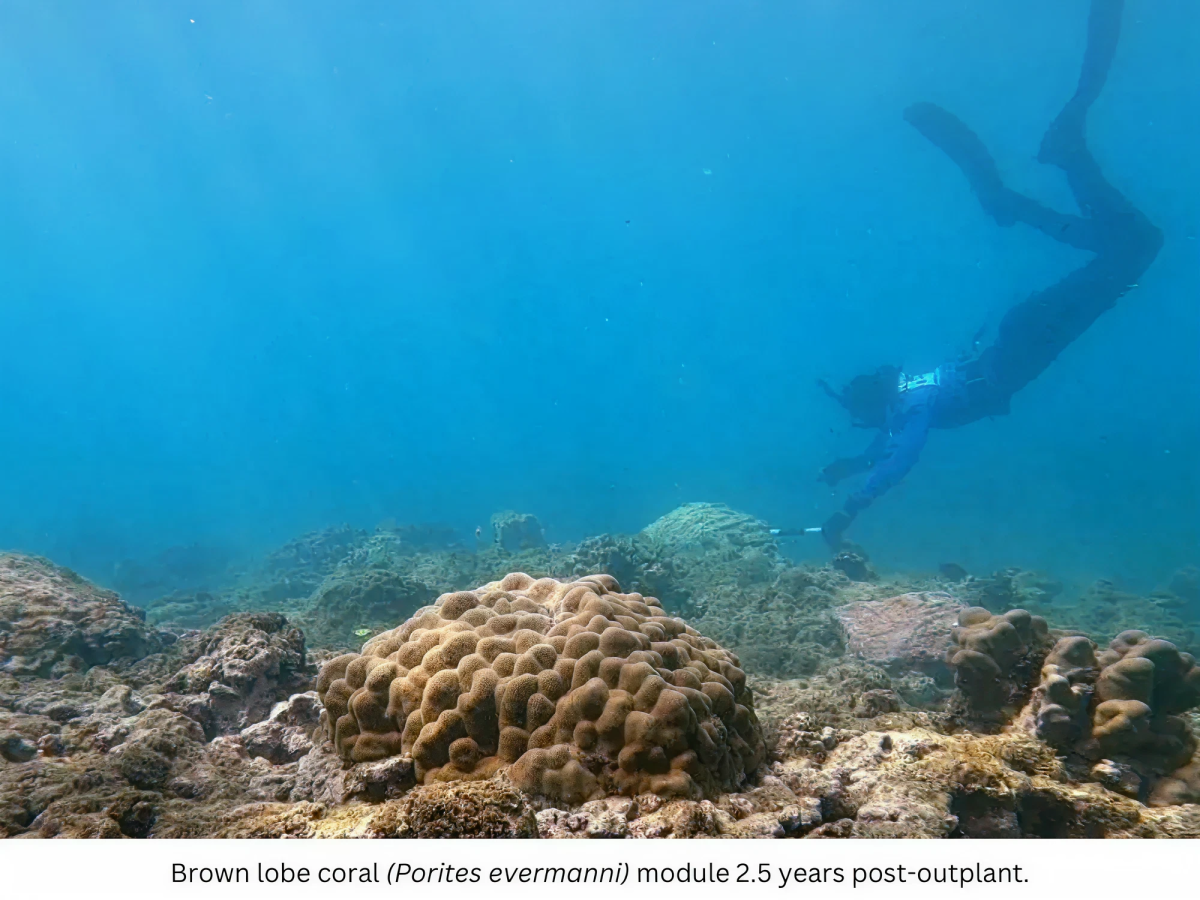
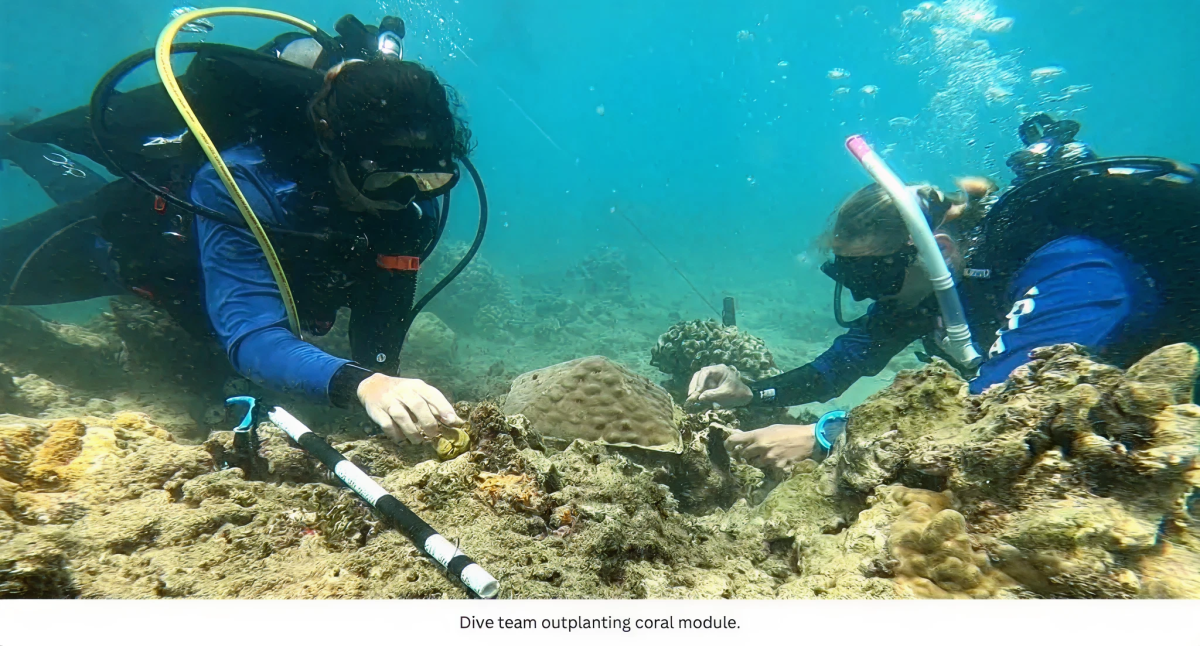
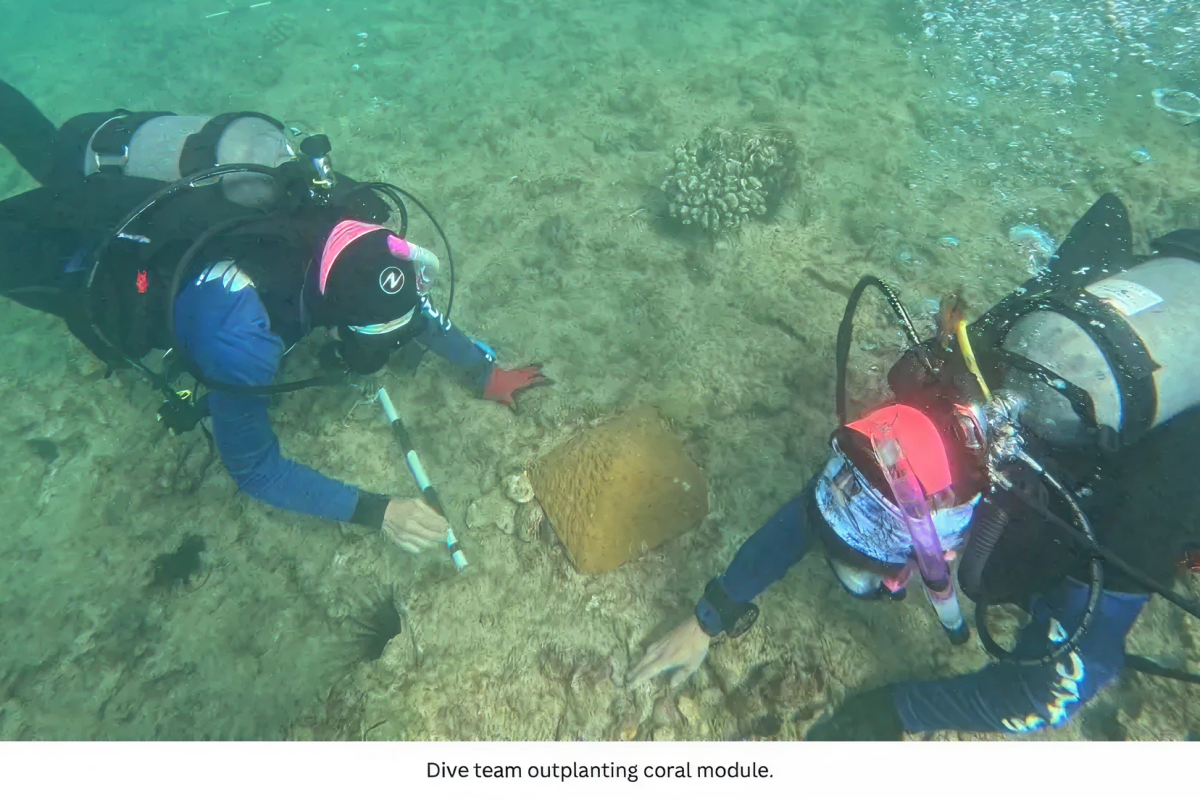
During outplanting, HCRN staff secure coral modules onto the reef at selected restoration sites. Before corals are placed, a baseline assessment is conducted to confirm site suitability and determine which coral species should be outplanted.
Nearby natural corals are chosen as reference controls to compare health and growth over time. These comparisons help evaluate restoration success, as outplanted corals gradually blend into the surrounding reef in both color and form.
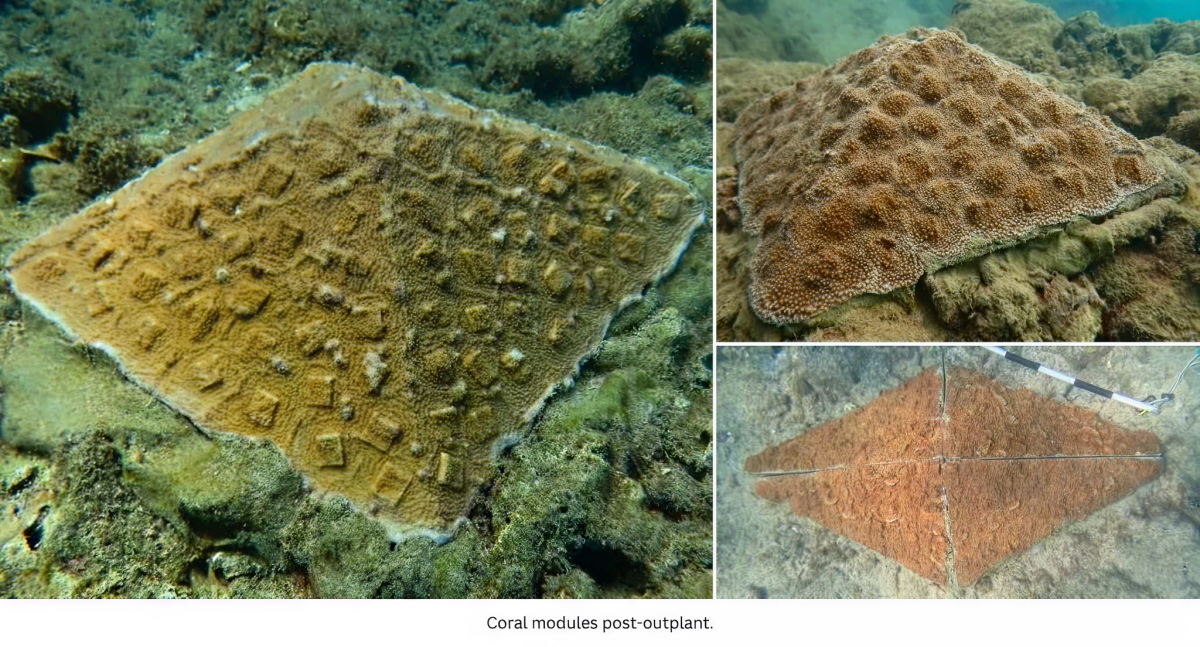
Before outplanting, HCRN staff clear algae and sediment from the reef to prepare a stable surface for each coral module. Divers then secure the modules using marine-grade epoxy to ensure a strong attachment.
Outplanting typically takes place in fall, winter, and spring, allowing corals time to acclimate before the warmer summer months, when higher water temperatures can increase the risk of bleaching. Each outplant is photo documented and recorded in the HCRN database to track and monitor every coral placed on the reef.
The HCRN routinely monitors outplanted coral colonies to ensure optimal health, survival, and growth. Outplants are monitored very frequently in the first three months after the outplanting event, and then gradually less frequently as the coral becomes a permanent part of the ecosystem at the outplant site.
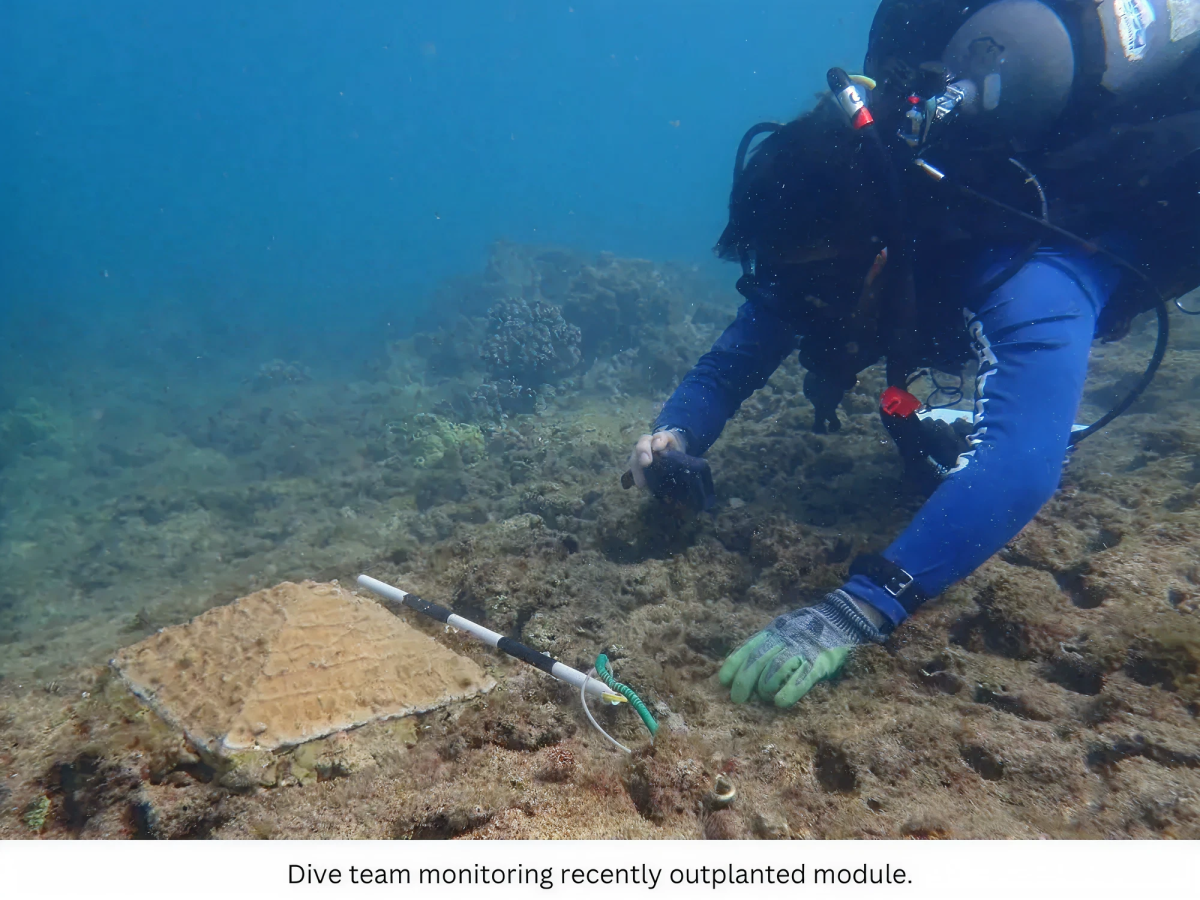
HCRN staff look for these key indicators of coral health when monitoring corals:
- Size and growth of the outplant, including new coral growth
- Any presence and degree of outplant tissue paling or bleaching
- Any presence and degree of outplant tissue death
- Any presence of any known coral disease
- Any indication of corallivores present
- Any presence of aquatic invasive species
- Any presence of competitors directly affecting coral health and growth
- Any impacts of sedimentation
- Obvious breakage of coral colony or outplant structure
These monitoring sessions are photo documented and entered into the HCRN database to maintain a chain-of-custody for every coral outplanted by the HCRN.