Learn & Explore/Species/Introduced & Invasive/Blackchin Tilapia

Blackchin Tilapia

Category: Invasive

A hardy tilapia that outcompetes native fish in Hawaiʻi’s streams and estuaries.

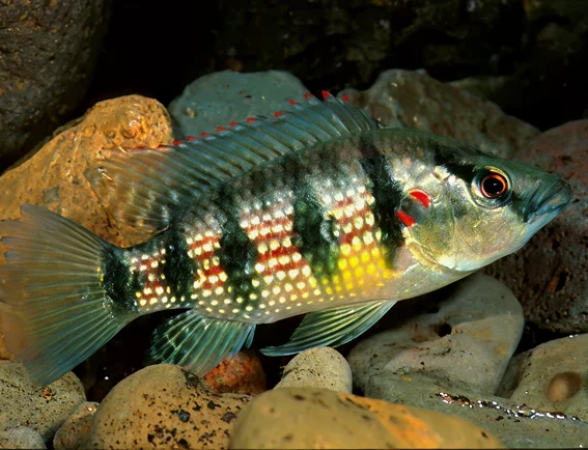
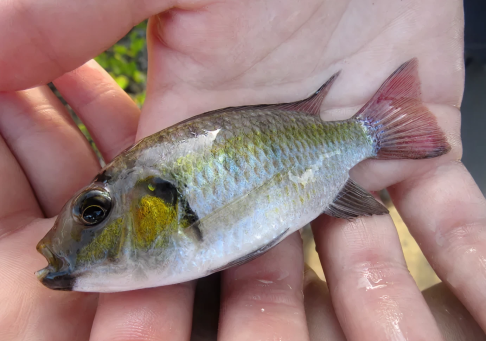
Blackchin Tilapia (Sarotherodon melanotheron)

  • Usually have black spots on chin or throat 1

  • Irregular vertical bars  9

  • Gold spot near gills in males  9

Blackchin Talapia
Photo courtesy of J. Tengeres, U.S. Fish and Wildlife Service

Habitat

  • High salinity tolerance and prefers brackish water 9

  • Found in streams, estuaries and wetlands 3

Impacts & Concern

  • Can greatly reduce aquatic vegetation present and therefore negatively impact native Hawaiian birds 2, 6

  • May overcrowd or act aggressive towards native fish 2, 4

  • Could serve as a vector of disease: blackchin tilapia is impacted by an unknown disease sometimes with no symptoms as well as the bacterium Francisella noatunensis subsp. Orientalis 5, 10

Introduction

  • Imported by Bureau of Commercial Fisheries in 1962 onto Sand Island where it was studied as potential tuna bait and likely escaped

  • After initial escape, blackchin tilapia spread through freshwater and estuary habitats

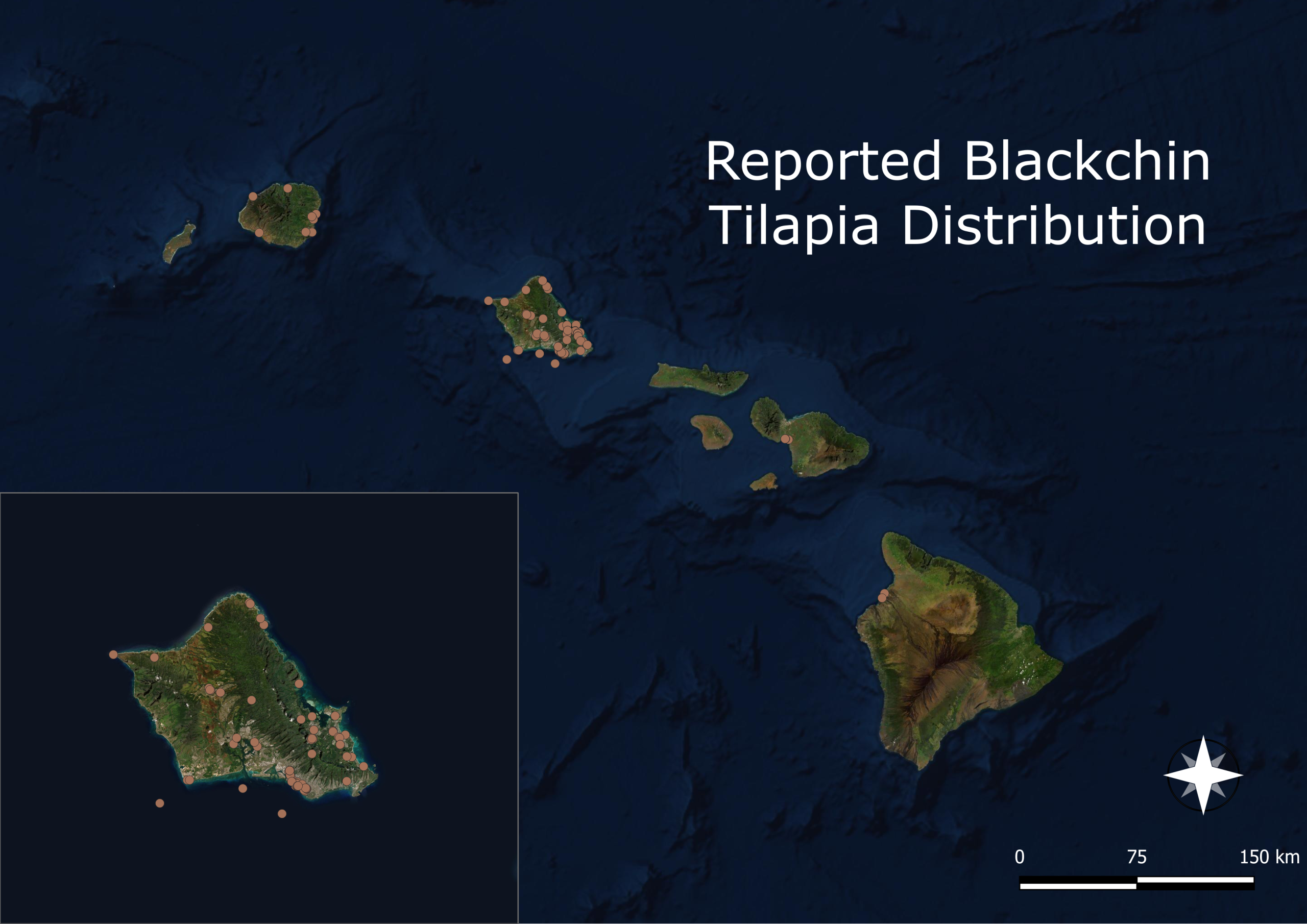
Distribution in Hawai‘i

  • Kauaʻi: Anahola Stream, Puali Stream 10

  • Oʻahu: Kahuku Pond, Kuliouou Steam, Kawaihāpai Reservoir 10, Wahiawa Lake, Nuʻuana Reservoir

  • Molokaʻi: Not documented

  • Lānaʻi: Not documented

  • Maui: Not documented

  • Hawaiʻi Island: Not documented

Related AIS Team Management Projects

  • 2019 Special Activity Permit allowed DAR officials and local fishermen to net about 300 fish in Nu‘alolo Bay, Kaua‘i

  • DAR investigated a large die-off of tilapia in the ‘Anahulu River near Hale‘iwa, O‘ahu after reports from kayak/SUP rental companies

  • Monitoring for spread and disease outbreaks continues

Regulations

  • Prohibited for import, not currently listed under HDOA import rules (§4-71-6.5)

References

  1. Campbell, D. (1987). A review of the culture of Sarotherodon melanotheron in West Africa. UNDP-FAO-NIOMR. 20 p.

  2. Courtenay W.R., Sahlman H. F., Miley W. M., Herrema D. J. Exotic fishes in fresh and brackish waters of Florida. (1974). Biological Conservation, 6(4), 292-302. https://doi.org/10.1016/0006-3207(74)90008-1

  3. Englund, R.A. (2005). Threats to native aquatic insect biodiversity in Hawaiʻi and the Pacific, and challenges in their conservation. [Doctoral dissertation, University of Hawaiʻi]. University of Hawaiʻi Manoa ScholarSpace.

  4. Faunce, C.H. & Paperno R. (1999). Tilapia-dominated fish assemblages within an impounded mangrove ecosystem in east-central Florida. Wetlands, 19(1), 126-138.

  5. Mauel, M., Miller, D., Frazier, K., Liggett, A., & Styer, L., Montgomery-Brock, D., & Brock, J. (2003). Characterization of a piscirickettsiosis-like disease in Hawaiian tilapia. Diseases of aquatic organisms, 53, 249-55. 10.3354/dao053249

  6. McGuire, C. (2006). Effects of introduced fish on aquatic insect abundance: A case study of Hamakua marsh, Oahu Hawaiʻi. [Master dissertation, University of Hawaiʻi]. University of Hawaiʻi Manoa ScholarSpace.

  7. Randall, J. E. (1987). Introductions of marine fishes to the Hawaiian Islands. Bulletin of Marine Science, 41(2), 490-502.

  8. Szyper, J.P., Hopkins, K.D., Malchow, W., & Okamura, W. Y. (2000). History and Prospects of Tilapia Stocks in Hawaiʻi, U.S.A. In Tilapia Culture in the 21st Century–Proceedings from the Fifth International Symposium on Tilapia Aquaculture, Rio de Janeiro, Brazil.
  9. Trewavas, E. (1983). Tilapiine Fishes of the genera Sarotherodon, Oreochromis, and Danakilia. The Dorset Press. https://doi.org/10.5962/bhl.title.123198
Other Introduced & Invasive