Learn & Explore/Species/Introduced & Invasive/Mozambique Tilapia

Mozambique Tilapia

Category: Invasive

A resilient tilapia that invades Hawaiian streams and estuaries, out‑competing native fish for food and habitat.

Mozambique Tilapia (Oreochromis mossambicus)

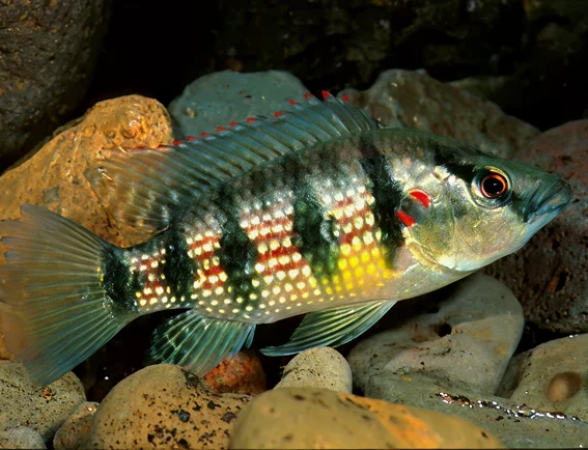
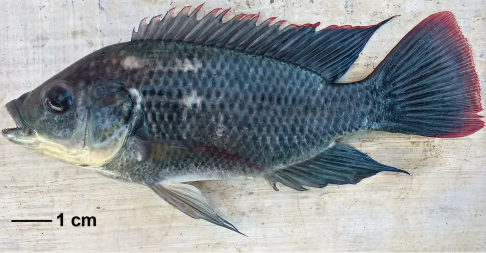
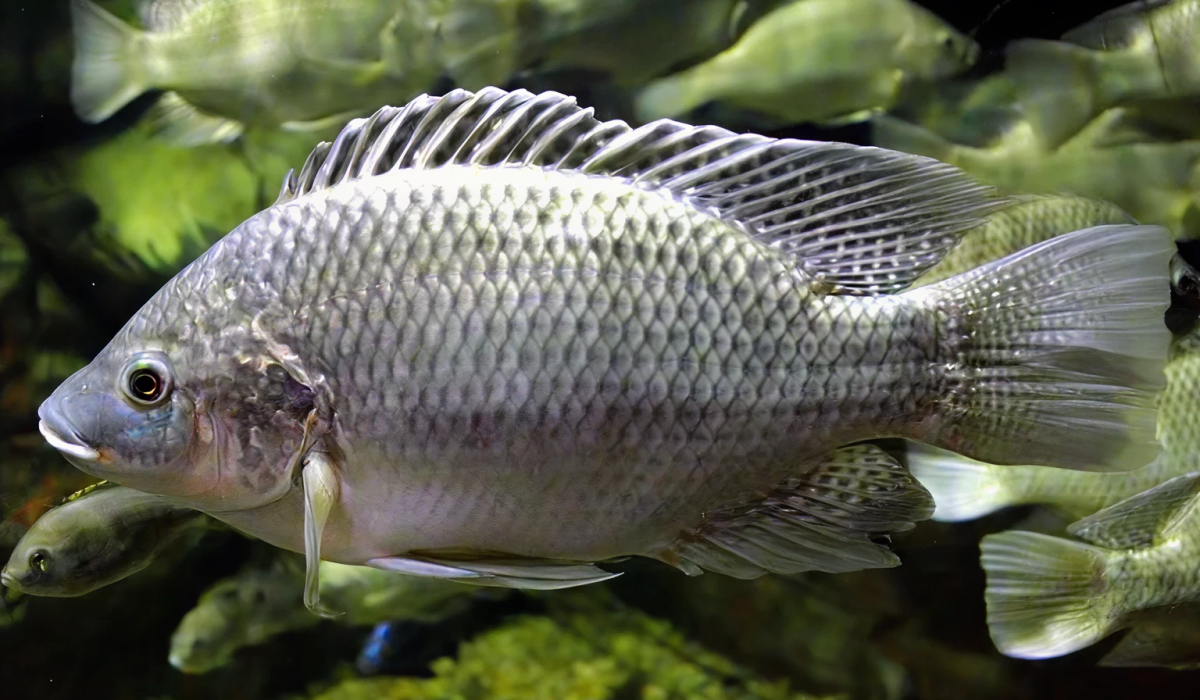
  • Silver or pale olive with large mouths  5,6

  • Breeding males can be dark colored with white on the head and red on dorsal and caudal fins  5

  • Can reach 10-15 inches long  6

d395cb5c8ac16910eb307c5852ebf2be4bdbc02f
Photo courtesy of Hasan et al. 2019

Habitat

  • Fresh and brackish water 3,4

  • Reservoirs, lakes, ponds, streams, and inshore with freshwater input 3

  • Tolerant of high salinities 3

Impacts & Concern

  • Outcompetes other fish for food, like the native striped mullet (Mugil cephalus6

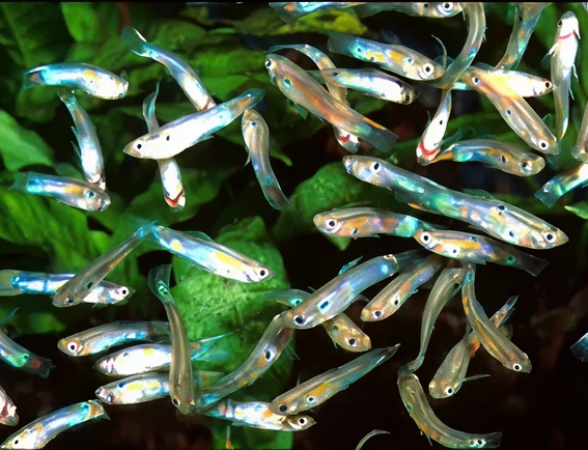
  • Colorful varieties of tilapia marketed as Hawaiian sunfish or Hawaiian perch 6

  • Mozambique tilapia in the Ala Wai and Mānoa stream contained polychlorinated biphenyls (PCBs) which can be harmful to human health  4

64f3dd3e4c331e95ade31824c389aa722f14023e
Photo courtesy of Greg Hume

Introduction

  • Likely introduced as a hybrid from Singapore in 1951 and 1952 3

  • Stocked for use as baitfish, biocontrol, food, and recreation  6

  • Displaced by later introduction of blackchin tilapia 6

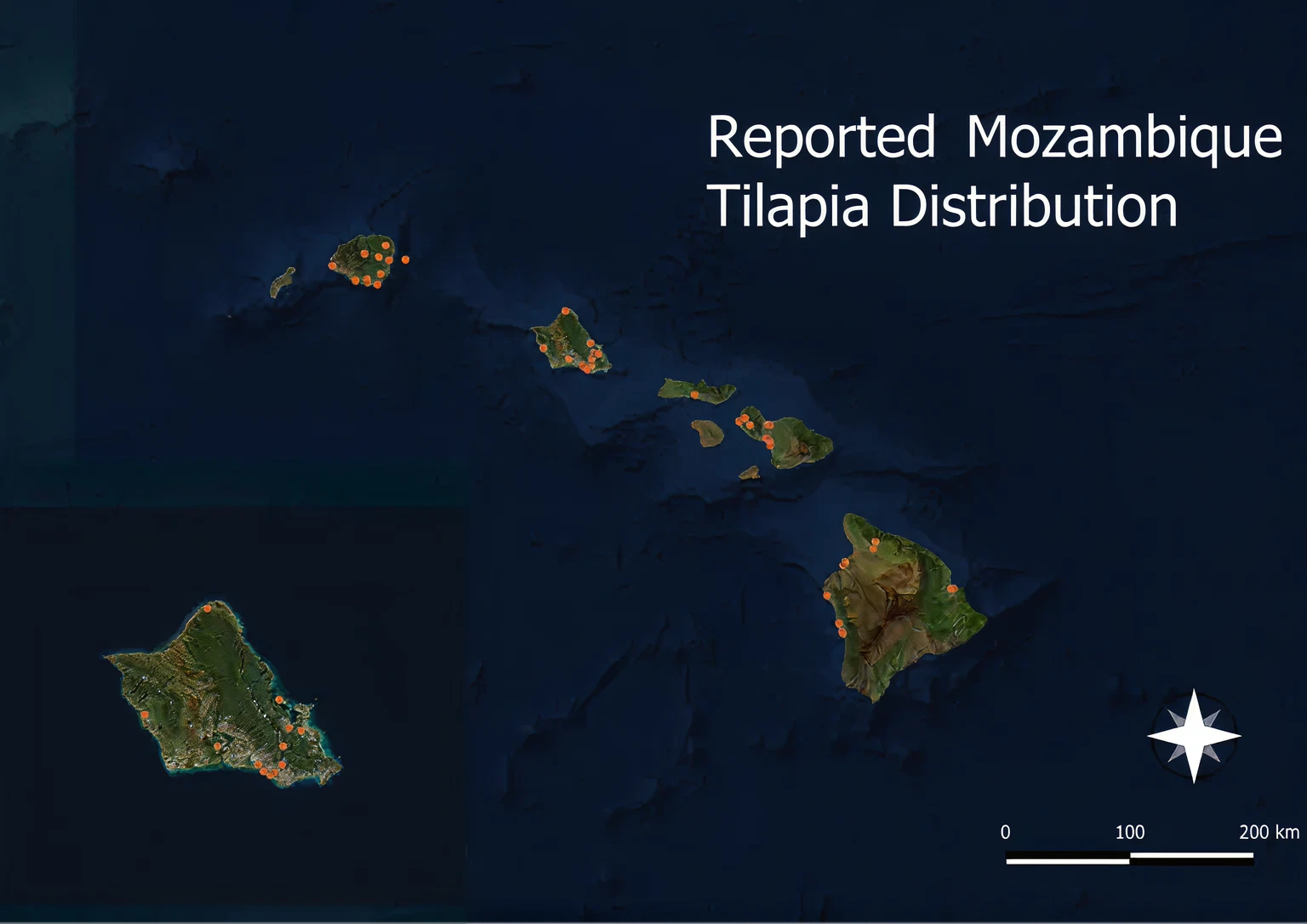
Distribution in Hawai‘i

  • Kauaʻi: Wailua River, Hulēʻia River, Keahua Stream, Kapahi Reservoir, Hanapēpē River, Anahola River, Lawai Stream, Kawaiʻele

  • Oʻahu: Pearl Harbor, Ala Wai Canal, Mānoa Stream, Māʻiliʻili Stream, Honolulu Harbor, Kewalo Basin, Ala Wai Yacht Harbor, Kāneʻohe Bay, Nuʻuanu Reservoir, Kawa Stream, Kawainui Marsh

  • Molokaʻi: Kawela Stream, Kaunakakai

  • Lānaʻi: Not documented

  • Maui: Lāhainā Stream, Kahului, Kūlanihākoʻi Gulch

  • Hawaiʻi Island: ʻAlenaio stream, Kohala watershed

Regulations

  • Restricted for private and commercial use including research, zoological parks, aquaculture production or non-profit research (§4-71-6.5)

  • Does not include individual possession of an animal as a pet

References

  1. Carlton, J.T. & Eldredge, L.G. (2009). Marine bioinvasions of Hawaiʻi: The introduced and cryptogenic marine and estuarine animals and plants of the Hawaiian archipelago. Bishop Museum Bulletin in Cultural and Environmental Studies 4. Bishop Museum Press. 203pp.

  2. Hasan V., Pratama F.S., Malonga W.A.M. & Cahyanurani A.B. (2019). First record of the Mozambique tilapia, Oreochromis mossambicus Peters, 1852 (Perciformes, Cichlidae), on Kangean Island, Indonesia. Neotropical Biology and Conservation, 14(2): 207-211. https://doi.org/10.3897/neotropical.14.e35601

  3. Mundy, B.C. (2005) Checklist of the fishes of the Hawaiian Archipelago. Bishop Museum Bulletin in Zoology 6. Bishop Museum Press. 704pp.

  4. Nico, L. & Neilson, M. (2022). Oreochromis mossambicus (Peters, 1852): U.S. Geological Survey, Nonindigenous Aquatic Species Database, Gainesville, FL, https://nas.er.usgs.gov/queries/factsheet.aspx?SpeciesID=466

  5. Trewavas, E. (1983). Tilapiine Fishes of the genera Sarotherodon, Oreochromis, and Danakilia. The Dorset Press. https://doi.org/10.5962/bhl.title.123198

  6. Yamamoto, M. & Tagawa, A.W. (2000). Hawaiʻi’s native & exotic freshwater animals. Mutual Publishing.

  7. Yamasaki L.S., Iwai T.,Klinger-Bowen R. C., Weese D.A., Fowler C.E., Yacoub J.L., & Wong M.A. (2022). Identification of Nile tilapia (Oreochromis niloticus) and its hybrids in natural environments in Hawai‘i. Aquaculture, 550, e737805. https://doi.org/10.1016/j.aquaculture.2021.737805

  8. Yang, F., Wilcox, B., Jin, S., Alonso Aguirre, A., Rougée, L., Xu, Y., & Lu, Y. (2008). Detection and quantitative analysis of polychlorinated biphenyls in tilapia from Hawaiian waters. Chemosphere, 73(1), 133–137. https://doi.org/10.1016/j.chemosphere.2008.03.066
Other Introduced & Invasive